Mon - Sat | 09:00 - 19:00


Find

Contact us

Odesa
Hrushevskoho str., 41
 Мережа СТО в місті
Місто
 +38 (096) 299 29 97
Odesa
Hrushevskoho str., 41
 Мережа СТО в місті
Місто
+38 (096) 299 29 97

 Години роботи
 Mon - Sat
09:00 - 19:00
Brakes Squeak When Braking: When the Noise Is Normal and When It Is a Warning Sign
When Sounds During Vehicle Stopping Become a Reason to Check the Brakes
Sometimes, after overnight parking, a vehicle begins to squeak during the first few presses of the brake pedal, and the sound disappears after a few minutes. In other cases, the squeaking accompanies every braking event regardless of the weather or trip duration. Even more concerning is a metallic grinding noise that can be heard even at low speeds.
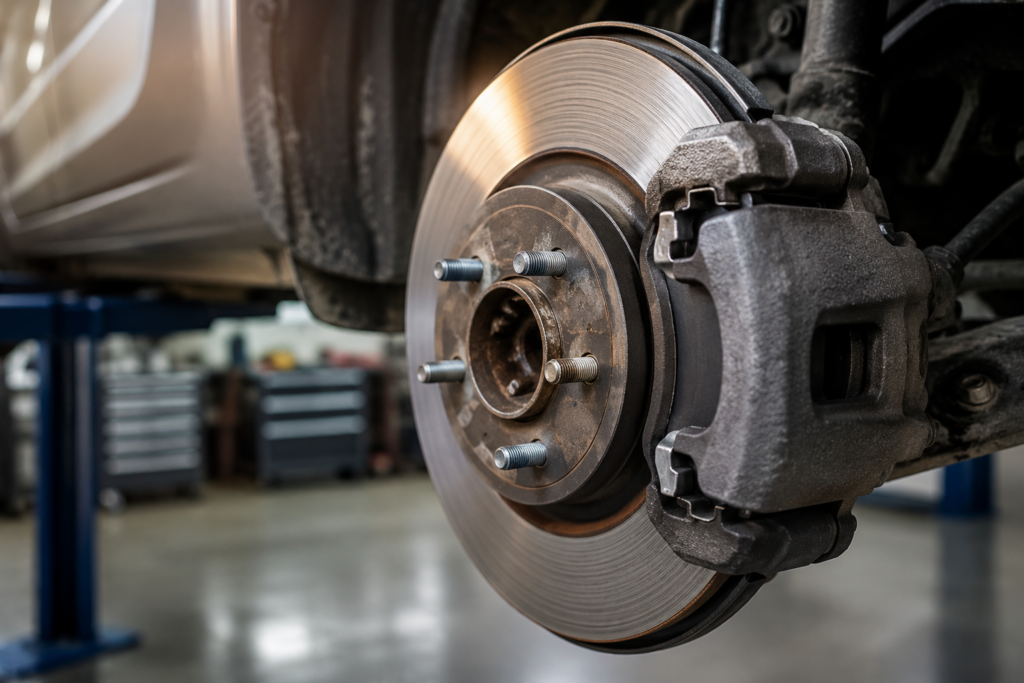
Different sounds may indicate either normal characteristics of the braking system or faults that require attention. The nature of the noise often helps determine how urgently the vehicle should be inspected.
Not every squeak indicates a problem. New brake pads sometimes produce unusual sounds during the bedding-in process, and after rain or a car wash, temporary squeaking may occur due to moisture on the surface of the brake discs. At the same time, there are situations where unusual sounds signal component wear or maintenance-related issues. That is why it is important to understand why brakes squeak during braking and in which cases inspection should not be postponed.
Natural Causes of Brake Squeaking: When There Is No Need to Worry Yet
One of the most common causes of squeaking is brake pad wear. Most modern manufacturers provide a special wear indicator (squealer). When the pad thickness reaches a critical level, a metal tab begins to touch the brake disc and produces a characteristic sound.
In this case, the noise serves a useful purpose – it warns the driver that the brake pads need replacement before the brake discs become damaged.
Another common situation occurs after installing new components. During the first trips, the pad surface gradually adapts to the working surface of the brake disc. During this period, temporary noises may occur and usually disappear once the bedding-in process is complete.
That is why the answer to the question of why brake pads squeak is not always related to a malfunction or poor-quality components.
External Factors: How Moisture and Dirt Affect Brake Performance
The appearance of unusual sounds is influenced not only by the technical condition of the vehicle. Sometimes the cause lies in normal operating conditions.
After prolonged parking, especially in humid weather, a thin layer of corrosion may form on the surface of the brake discs. During the first braking cycles, it is worn away, producing a characteristic squeak or squeal.
A similar effect may occur after:
- washing the vehicle;
- prolonged driving in the rain;
- driving on dusty roads;
- sudden cooling of heated brake discs.
Sand, road dust, or small foreign particles trapped between the brake pad and disc can also temporarily create unpleasant noises.
In most such cases, brake squeaking disappears on its own after several braking cycles and does not require repairs.
Technical Causes: When the Noise Indicates a Problem
If the sound persists for a long time or gradually becomes louder, attention should be paid to the condition of the braking system components.
One common cause is the use of brake pads made from hard or low-quality friction material. Even when braking performance remains normal, such products may continuously generate squeaking noises.
The condition of the brake caliper also plays an important role. If the caliper guide pins become dirty or lose mobility, the brake pad presses against the disc unevenly. This creates vibrations and characteristic noise.
Unusual sounds may also be caused by:
- brake disc deformation;
- installation errors;
- lack of proper lubrication in moving components;
- a seized brake caliper;
- uneven component wear.
In such situations, the question of how to eliminate brake pad squeaking can only be resolved after identifying and correcting the specific cause.
There is one important consideration: the longer unusual sounds are ignored, the more difficult it becomes to identify their source later. A slight squeak that initially occurs only occasionally may eventually turn into constant noise, while a worn brake pad can damage the working surface of the brake disc.
What to Do If a Grinding Noise Appears Instead of a Squeak
The most alarming warning sign is a grinding noise during braking. Unlike ordinary squeaking, it often indicates direct contact between metal components.
This situation usually occurs when the friction material on the brake pad has almost completely worn away and the metal backing plate begins making contact with the brake disc.
Continuing to operate the vehicle in this condition may result in:
- damage to the brake discs;
- reduced braking efficiency;
- overheating of braking system components;
- significantly higher repair costs.
If brakes squeak, the causes may be relatively harmless and related to operating conditions. However, grinding during braking almost always indicates a problem that should not be ignored.
Unusual sounds during braking should not be viewed merely as a source of discomfort. Some are associated with normal wear or weather conditions, but others may indicate problems with the caliper, brake pads, or discs. The earlier the cause of the noise is identified, the easier it is to eliminate the issue and avoid expensive brake system repairs.
Top popular news
- Steering Tie Rod Knocking: Symptoms and How Not to Confuse It with a Faulty Rack
- How to Read US Car Auction Photos and See More Than the Camera Shows
- Restoring Vehicle Safety After Airbag Deployment: Why Cheap SRS Repairs Are Dangerous
- VAG Comfort Control Module: Simultaneous Failure of Locks, Mirrors, and Power Windows
- The Heater Blows Weakly, and the Engine Takes a Long Time to Warm Up: Where to Look for the Cause
- ADAS calibration after windshield replacement: restoring the accuracy of driver-assistance systems
- VAG immobilizer: why the car will not start and the key transponder is not recognized
- TSI coolant pump and thermostat: causes of slow warm-up and engine overheating

Subscribe to our newsletter!
To stay updated with the latest news

Book a service