Mon - Sat | 09:00 - 19:00


Find

Contact us

Odesa
Hrushevskoho str., 41
 Мережа СТО в місті
Місто
 +38 (096) 299 29 97
Odesa
Hrushevskoho str., 41
 Мережа СТО в місті
Місто
+38 (096) 299 29 97

 Години роботи
 Mon - Sat
09:00 - 19:00
Why does the Check Engine light come on without obvious symptoms?
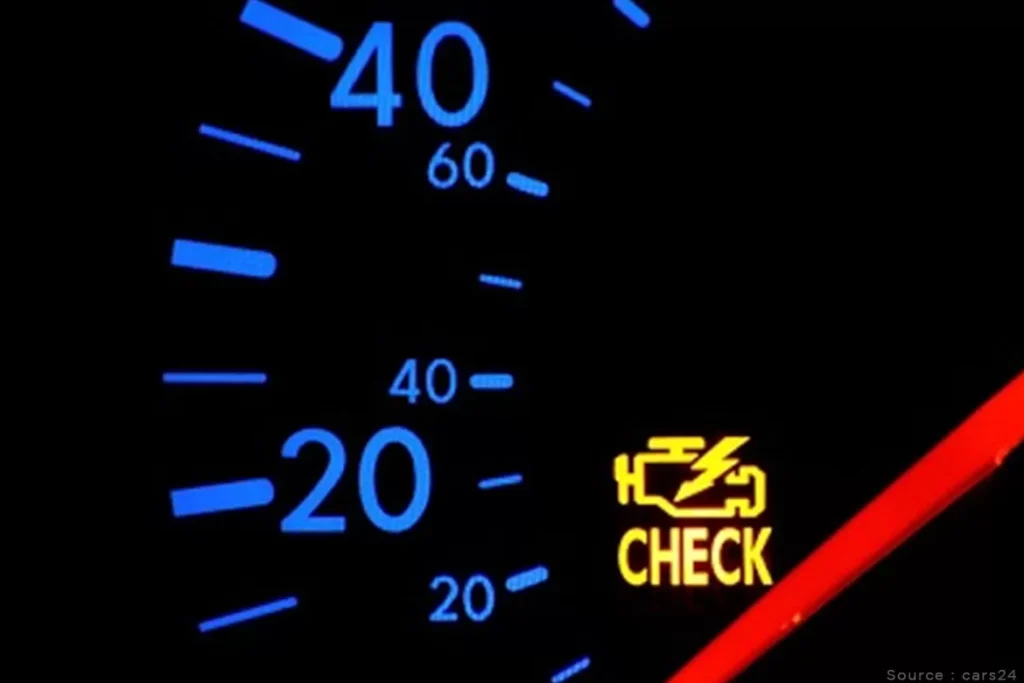
Why Check Engine Doesn’t Always Mean a Breakdown
Modern VAG engines are equipped with a complex electronic control system that constantly monitors the operation of the engine through dozens of sensors. Even minimal fluctuations in parameters – pressure, temperature, fuel composition, shaft position – can be recorded by the control unit as an error that triggers the Check Engine signal. At the same time, the engine often operates stably, without loss of power or increased fuel consumption.
For the car owner, this may come as a surprise: the light comes on, but there are no signs of a breakdown. In fact, in most cases this is a temporary electronic adaptation or software failure, and not a serious malfunction. Understanding the mechanisms for triggering the signal helps to avoid unjustified intervention and preserve the engine’s resource.
The main reasons for the appearance without symptoms
The reasons can be divided into several categories:
- Sensors and sensors. Oil pressure, coolant temperature, oxygen and crankshaft and camshaft position sensors respond to any signal fluctuations. The system can record short-term deviations as an error, even if the engine is running unchanged.
- Engine adaptations. After a cold start or short trips, the system makes corrections to the valve timing and fuel supply, which sometimes activates the Check Engine signal.
- Software failures and software updates. Some versions of the control unit firmware do not process sensor signals correctly. After a software update, temporary errors may appear more often.
- External conditions. Humidity, low fuel quality, temperature changes or prolonged parking of the car can trigger a check engine signal.
- Electronic power limitations. The control unit can temporarily change the valve timing or limit fuel supply to protect the engine, which is imperceptible to the driver, but is recorded as an error.
Such factors may recur periodically, especially in older engines or after complex service work.
Signs of temporary errors
You can determine that a VAG engine error is a temporary error by the following signs:
- the engine runs stably, without jerks and loss of traction;
- the light stays on for a short time or disappears after restarting;
- fuel consumption does not change;
- engine sounds remain normal;
- the error repeats only under certain conditions (for example, cold start or high humidity).
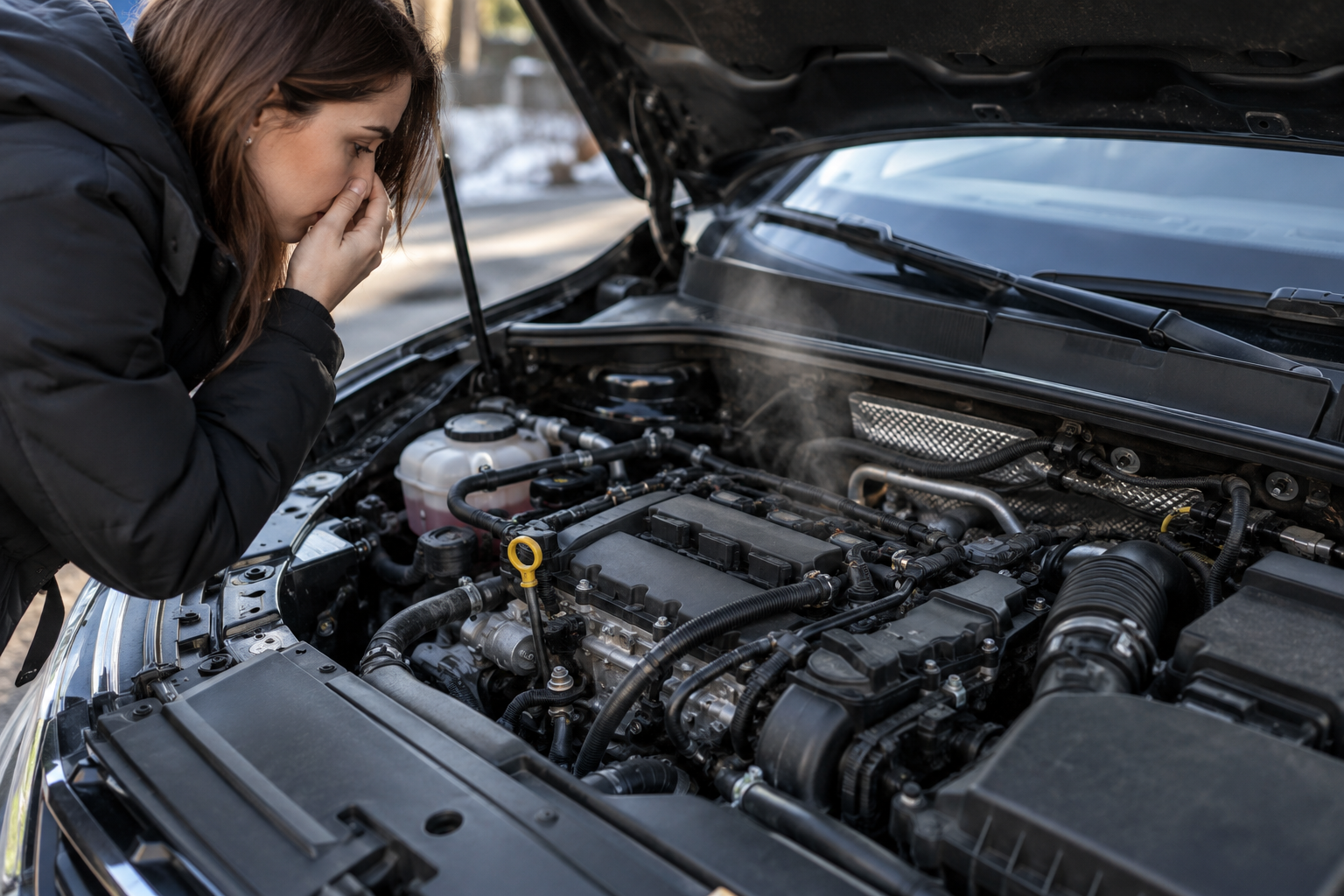
If any additional signs appear – smoke, burning smell, extraneous noises – the signal already indicates a serious problem.
Can I continue driving
In cases of Check without problems, the car can usually be operated. It is recommended to:
- avoid high revs and sharp accelerations;
- monitor engine temperature and oil pressure;
- record the error code using a scanner;
- monitor the repeatability of the signal;
- record the conditions under which the error appears.
This allows the driver to monitor the condition of the engine and not damage the engine due to imperceptible electronic failures.
When immediate diagnostics are required
You should immediately contact the service in case of:
- unstable engine operation, jerks or loss of power;
- appearance of smoke or a burning smell;
- increased fuel consumption;
- re-ignition of the signal after it has disappeared;
- the appearance of errors in the turbine or gas recirculation system sensors.
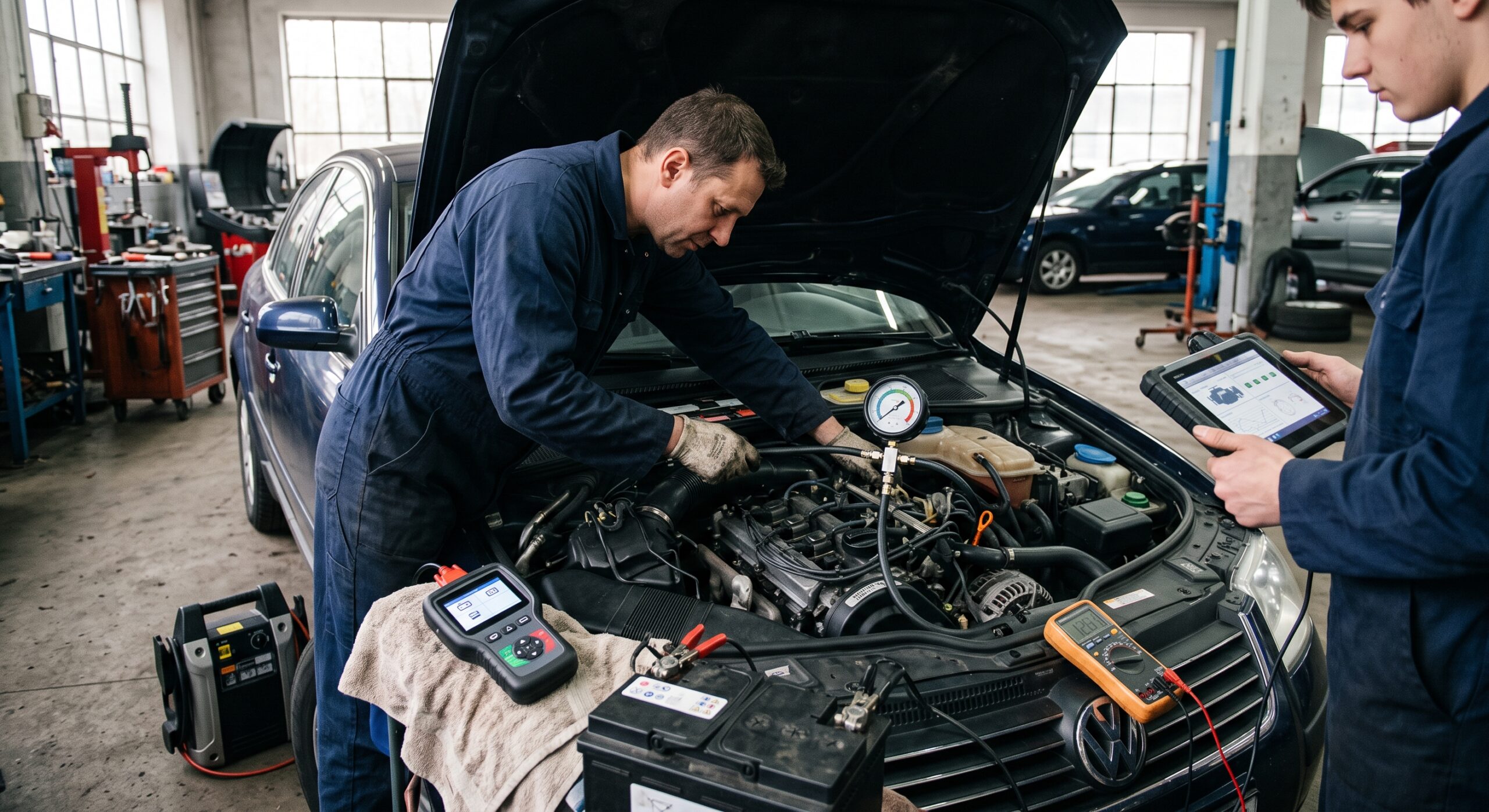
Scanning the control unit helps determine the nature of the problem: software, electronic or mechanical, and prevent expensive repairs.
Why ignoring it can be dangerous
Even if the engine is running stably, ignoring Check Engine can lead to:
- accumulation of minor errors in adaptations;
- incorrect operation of the fuel system and sensors;
- premature wear of the turbine, valves and valve timing;
- manifestation of hidden mechanical problems at a critical moment.
Timely diagnostics allows you to maintain the engine’s resource and provides control over VAG electronics.
Top popular news
- There is a smell of gasoline under the hood, but there are no signs of a leak: where to look for the problem
- Volkswagen Golf 7: which engines are considered the most successful in the secondary market
- Why do errors appear after a night frost that disappear after warming up?
- The car stalls when you suddenly release the gas: what happens at this moment
- Audi A6 with 200+ thousand mileage: what expensive malfunctions can be predicted in advance
- Why does my car start to consume more oil even though my driving style hasn’t changed?
- The ABS light came on on the dashboard: can I continue driving?
- Volkswagen Passat B8 or Skoda Superb: what will the car show after 200 thousand km

Subscribe to our newsletter!
To stay updated with the latest news

Book a service