Mon - Sat | 09:00 - 19:00


Find

Contact us

Odesa
Hrushevskoho str., 41
 Мережа СТО в місті
Місто
 +38 (096) 299 29 97
Odesa
Hrushevskoho str., 41
 Мережа СТО в місті
Місто
+38 (096) 299 29 97

 Години роботи
 Mon - Sat
09:00 - 19:00
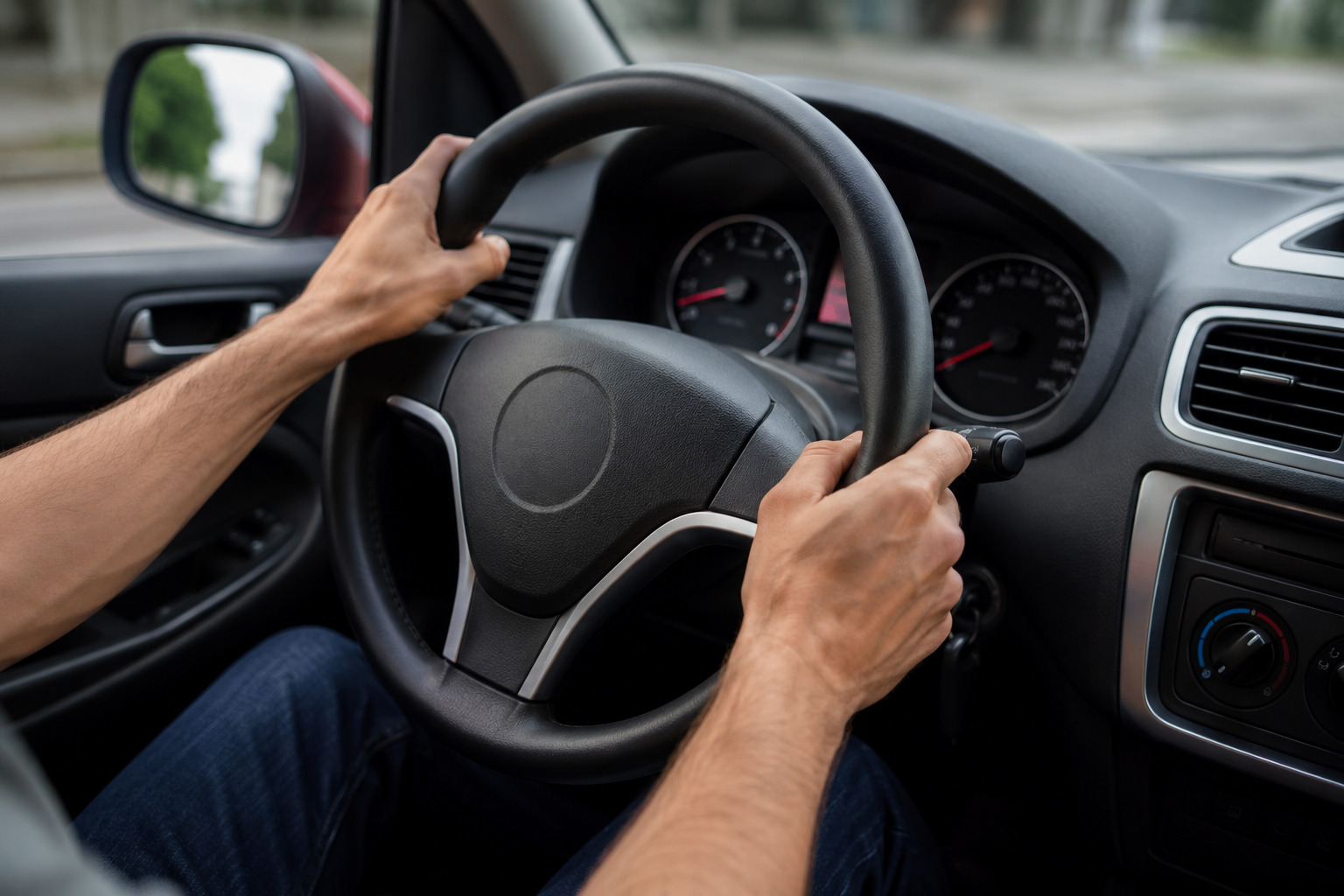
Why a Car Pulls to One Side While Driving
Why a Vehicle May Start Changing Its Driving Direction
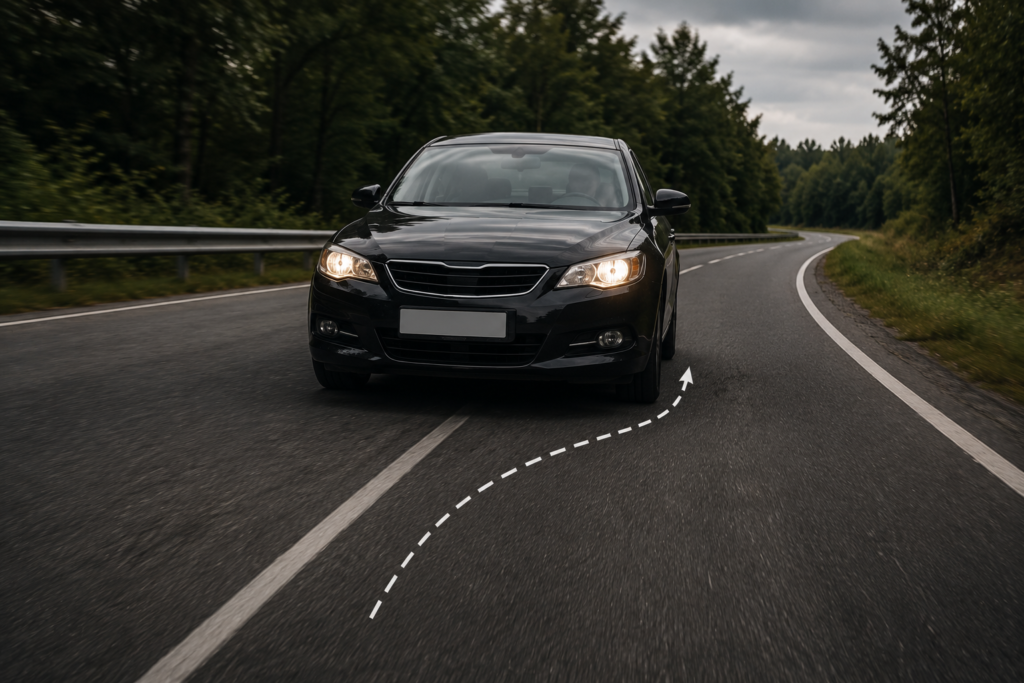
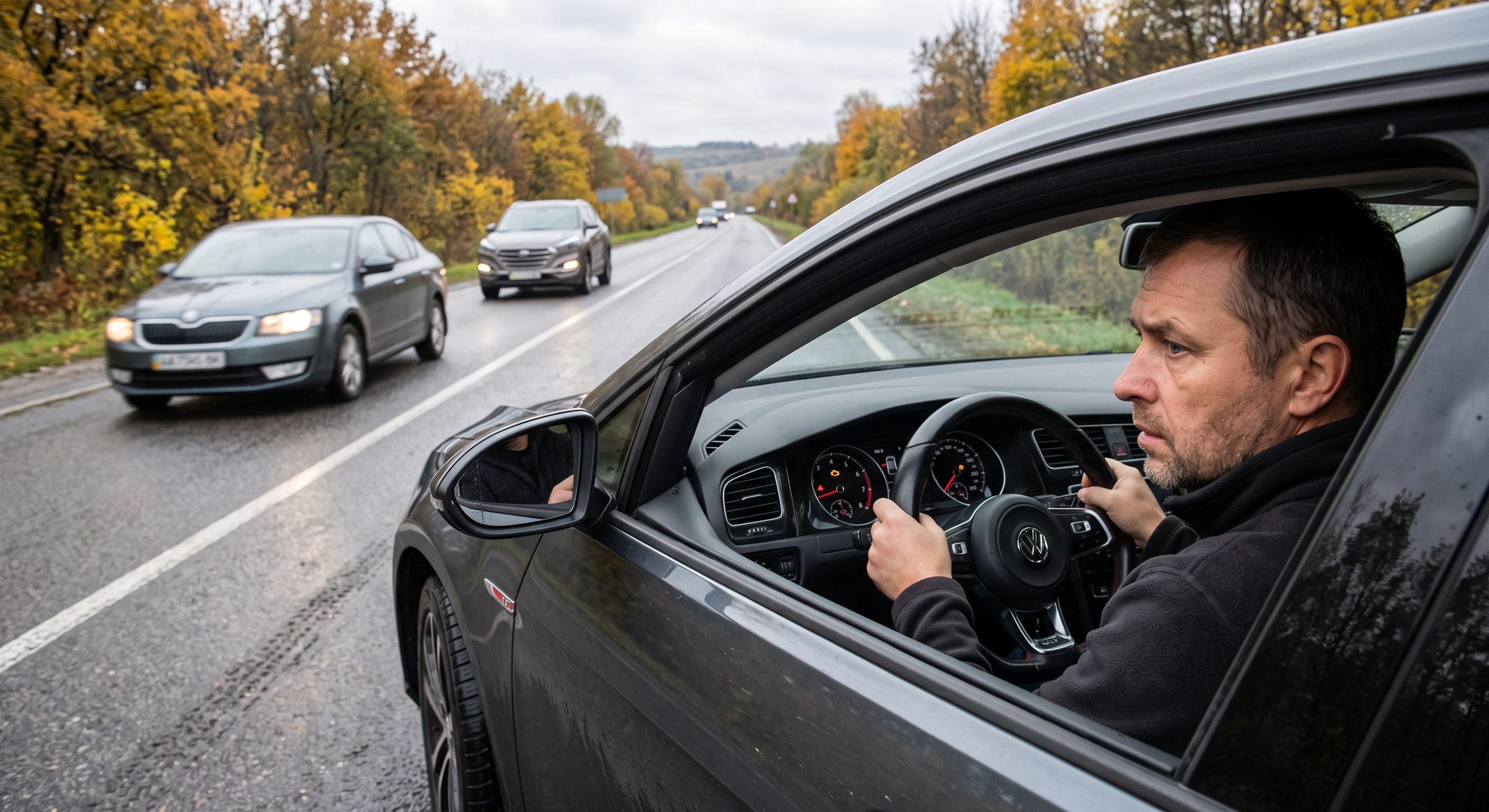
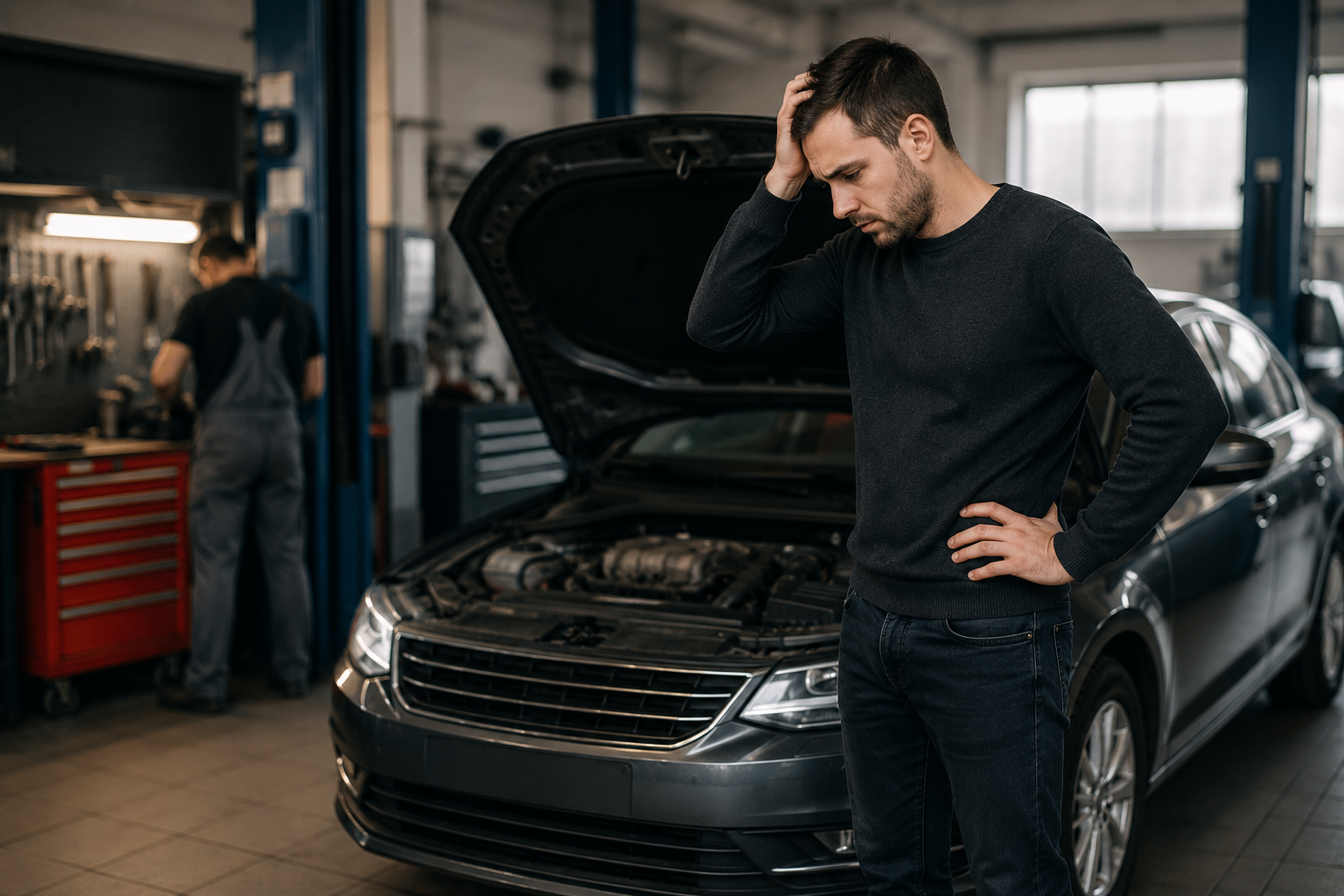
A vehicle may begin changing its driving direction gradually, which is why drivers do not always notice the problem immediately. At first, the car may only drift slightly to one side, requiring constant steering corrections. Over time, the vehicle may pull more noticeably even on a flat road without potholes or ruts.
In some cases, the issue only appears during braking or at higher speeds. Sometimes the vehicle constantly pulls to one side regardless of the road surface. The causes can vary, ranging from incorrect tire pressure to suspension or braking system problems.
The most common symptoms include:
- the car pulls to the right or left;
- the vehicle drifts even when the steering wheel is straight;
- the car reacts more strongly to road ruts than before;
- constant steering corrections are required;
- the steering wheel is off-center while driving straight.
Many drivers get used to this behavior, although reduced vehicle stability gradually affects not only driving comfort but also road safety.
Main Reasons Why a Car Pulls to One Side
In most cases, a vehicle pulls to one side because of issues with the wheels or suspension system. One of the simplest causes is incorrect tire pressure. If one tire is significantly underinflated compared to the others, the vehicle may begin changing direction even without steering input.
Other possible causes include:
- uneven tire wear;
- tire deformation;
- damaged wheel rims;
- wheel balancing issues;
- play in suspension components;
- faulty shock absorbers.
Quite often, a car starts pulling to the right or left after hitting a pothole or curb. In such cases, wheel alignment angles may shift or suspension components may become damaged.
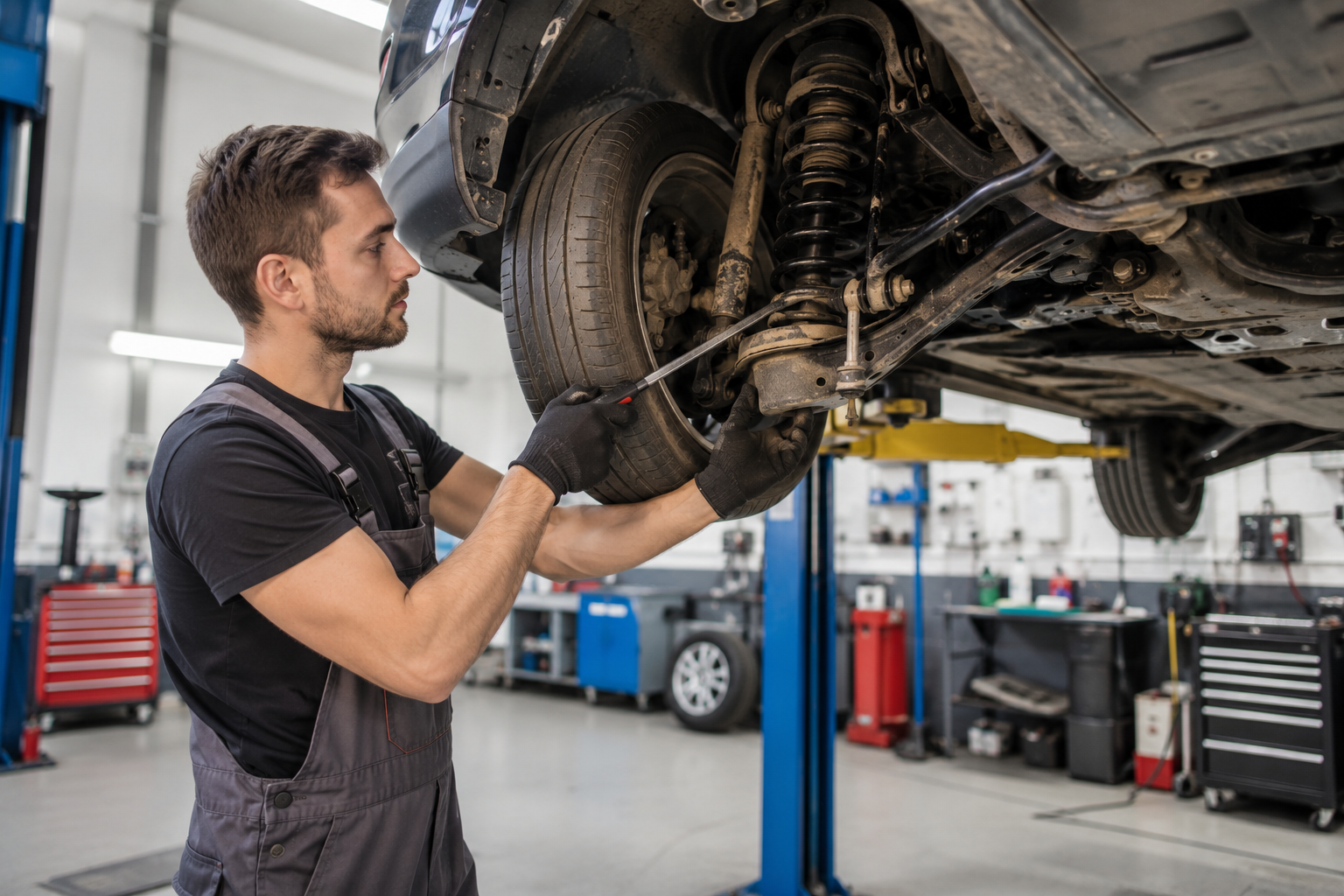
The problem can also result from worn suspension parts. Excessive play in bushings, ball joints, or tie rod ends affects the vehicle’s stability while driving.
Brake system issues should also be considered. If one brake caliper is malfunctioning or sticking, the vehicle may pull to one side during braking.
How Tires and Wheel Alignment Affect Handling
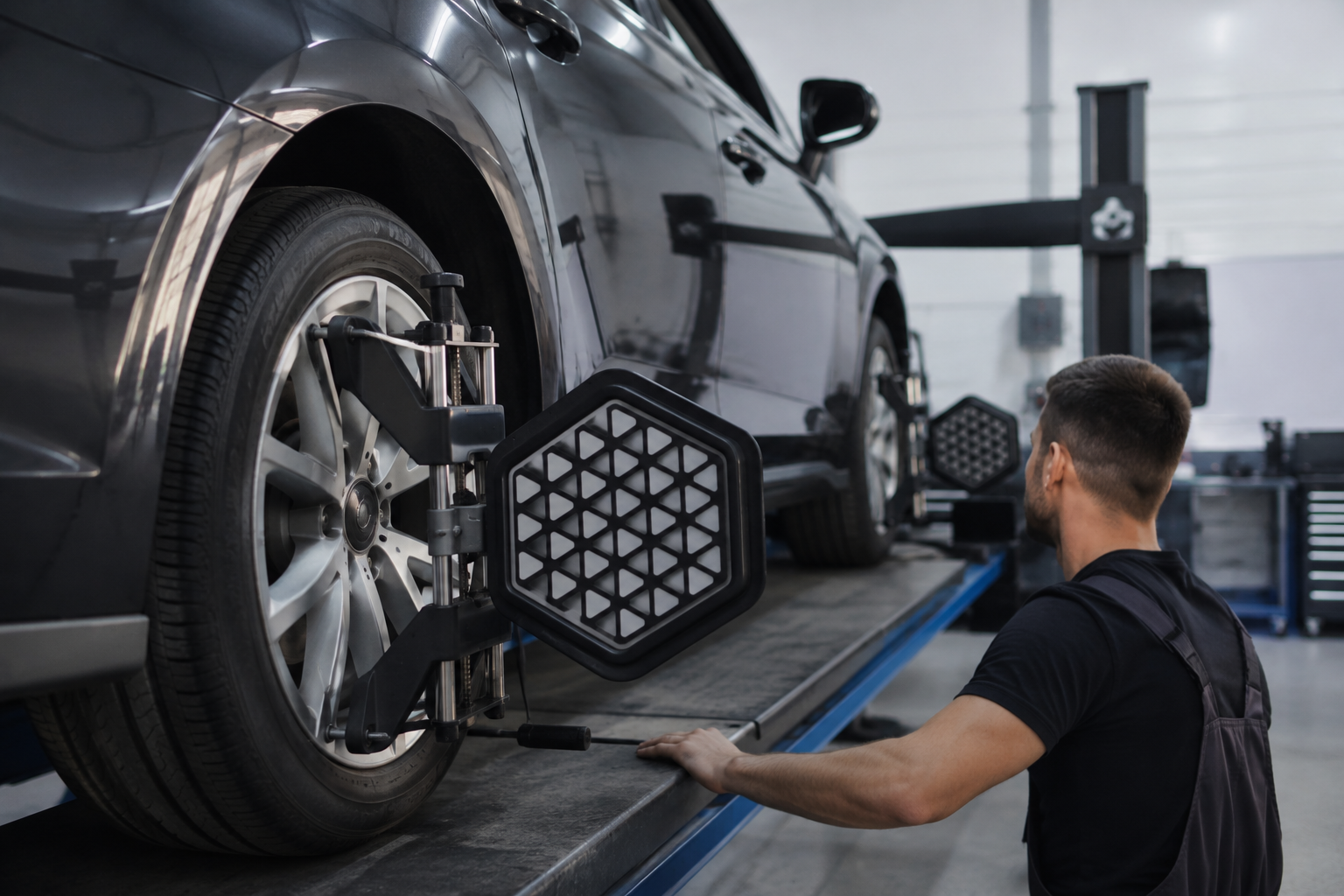
Wheel alignment directly affects how a vehicle behaves on the road. If the wheel alignment angles are incorrect, the car may drift even when the steering wheel is centered.
Alignment problems often occur:
- after hitting potholes;
- after suspension repairs;
- due to worn suspension components;
- after striking a curb;
- after prolonged operation without suspension inspection.
In such situations, the driver may notice that the steering wheel is no longer centered and the vehicle pulls to one side even on a smooth road surface.
Incorrect wheel alignment also accelerates tire wear. The tread often wears more heavily on one side, and the vehicle becomes less stable at higher speeds.
The condition of the tires themselves also affects handling. If a tire has internal damage or deformation, the vehicle may continue changing direction even after balancing and wheel alignment adjustments.
When the Problem Is Related to the Suspension or Brakes
If a vehicle constantly pulls to one side, the issue is often related to the suspension system or brakes.
Worn shock absorbers may distribute load unevenly across the wheels, causing the vehicle to lose stability while driving. This is especially noticeable on uneven roads or during sudden braking.
Other possible causes include:
- play in the steering system;
- worn suspension bushings;
- faulty ball joints;
- worn tie rod ends;
- brake system malfunctions.
If the vehicle pulls to one side specifically while braking, the brake calipers, wheel cylinders, and brake pads should be inspected.
Sometimes the problem only appears after a long drive, when one of the brake mechanisms begins overheating and operating unevenly.
Why You Should Not Ignore a Vehicle Pulling to One Side
Even if a car only drifts slightly, it already indicates that one of its systems is not functioning properly. Over time, the issue usually becomes more severe and starts affecting other components.
A persistent deviation from the intended driving path can lead to:
- accelerated tire wear;
- reduced handling and stability;
- increased stress on the suspension system;
- additional load on chassis components;
- decreased braking efficiency.
This is particularly dangerous during emergency braking or high-speed driving.
If your vehicle regularly pulls to one side, you should check the tire pressure, inspect the suspension system, examine the braking system, and perform a suspension diagnostic inspection. In many cases, the problem can be resolved at an early stage without requiring major repairs.
Top popular news
- There is a smell of gasoline under the hood, but there are no signs of a leak: where to look for the problem
- Volkswagen Golf 7: which engines are considered the most successful in the secondary market
- Why do errors appear after a night frost that disappear after warming up?
- The car stalls when you suddenly release the gas: what happens at this moment
- Audi A6 with 200+ thousand mileage: what expensive malfunctions can be predicted in advance
- Why does my car start to consume more oil even though my driving style hasn’t changed?
- The ABS light came on on the dashboard: can I continue driving?
- Volkswagen Passat B8 or Skoda Superb: what will the car show after 200 thousand km

Subscribe to our newsletter!
To stay updated with the latest news

Book a service