Mon - Sat | 09:00 - 19:00


Find

Contact us

Odesa
Hrushevskoho str., 41
 Мережа СТО в місті
Місто
 +38 (096) 299 29 97
Odesa
Hrushevskoho str., 41
 Мережа СТО в місті
Місто
+38 (096) 299 29 97

 Години роботи
 Mon - Sat
09:00 - 19:00
DSG oil changes: why the factory schedule does not always work in real life
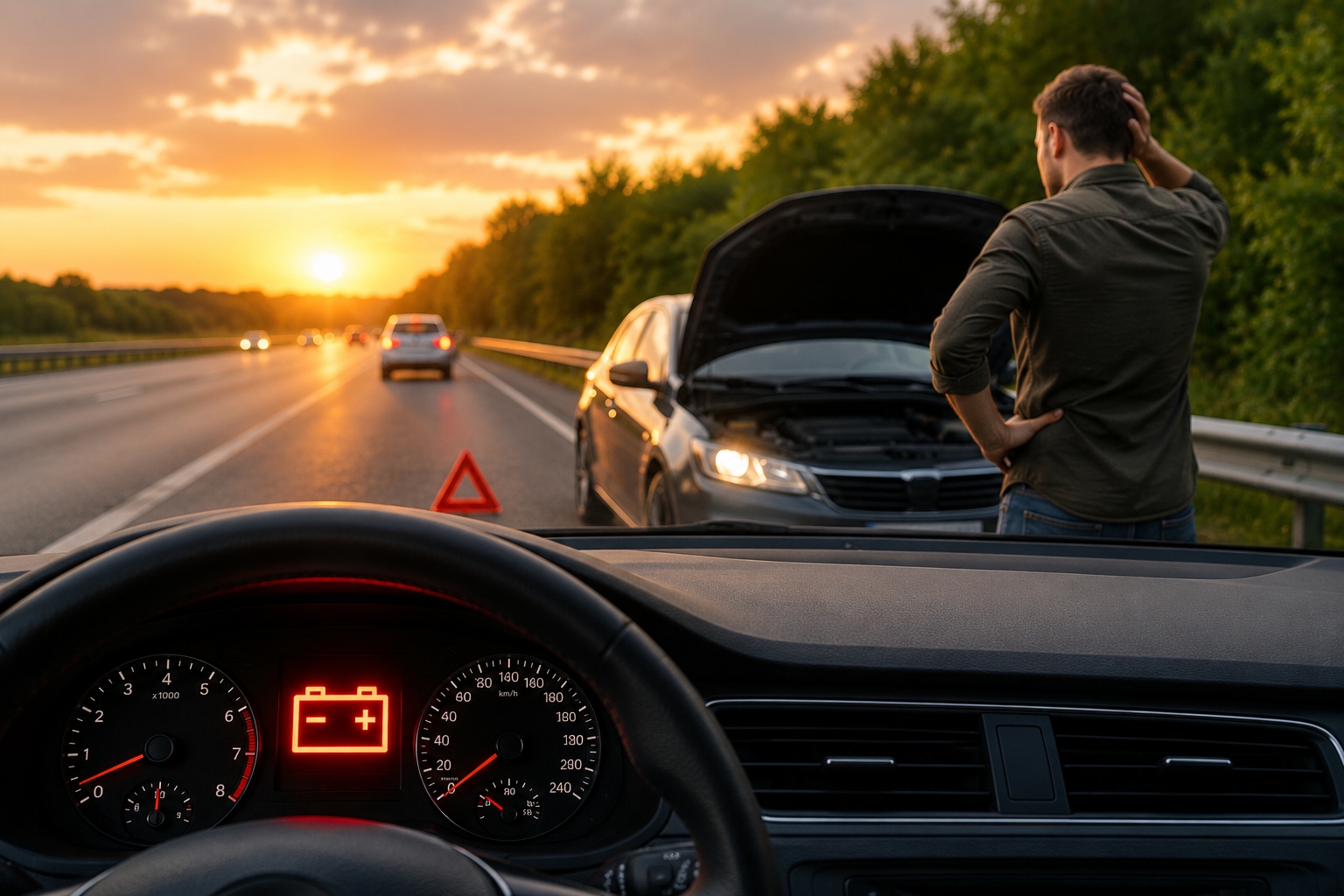
assume the transmission requires no attention before that mileage. This approach works only when the vehicle is operated under the conditions the manufacturer had in mind. Daily traffic jams, short urban routes, high ambient temperatures, and frequent acceleration change the picture. Under these loads, the transmission fluid ages faster and internal components operate under more demanding conditions.
The question of the DSG oil-change interval often arises only after the first jolts during gear changes appear. In reality, there is no reason to wait for transmission behaviour to change. By that point, the fluid has already lost some of its properties and wear particles have begun circulating inside the unit.
How DQ200, DQ250, and DQ381 differ
One of the most common mistakes is servicing all DSG transmissions in the same way. Despite the similar naming, their construction differs.
The DQ200 uses a dry clutch. Its oil primarily lubricates the mechanical section of the gearbox and does not come into contact with the clutch packs.
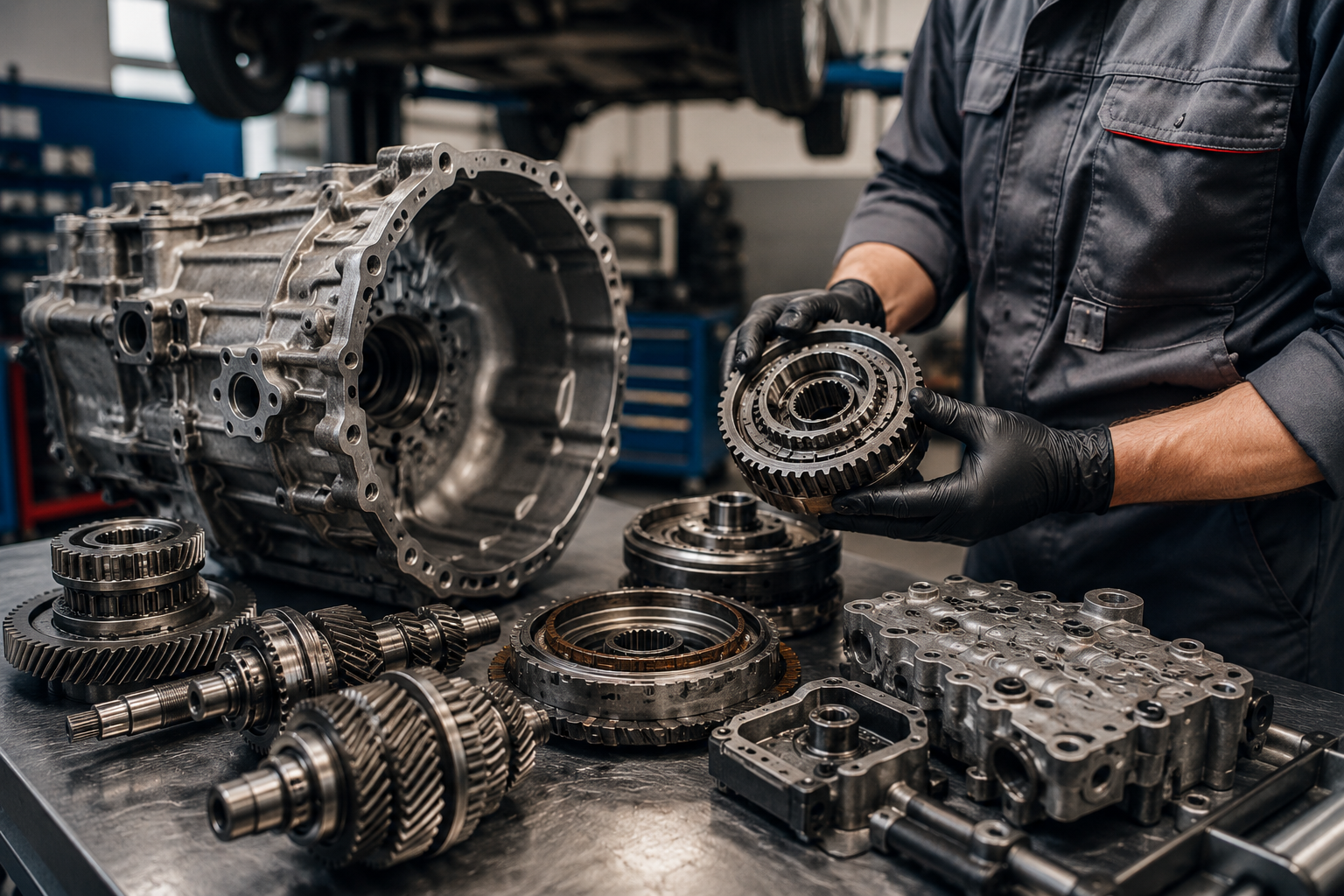
The DQ250 and DQ381 use wet clutches. In these transmissions, the fluid not only lubricates components but also cools the clutch discs, carries away wear debris, and helps maintain a stable operating temperature.
Because the designs differ, the service requirements differ as well.
Maintenance must take into account:
- the oil-change interval for the DQ250 and other variants;
- the oil capacity specified for the particular 7-speed DSG;
- which oil should be used in accordance with the factory approval;
- the transmission type and the fluid recommended for the particular dual-clutch gearbox.
There is no universal procedure. Even cars from the same brand may require different servicing if they use different DSG transmission models.
What happens to the fluid in constant traffic jams
Urban stop-and-go traffic creates some of the harshest operating conditions for a DSG. The car repeatedly pulls away, stops, and moves again. The number of gear changes during one trip can be several times higher than on an open road.
Frequent heating cycles gradually reduce fluid stability. Its viscosity changes, its ability to dissipate heat declines, and fine metal particles and friction debris accumulate inside the transmission. At the same time, clutch wear accelerates, while the coarse filter can no longer trap all abrasive particles completely.
There is another important point. A vehicle that spends an hour and a half in traffic every day can place much greater load on its transmission than a higher-mileage car that spends most of its time on open roads.
How saving on maintenance leads to mechatronic repairs
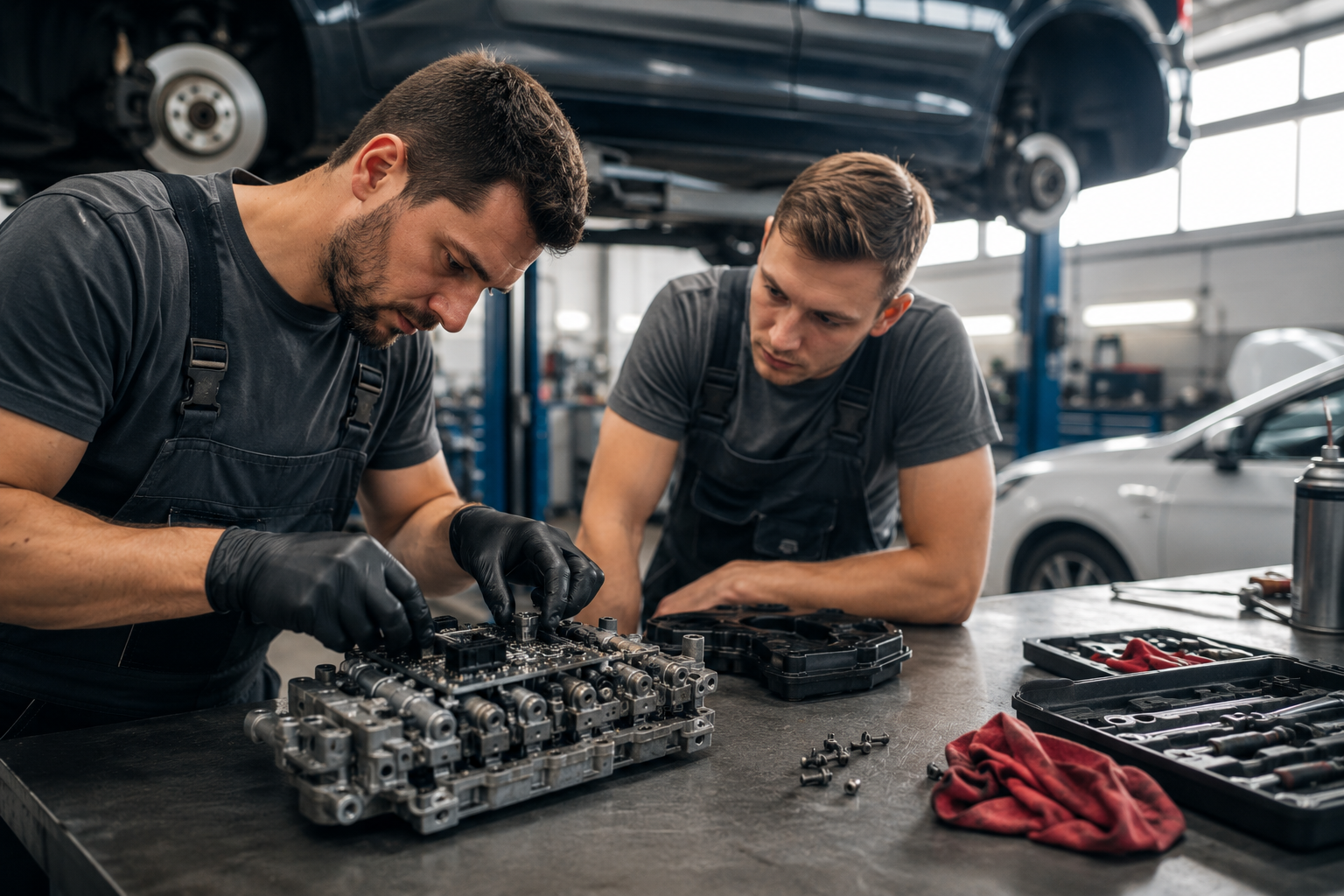
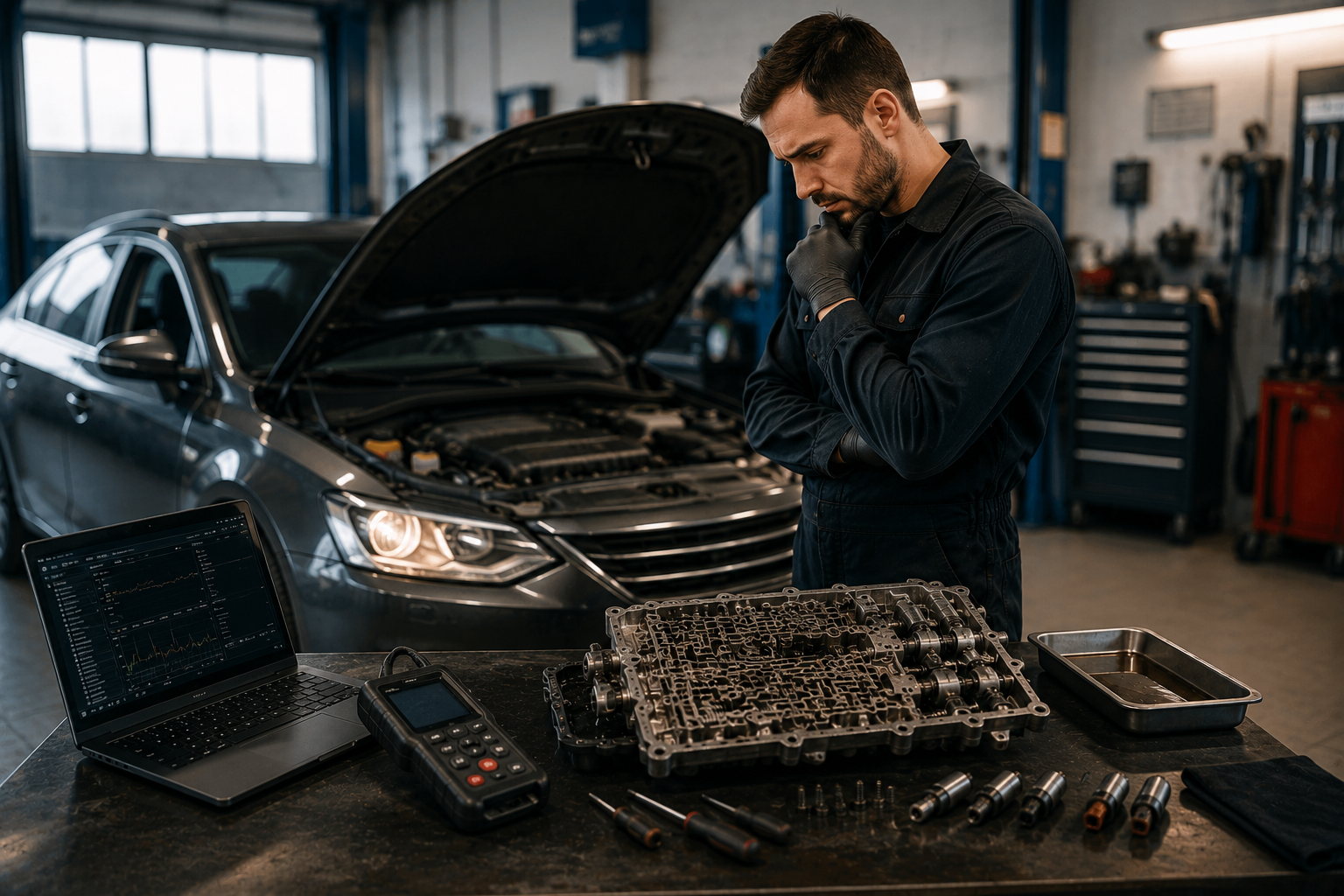
The mechatronic unit controls gear changes, clutch operation, and every change in load. For its valves to operate accurately, it needs clean fluid with stable characteristics. If the fluid has degraded or contains wear products, the hydraulic system begins to operate less precisely.
At first, the driver may notice slight jerks, a delay during gear changes, or different transmission behaviour after warming up. If the vehicle continues to be used without servicing, loads on internal components increase and the risk of expensive repairs rises significantly. This is why scheduled fluid replacement is often far cheaper than rebuilding the mechatronic unit or replacing the clutch.
What a proper DSG oil change includes
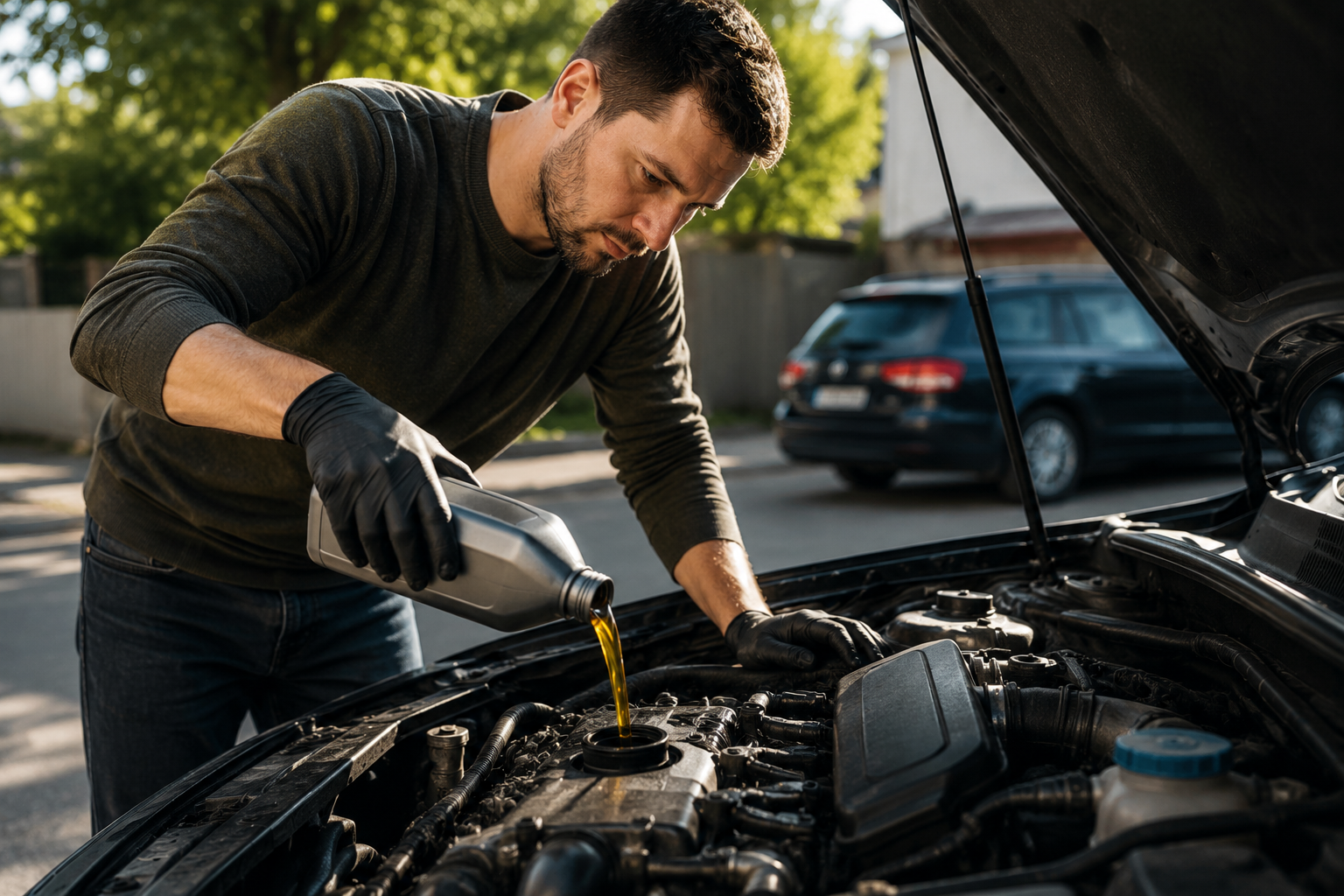
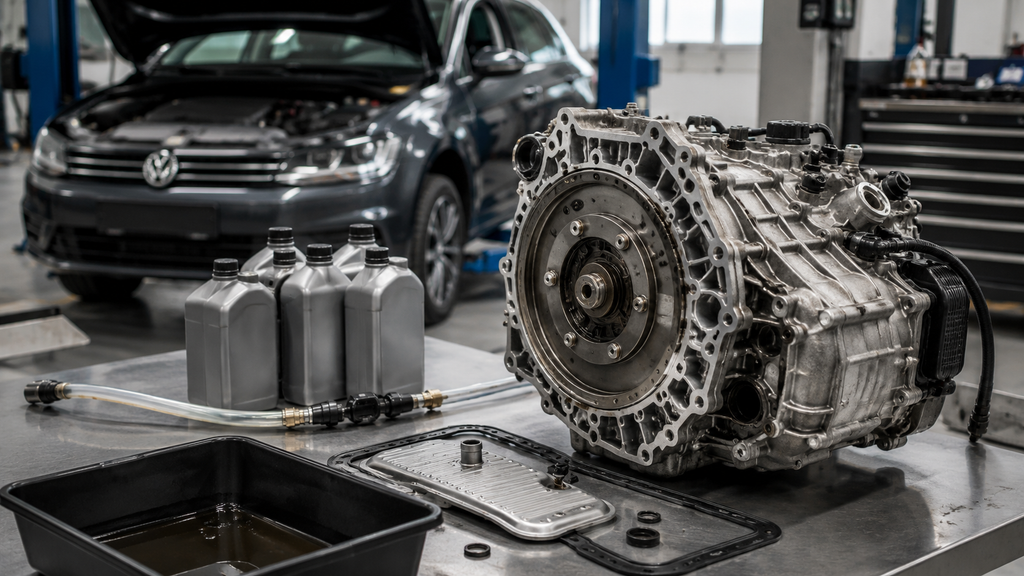
Quality servicing is not limited to draining the old fluid and filling the transmission with new oil. The result depends on following the complete procedure.
The service typically includes:
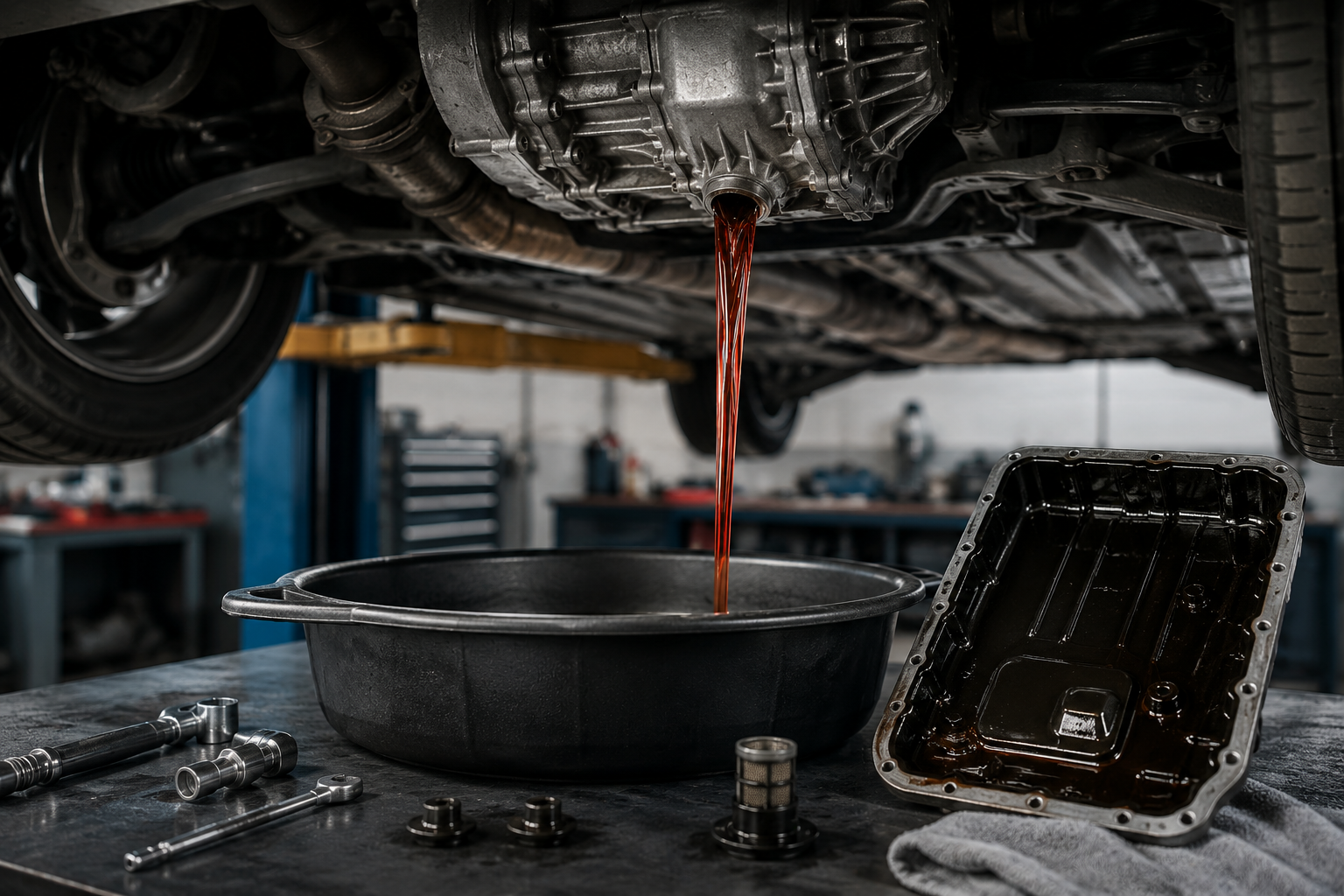
- draining the used fluid;
- replacing the filter where the design provides for one;
- cleaning the sealing and mounting surfaces;
- refilling the transmission with fluid that meets the required specification;
- checking the level at the temperature specified by the manufacturer;
- checking for leaks after the work is complete.
When evaluating the cost of DSG filter replacement, the price of the service should not be the only criterion. It is far more important whether the workshop follows the correct procedure and uses materials specified for the particular transmission model.
Why adaptation may be performed after servicing
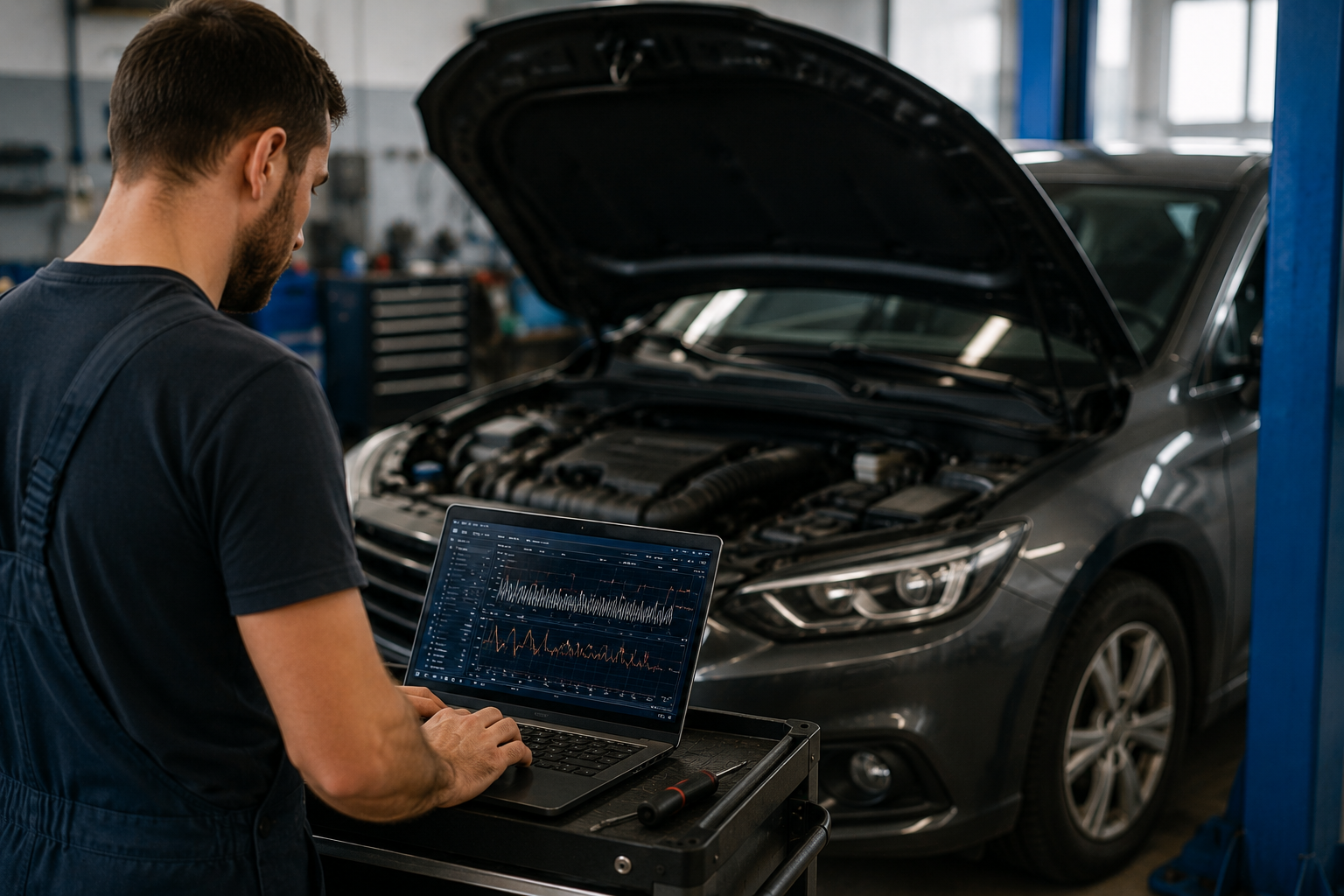
After the fluid is renewed, some versions of the dual-clutch transmission require additional electronic setup. DSG adaptation after an oil change helps the control unit adjust operating parameters to the condition of the new fluid and the actual wear of the components.
The procedure performs a basic transmission adaptation. The electronics relearn operating parameters, after which gear changes can become smoother and component loads are distributed more correctly. This procedure is most often required after comprehensive servicing or repair.
The factory maintenance schedule does not account for daily traffic jams, prolonged operation in hot weather, and constant short trips. If a vehicle spends most of its time in these conditions, shortening the service interval can be justified. Regular oil and filter replacement costs far less than repairing the transmission once contamination has already affected the mechatronic unit and other expensive components.
Top popular news
- Steering Tie Rod Knocking: Symptoms and How Not to Confuse It with a Faulty Rack
- How to Read US Car Auction Photos and See More Than the Camera Shows
- Restoring Vehicle Safety After Airbag Deployment: Why Cheap SRS Repairs Are Dangerous
- VAG Comfort Control Module: Simultaneous Failure of Locks, Mirrors, and Power Windows
- The Heater Blows Weakly, and the Engine Takes a Long Time to Warm Up: Where to Look for the Cause
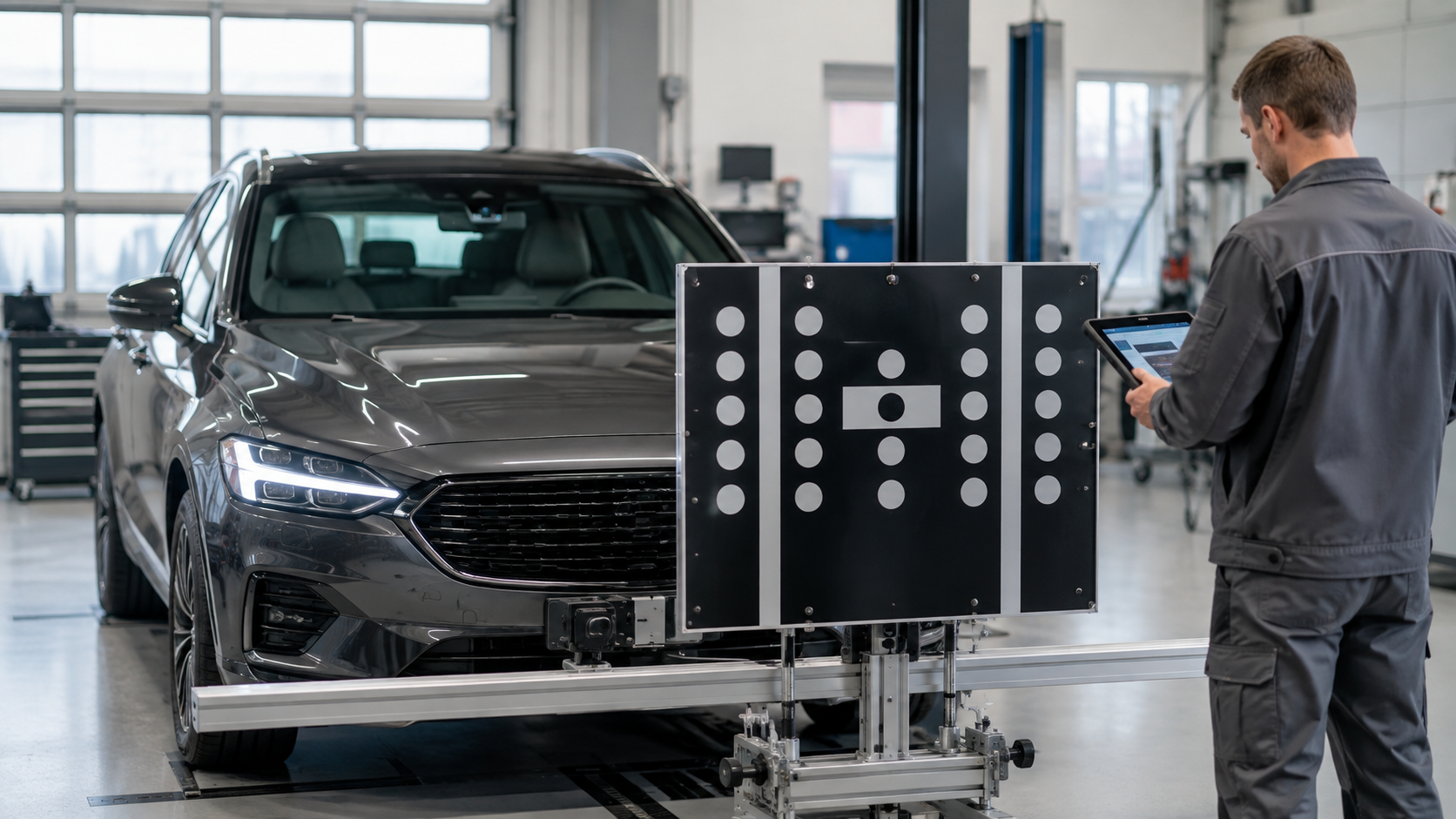
- ADAS calibration after windshield replacement: restoring the accuracy of driver-assistance systems
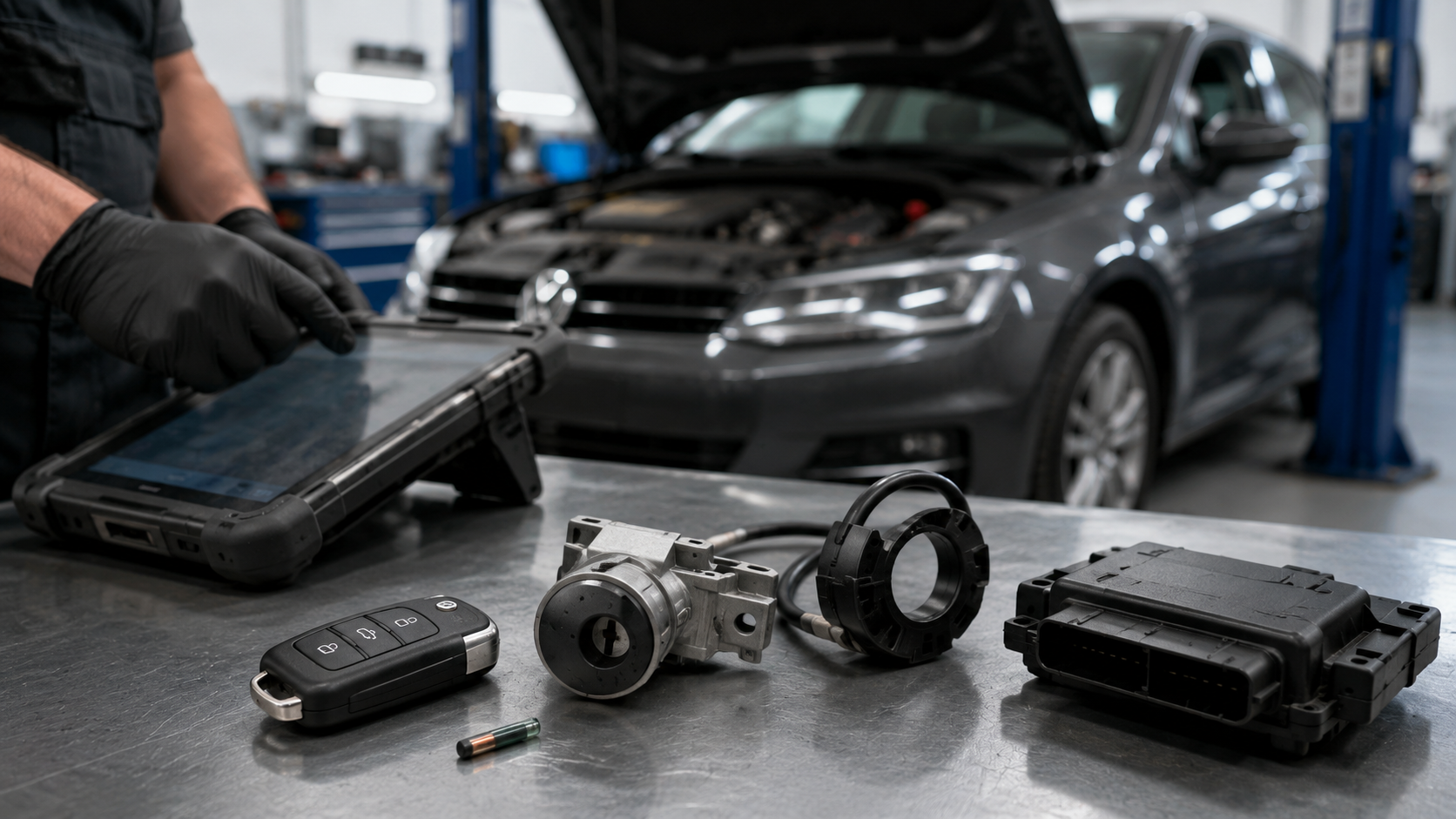
- VAG immobilizer: why the car will not start and the key transponder is not recognized
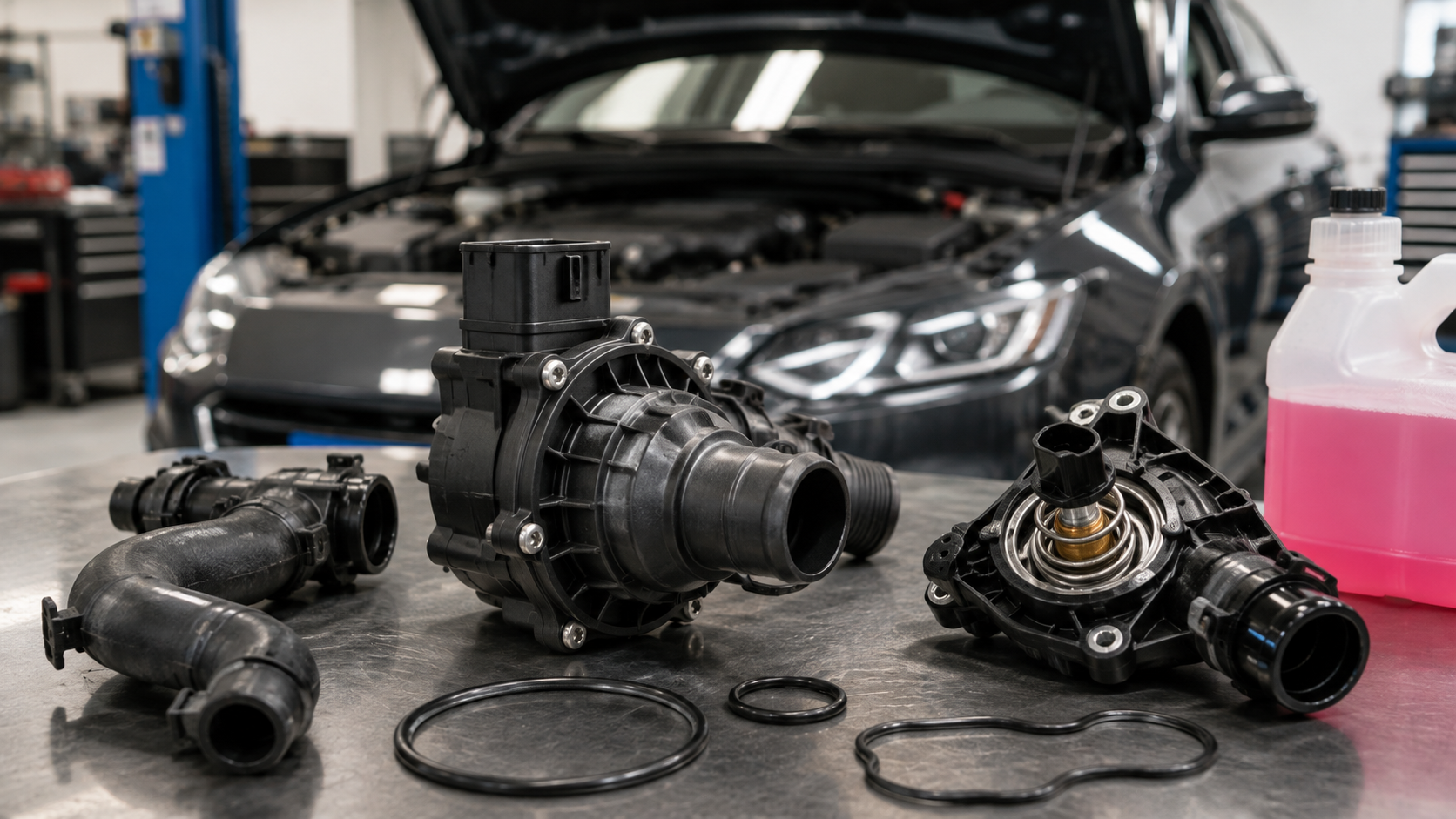
- TSI coolant pump and thermostat: causes of slow warm-up and engine overheating

Subscribe to our newsletter!
To stay updated with the latest news

Book a service