Mon - Sat | 09:00 - 19:00


Find

Contact us

Odesa
Hrushevskoho str., 41
 Мережа СТО в місті
Місто
 +38 (096) 299 29 97
Odesa
Hrushevskoho str., 41
 Мережа СТО в місті
Місто
+38 (096) 299 29 97

 Години роботи
 Mon - Sat
09:00 - 19:00
What Affects Tire Wear and How to Extend Tire Life
What Determines the Actual Service Life of a Set of Tires
Tire manufacturers usually specify the estimated lifespan of their products, but in practice, identical sets of tires can wear out very differently. One driver may use a set of tires for several seasons without any issues, while another may need a replacement much sooner. The reason lies not only in the quality of the tires.
The rate of tire wear is influenced by driving style, road surface conditions, tire pressure, suspension condition, wheel alignment accuracy, and the regularity of vehicle maintenance. Even minor deviations in the operation of the suspension system can gradually reduce tread life while remaining unnoticed by the driver.
That is why tire wear should be viewed not simply as a natural process of rubber abrasion, but also as one of the indicators of a vehicle’s technical condition. The wear pattern often makes it possible to identify a problem before it begins affecting handling or driving comfort.
Types of Uneven Tire Wear and What Malfunctions They Indicate
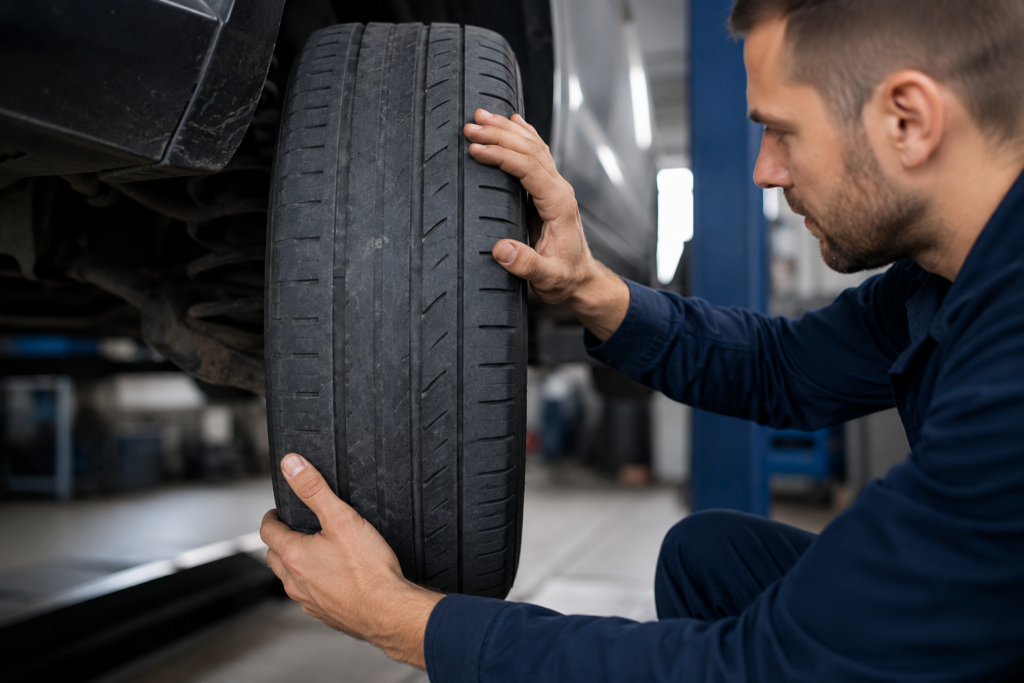
Uneven tire wear rarely occurs without a reason. In most cases, the tread literally indicates which vehicle components require attention.
Wear in the Center of the Tread
If the center section of the tire tread wears out the fastest, the first thing to check is tire pressure. An overinflated tire contacts the road mainly through the center of the tread, causing the load to be distributed unevenly.
In addition to accelerated wear, this situation may reduce traction, especially in rainy conditions.
Wear on the Edges
When the outer edges of the tread wear faster, the problem is most often related to insufficient tire pressure. Due to constant deformation, the tire heats up more and its shoulder areas experience increased stress.
Long-term operation in this condition reduces tire life even when no other faults are present.
Wear on the Inner or Outer Side of the Tire
If the inner side of the tire or the outer edge of the tread wears faster than other areas, the cause should be sought in incorrect wheel alignment angles. In most cases, this wear pattern indicates the need for a wheel alignment check.
Such wear may also result from worn suspension components or the consequences of severe impacts with potholes and curbs.
Patchy or Wavy Wear
Uneven wear spots across different areas of the tire often indicate problems with shock absorbers, wheel balancing, or certain suspension components.
In such cases, installing a new set of tires without addressing the root cause does not solve the problem the new tires will begin wearing in the same manner.
To identify problems in time, it is important to regularly monitor tread condition. Most modern tires have a tire wear indicator special raised bars located inside the tread grooves. When the tread surface becomes level with these indicators, the tire is considered worn out and must be replaced.
During inspections, it is also advisable to evaluate tread depth and the uniformity of wear across the entire width of the tire. This is the simplest way to check tire wear between visits to a tire service center.
How Incorrect Tire Pressure “Destroys” the Tread
Among all causes of tire wear, incorrect tire pressure remains one of the most common. Many drivers check their tires only before a long trip or after receiving a warning from the tire pressure monitoring system.
Even a slight deviation from the recommended pressure affects tire performance. Excessive pressure causes the center of the tread to wear faster, while insufficient pressure places the main load on the shoulder areas.
In addition to accelerated wear, incorrect tire pressure can lead to:
- increased fuel consumption;
- reduced directional stability;
- longer braking distances;
- uneven load distribution on suspension components.
Regular tire pressure checks take only a few minutes but can significantly extend the lifespan of a set of tires.
The Impact of the Suspension System and Wheel Alignment on Tire Condition
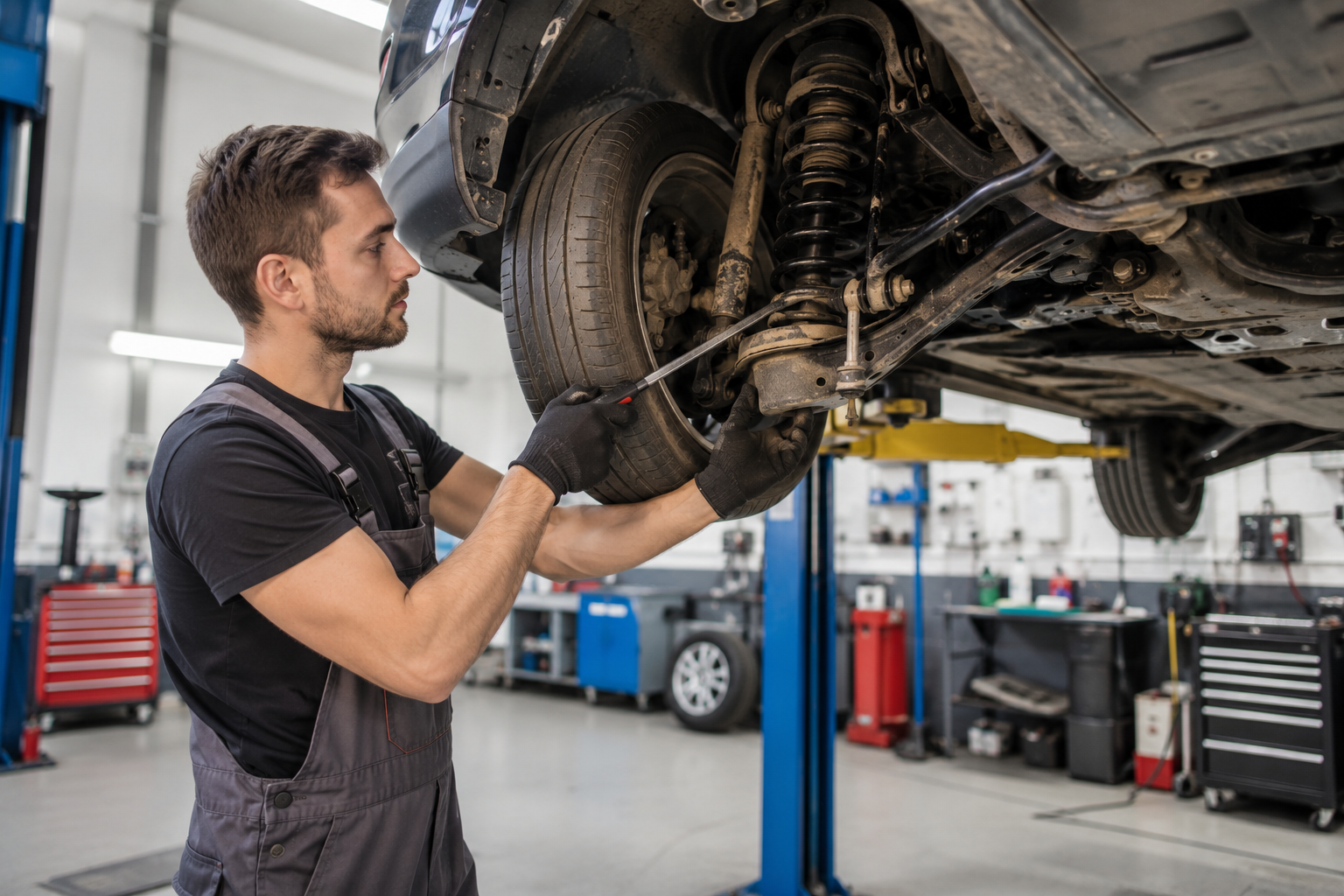
Even high-quality tires cannot wear evenly if the suspension is not functioning correctly. Play in suspension components, worn shock absorbers, or incorrect wheel alignment angles directly affect how the tire contacts the road surface.
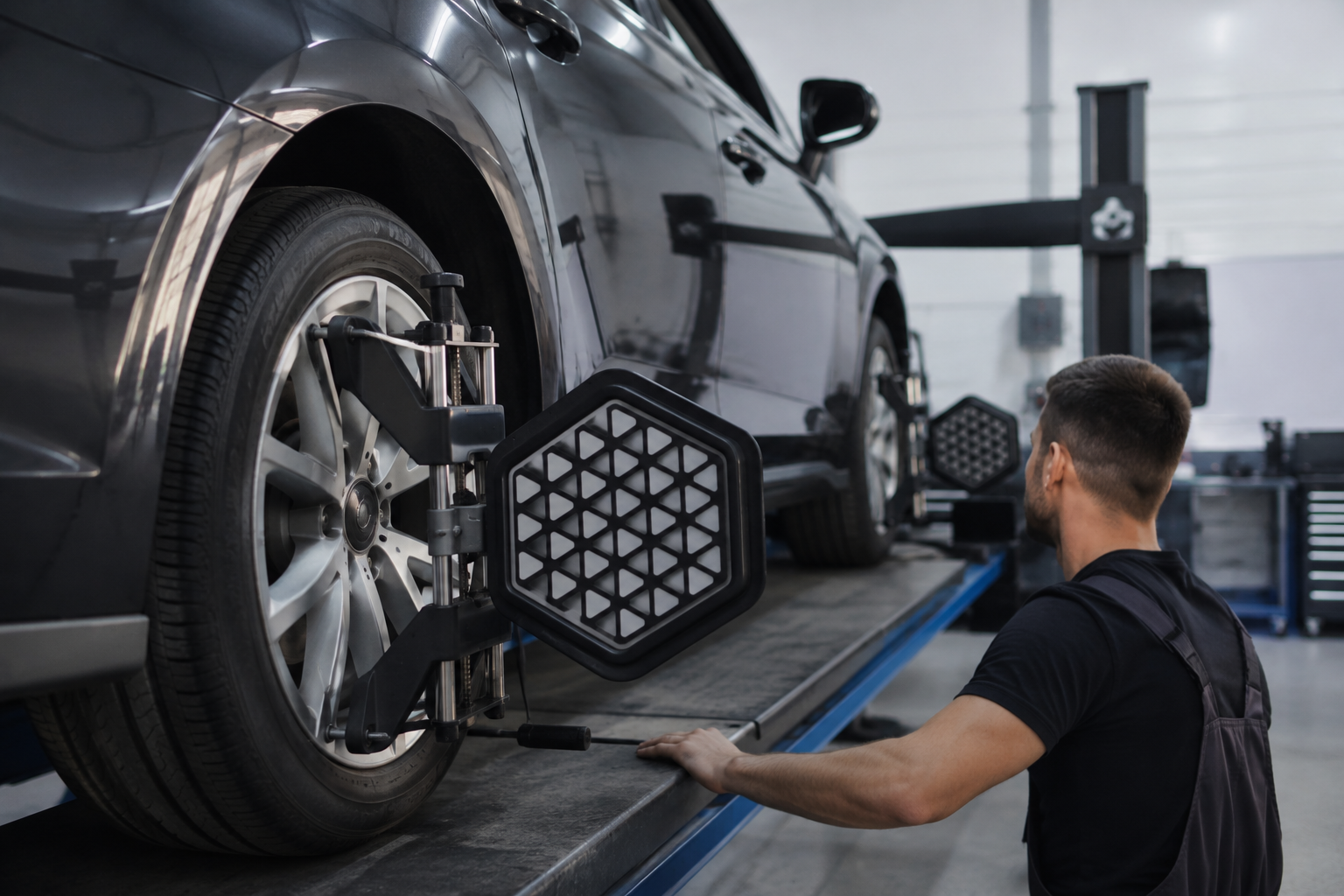
Particular attention should be paid to wheel alignment. Incorrect wheel positioning causes only part of the tread surface to contact the road properly. As a result, certain areas wear much faster, while vehicle handling gradually deteriorates.
The following signs may indicate the need for a suspension inspection:
- the vehicle pulls to one side while driving;
- the steering wheel is off-center when driving straight;
- tires wear on only one side;
- unusual noises or knocking sounds appear in the suspension.
In such situations, replacing the tires without diagnosing the vehicle usually does not solve the problem.
Practical Tips: How Drivers Can Significantly Slow Tire Wear
Completely avoiding tire wear is impossible, but extending tire life is entirely achievable. Most recommendations require no significant expenses and can be followed during normal vehicle operation.
To maximize tire lifespan, it is recommended to:
- check tire pressure at least once a month;
- perform wheel balancing on time;
- regularly check wheel alignment;
- rotate tires according to the intervals recommended by the manufacturer;
- avoid harsh acceleration and unnecessary emergency braking;
- monitor suspension condition;
- ensure proper seasonal tire storage.
In many cases, tire rotation and pressure monitoring provide the greatest benefits because they help distribute loads more evenly among all wheels.
The condition of a tire tread can reveal more about a vehicle than it may seem at first glance. Regular tire inspections help not only with timely replacement planning but also with identifying faults that may eventually lead to significantly more expensive repairs.
Top popular news
- Steering Tie Rod Knocking: Symptoms and How Not to Confuse It with a Faulty Rack
- How to Read US Car Auction Photos and See More Than the Camera Shows
- Restoring Vehicle Safety After Airbag Deployment: Why Cheap SRS Repairs Are Dangerous
- VAG Comfort Control Module: Simultaneous Failure of Locks, Mirrors, and Power Windows
- The Heater Blows Weakly, and the Engine Takes a Long Time to Warm Up: Where to Look for the Cause
- ADAS calibration after windshield replacement: restoring the accuracy of driver-assistance systems
- VAG immobilizer: why the car will not start and the key transponder is not recognized
- TSI coolant pump and thermostat: causes of slow warm-up and engine overheating

Subscribe to our newsletter!
To stay updated with the latest news

Book a service