Mon - Sat | 09:00 - 19:00


Find

Contact us

Odesa
Hrushevskoho str., 41
 Мережа СТО в місті
Місто
 +38 (096) 299 29 97
Odesa
Hrushevskoho str., 41
 Мережа СТО в місті
Місто
+38 (096) 299 29 97

 Години роботи
 Mon - Sat
09:00 - 19:00
Why the Battery Warning Light Stays On While the Engine Is Running
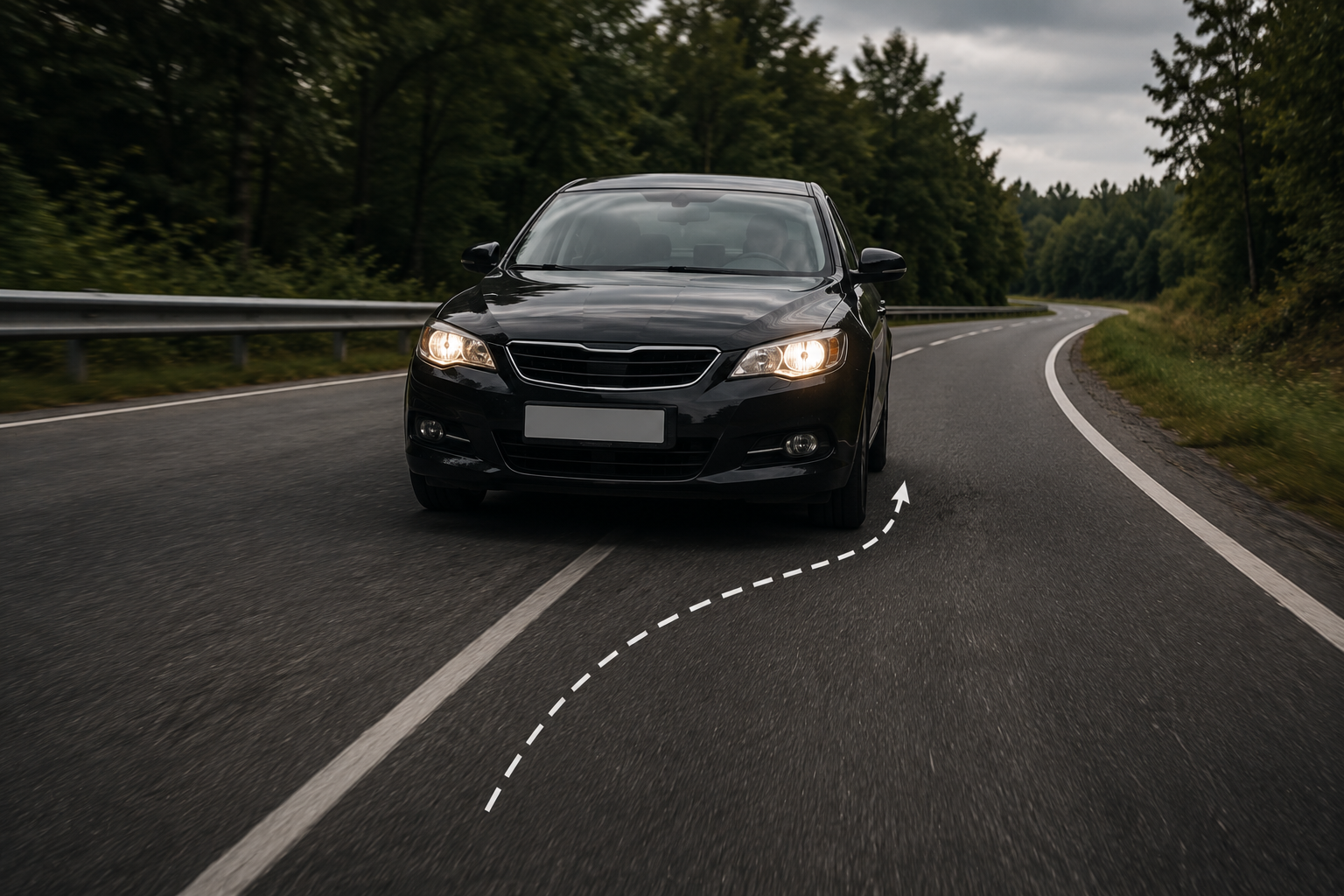
The red battery warning light on the dashboard is one of those alerts that should never be ignored. Many drivers mistakenly believe that this indicator points to a faulty battery under the hood. In reality, in most cases the problem is not the battery itself but the vehicle’s charging system. If the battery warning light remains on while the engine is running, it means the battery is no longer receiving a charge from the alternator and is gradually discharging.
The vehicle may continue driving for some time using the remaining battery power, but once the battery is depleted, the engine will stall and restarting it will become impossible.
Why the Battery Warning Light Usually Indicates an Alternator Problem Rather Than a Battery Failure
After the engine starts, the alternator becomes the vehicle’s primary source of electrical power. It supplies electricity to all onboard electrical systems while simultaneously charging the battery.
When the alternator is operating properly, the vehicle’s electrical system maintains the correct voltage, and the battery warning light remains off. If charging stops, the system detects the problem and displays a warning on the instrument panel.
For this reason, if the battery warning light comes on while driving, it most often indicates a malfunction of the alternator or one of its supporting components.
Why the Engine Does Not Stall Immediately After the Warning Light Appears

Once the charging system stops working, all of the vehicle’s electronic systems begin drawing power directly from the battery. As long as the battery voltage remains high enough to operate the fuel pump, fuel injectors, ignition system, and engine control module, the vehicle will continue running.
As the battery gradually discharges, the system voltage begins to decrease. Initially, individual electronic systems may begin displaying faults. Then the performance of the electrical equipment deteriorates, and once the voltage reaches a critical level, the engine shuts down.
That is why, after the battery warning light appears, it is important not to wait until the battery is completely discharged but to identify the cause of the problem as soon as possible.
The Most Common Causes of Alternator Charging Failure
There are several reasons why the charging system may stop working.
The most common include:
- a broken or slipping alternator belt;
- worn alternator brushes;
- a faulty voltage regulator;
- a failed diode bridge (rectifier);
- corroded battery terminals and electrical connections;
- damaged power cables;
- a faulty alternator pulley.
For example, if the alternator belt breaks, the alternator shaft immediately stops rotating, and electrical power generation ceases instantly. If the problem is caused by worn alternator brushes, charging may fail intermittently depending on the engine’s operating conditions.
Another common cause is a defective diode bridge. In this case, the alternator continues rotating but can no longer provide the electrical system with stable charging voltage.
The Difference Between a Constant Battery Warning Light and a Flashing One
The way the warning light behaves can also help identify the likely cause of the problem.
If the battery warning light stays on continuously, it usually indicates a complete loss of charging. This may be caused by a broken alternator belt, a faulty voltage regulator, or a failed diode bridge.
If the battery warning light flashes, the problem is often related to an unstable electrical connection, corroded terminals, a slipping alternator belt, or the early stages of alternator brush wear. In these cases, charging may come and go intermittently.
How Far Can You Drive Without Alternator Charging?
There is no universal answer because it depends on the condition of the battery and the number of electrical accessories currently in use.
Battery discharge speed is affected by:
- low-beam and high-beam headlights;
- the climate control system;
- rear window defroster;
- heated seats;
- the multimedia system;
- additional electrical accessories.
In some cases, a vehicle may only travel a few dozen kilometers, while in others it may continue much farther. However, relying on extended driving without alternator charging is never recommended.
What Should You Do If the Battery Warning Light Comes On While Driving?
If the battery warning light illuminates while driving, you should reduce the electrical load on the vehicle as much as possible.
It is advisable to turn off:
- heated seats;
- window defrosters;
- the multimedia system;
- phone chargers and other charging devices;
- additional lighting.
This will help preserve the remaining battery charge and increase the chances of safely reaching a repair facility.
A Practical Example
A fairly common situation occurs when the battery warning light appears after heavy rain or after driving through deep puddles. At first, the warning light may flash occasionally, but after some time it begins staying on continuously.
During inspection, technicians often discover that the alternator belt has lost proper tension or has started slipping due to wear. As a result, the alternator can no longer maintain the required system voltage. Once the underlying issue is corrected, the charging system returns to normal operation.
How Technicians Diagnose the Charging System
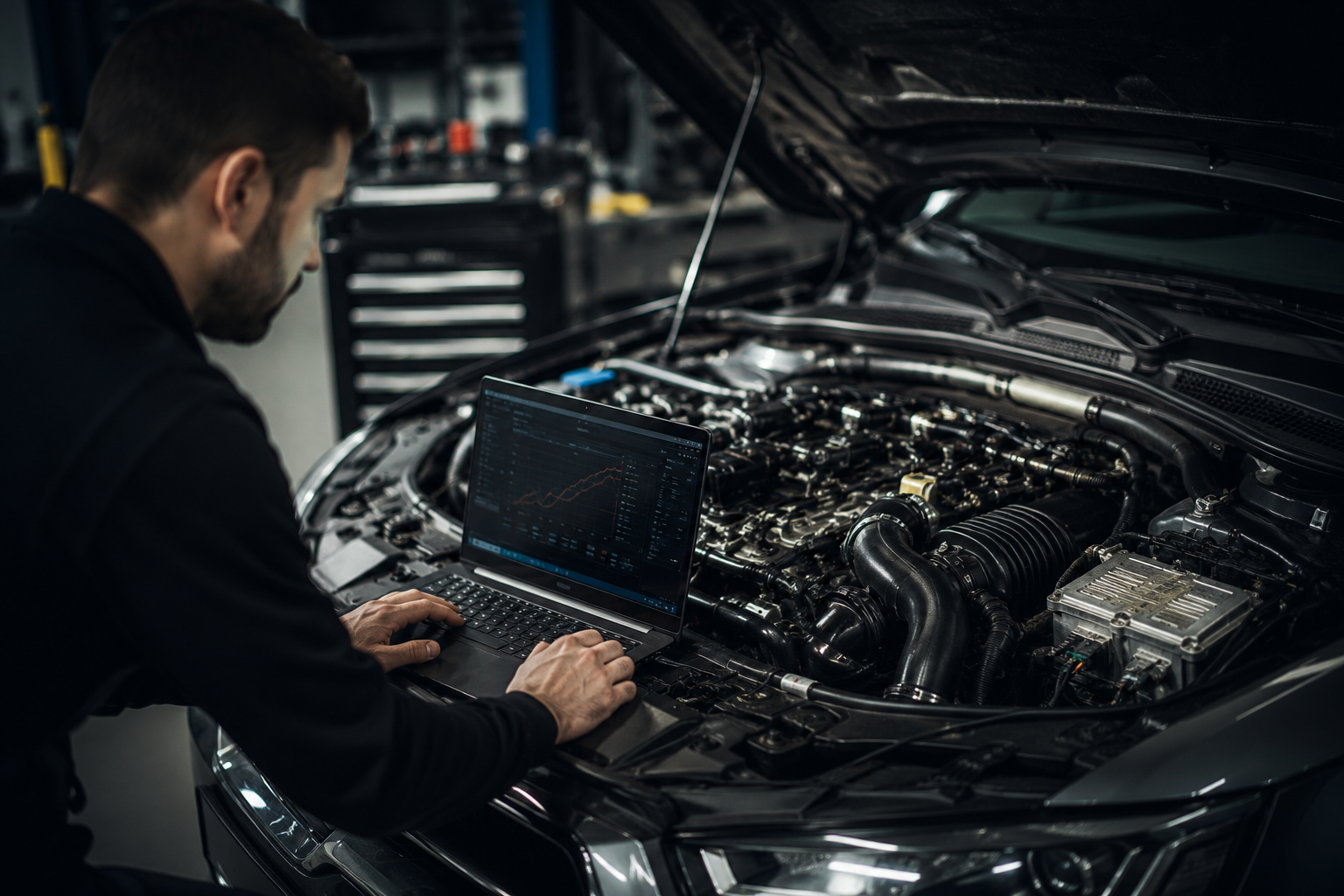
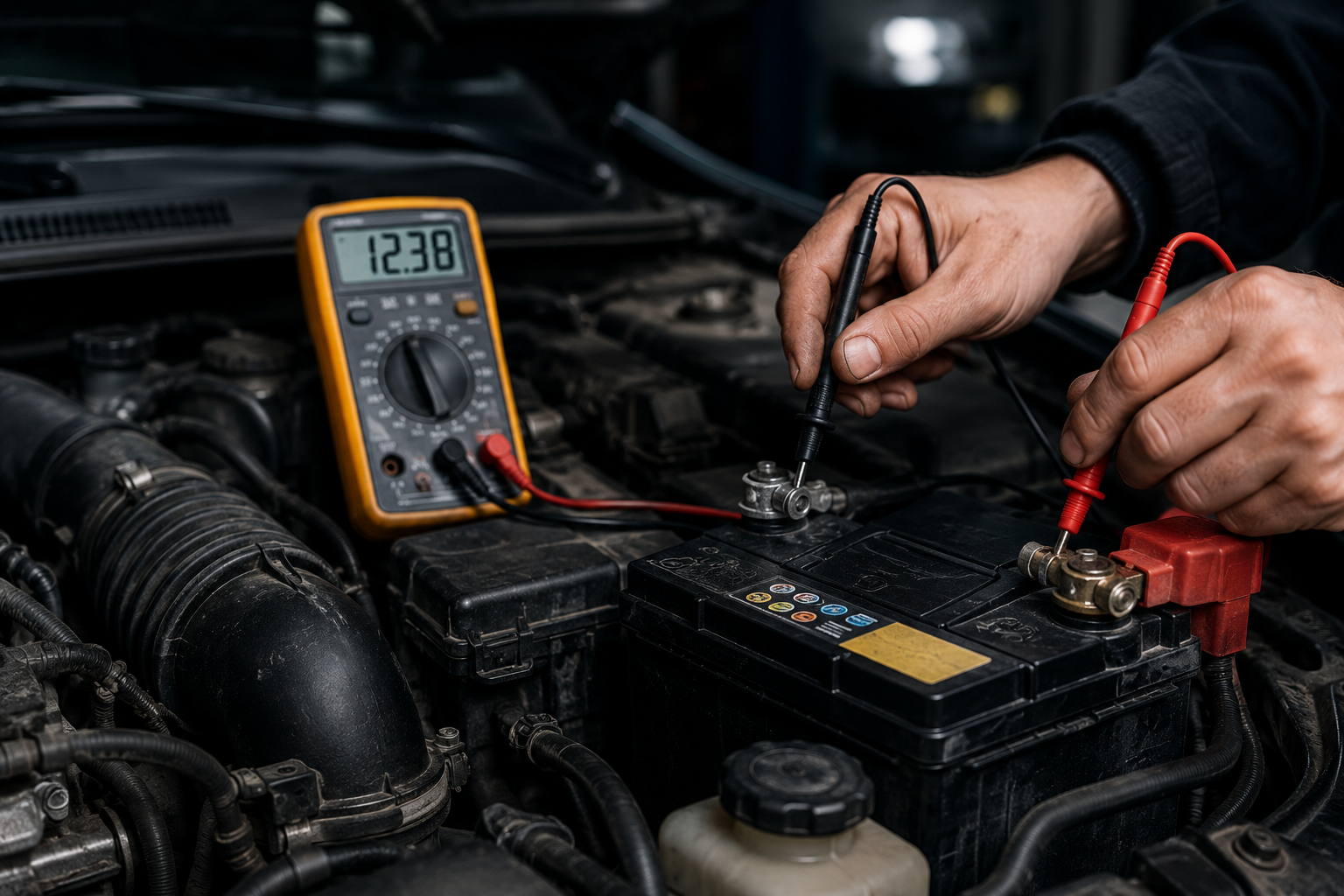
The diagnostic process begins by measuring system voltage with a multimeter.
During the inspection, technicians evaluate:
- battery terminal voltage;
- alternator performance under electrical load;
- voltage regulator operation;
- diode bridge condition;
- wiring and electrical connections;
- charging voltage at different engine speeds.
This approach allows technicians to accurately identify the source of the problem and avoid replacing components that are still functioning properly.
If the battery warning light remains on while the engine is running, it is primarily an indication of a charging system failure rather than a defective battery. The cause may be a faulty alternator belt, worn brushes, a failed voltage regulator, a damaged diode bridge, or poor electrical connections.
The sooner the charging system is inspected, the lower the risk of complete battery discharge and vehicle breakdown. Timely automotive electrical diagnostics help quickly identify the fault and restore reliable operation of the vehicle’s electrical system.
Regular inspection of the charging system helps improve vehicle reliability and reduces the risk of unexpected breakdowns on the road.
Top popular news
- Steering Tie Rod Knocking: Symptoms and How Not to Confuse It with a Faulty Rack
- How to Read US Car Auction Photos and See More Than the Camera Shows
- Restoring Vehicle Safety After Airbag Deployment: Why Cheap SRS Repairs Are Dangerous
- VAG Comfort Control Module: Simultaneous Failure of Locks, Mirrors, and Power Windows
- The Heater Blows Weakly, and the Engine Takes a Long Time to Warm Up: Where to Look for the Cause
- ADAS calibration after windshield replacement: restoring the accuracy of driver-assistance systems
- VAG immobilizer: why the car will not start and the key transponder is not recognized
- TSI coolant pump and thermostat: causes of slow warm-up and engine overheating

Subscribe to our newsletter!
To stay updated with the latest news

Book a service