Mon - Sat | 09:00 - 19:00


Find

Contact us

Odesa
Hrushevskoho str., 41
 Мережа СТО в місті
Місто
 +38 (096) 299 29 97
Odesa
Hrushevskoho str., 41
 Мережа СТО в місті
Місто
+38 (096) 299 29 97

 Години роботи
 Mon - Sat
09:00 - 19:00
VAG immobilizer: why the car will not start and the key transponder is not recognized
Starting the engine in a VAG vehicle depends on more than the condition of the battery, starter, or fuel system. An electronic anti-theft system authorizes engine operation by verifying the original key before every start.
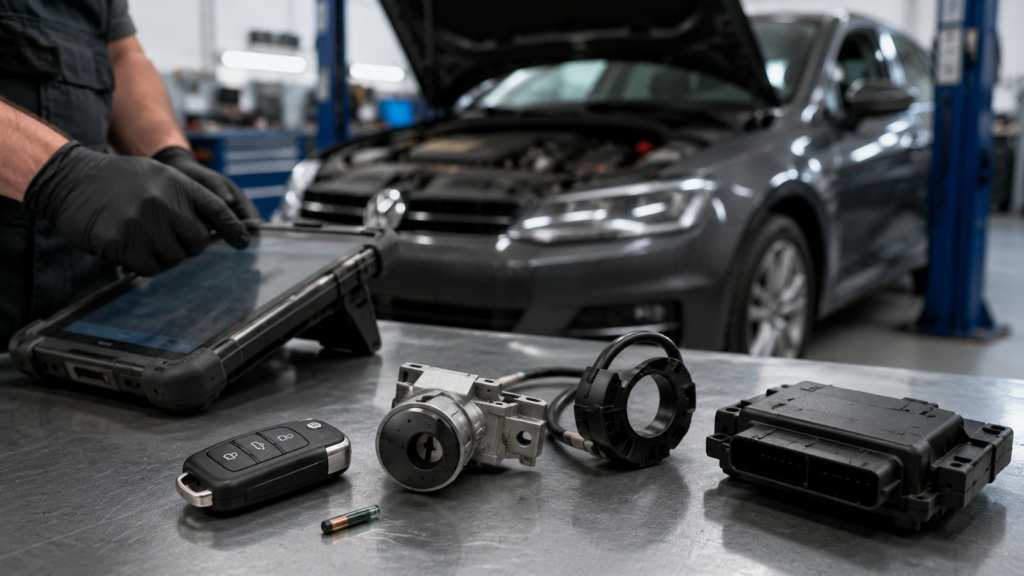
When the car will not start and the key transponder is not recognized, the cause may be a communication problem between the transponder and the vehicle’s electronic control units. The key may look undamaged and its remote-control buttons may still work, yet the starting system can still refuse to authorize the engine.
On Volkswagen, Audi, Skoda, and SEAT models, this verification is part of the factory anti-theft system. It prevents the car from being started with an unauthorized key, which means diagnosis requires checking the entire communication chain rather than a single component.
How the immobilizer recognizes the key: how the transponder works
Inside the factory key is a transponder, a small electronic chip containing unique coded data. It does not operate like a conventional radio transmitter and does not depend on the battery that powers the remote locking and unlocking buttons.
During startup, the key-reader antenna generates a field that allows data to be exchanged with the transponder. Once the correct code is received, the electronics verify the data and send start authorization to the engine control unit.
The process differs between VAG immobilizer generations. IMMO2 and IMMO3 used simpler security algorithms, while IMMO4 and IMMO5 introduced more complex interaction between electronic modules.
Several components take part in the verification process: the comfort/convenience module, the immobilizer module, and the engine control unit. For the engine to start correctly, all of them must confirm the authenticity of the installed transponder.
Reasons the immobilizer may not recognize the key
A recognition failure does not always mean that the key itself is damaged. The cause may lie anywhere in the electronic chain responsible for start authorization.
The main reasons an immobilizer may fail to recognize a key include:
- damage to the transponder inside the key housing;
- a faulty key-reader antenna;
- loss of synchronization between electronic modules;
- a malfunction in the comfort/convenience module;
- communication errors with the engine control unit.
Problems like these may appear after electronic repairs, replacement of individual modules, or unsuccessful programming. In such cases, simply copying a code does not solve the problem because correct communication between all components must be restored.
Flat key-fob battery or faulty transponder: how to tell the difference
One of the most common questions from VAG owners concerns the difference between a discharged key-fob battery and a transponder fault. These components perform different functions.
The battery inside the key housing powers remote locking. If it is discharged, the buttons may stop working, but engine starting often remains possible because the transponder operates independently.
A damaged transponder behaves differently. The central locking may still respond to commands, but the engine does not receive start authorization. A key symbol or an immobilizer fault message may sometimes appear on the instrument panel.
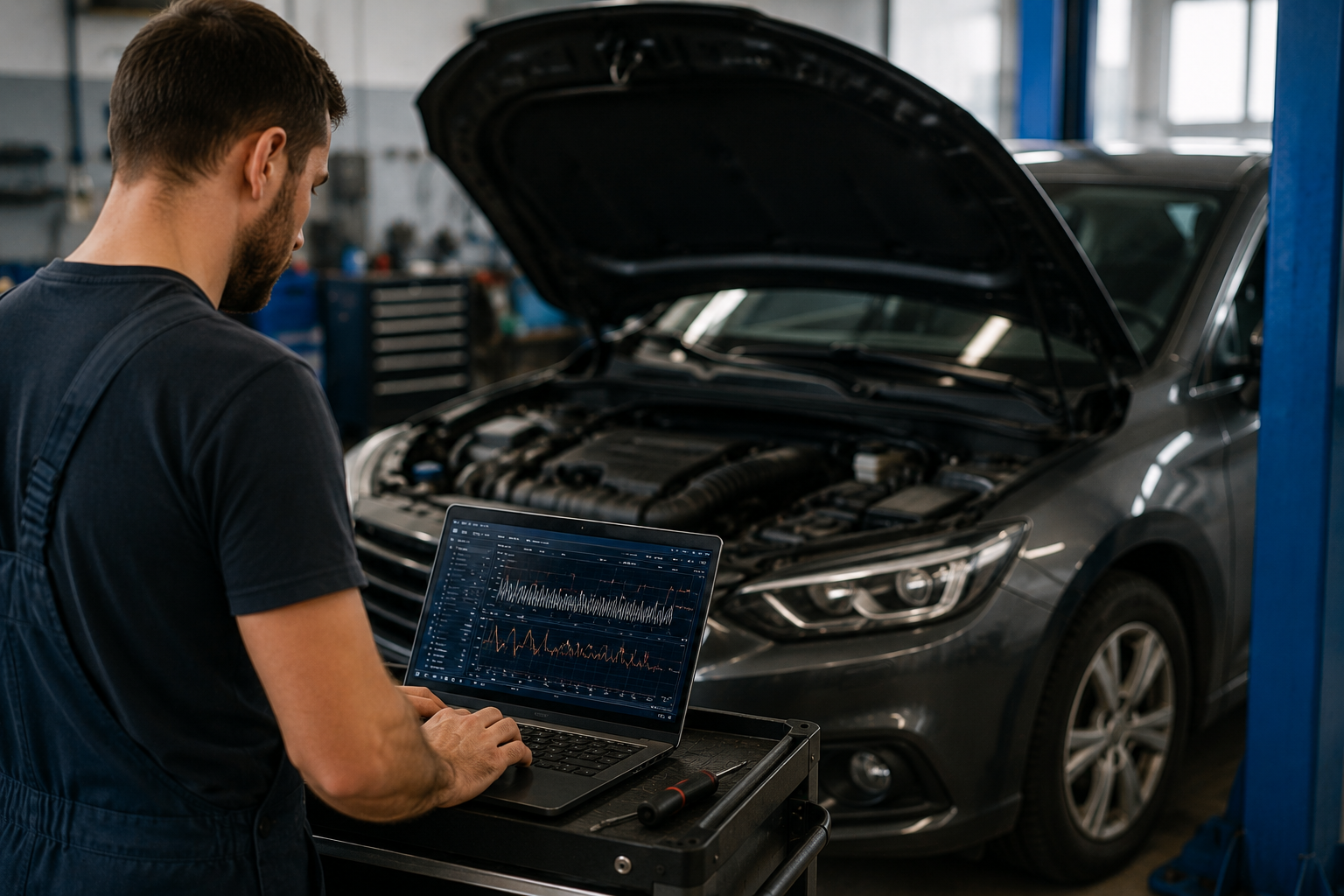
To identify the cause accurately, technicians check not only the key itself but also the reader antenna, PIN/SKC security data, and communication between the control units.
All keys lost: how access to the vehicle is restored
If the owner has lost all keys, creating a new set requires a different approach from making an ordinary duplicate. Without a working key, information cannot simply be copied from an existing device.
The vehicle model, production year, and immobilizer generation are identified first. Protected security data are then used to program and pair a new transponder with the vehicle’s specific electronics.
Once the new key is prepared, it is synchronized with the engine control system so the control unit can verify its authenticity and authorize engine start.
Special attention is required with IMMO4 and IMMO5 systems. Their security architecture is more complex, so the procedure depends on the specific model, equipment level, and condition of the electronic modules.
Promises to restore any key without first inspecting the vehicle or obtaining the required data are not always realistic. In some cases, electronic control units must be programmed rather than simply fitting a new key housing.
Which documents and information are needed to create a new key
Before the procedure begins, it is worth preparing information that helps identify the vehicle and confirm the right to use it.
Usually required are:
- the VIN;
- vehicle registration or ownership documents;
- the model and production year;
- information about any remaining original keys.
After a new VAG key is programmed, the cost of the procedure depends on the immobilizer generation, the type of key, the transponder design, and the complexity of obtaining the required security data. When making a duplicate, the design of the original key and the electronic setup required are also taken into account.
The VAG immobilizer operates as a network of interconnected electronic components. A no-start condition may be caused by the transponder, the reader antenna, or one of the control units. Checking each element in sequence makes it possible to locate the fault and restore system operation without replacing serviceable parts.
Top popular news
- Steering Tie Rod Knocking: Symptoms and How Not to Confuse It with a Faulty Rack
- How to Read US Car Auction Photos and See More Than the Camera Shows
- Restoring Vehicle Safety After Airbag Deployment: Why Cheap SRS Repairs Are Dangerous
- VAG Comfort Control Module: Simultaneous Failure of Locks, Mirrors, and Power Windows
- The Heater Blows Weakly, and the Engine Takes a Long Time to Warm Up: Where to Look for the Cause
- ADAS calibration after windshield replacement: restoring the accuracy of driver-assistance systems
- TSI coolant pump and thermostat: causes of slow warm-up and engine overheating
- Unit injector or Common Rail: which is better for a diesel Volkswagen

Subscribe to our newsletter!
To stay updated with the latest news

Book a service