Mon - Sat | 09:00 - 19:00


Find

Contact us

Odesa
Hrushevskoho str., 41
 Мережа СТО в місті
Місто
 +38 (096) 299 29 97
Odesa
Hrushevskoho str., 41
 Мережа СТО в місті
Місто
+38 (096) 299 29 97

 Години роботи
 Mon - Sat
09:00 - 19:00
Common Rail injectors on TDI engines: signs of wear and whether they can be rebuilt instead of replaced
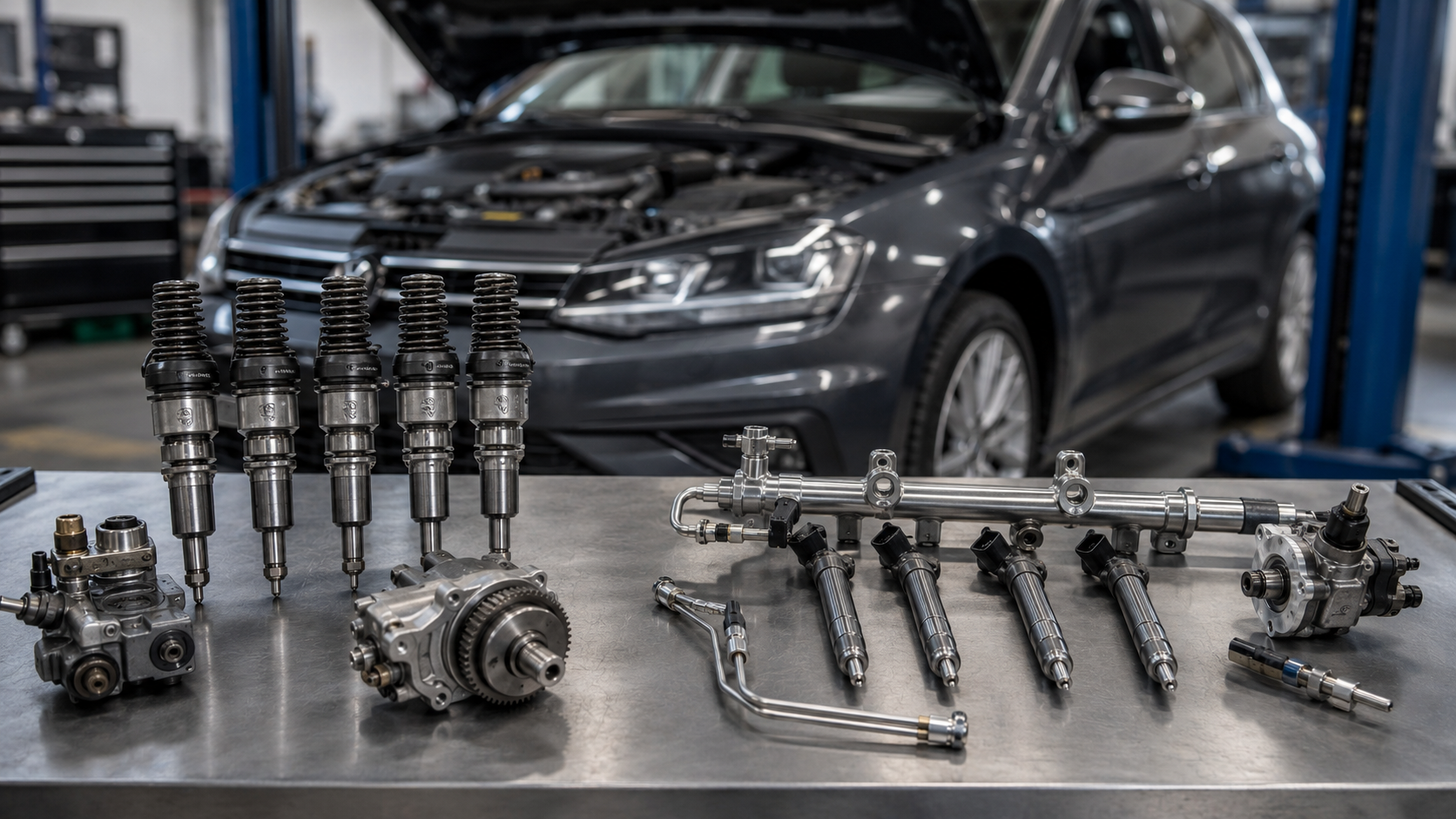
Difficult starting in a diesel car does not always mean a problem with the starter or battery. If the engine cranks for a long time after sitting overnight, black smoke appears during acceleration, and fuel consumption gradually increases, the cause may lie much deeper. Components of the injection system are among the most common sources of these symptoms. That is why Common Rail TDI injector repair should begin not with buying new parts, but with determining the actual condition of the existing injectors.
How the Common Rail system is designed and what role the injectors play
The main difference between Common Rail and earlier diesel systems lies in the way fuel is supplied. The high-pressure pump continuously maintains the required pressure in the common rail, while the control unit determines only when the injector opens and how long injection lasts. This allows the system to meter fuel precisely regardless of engine load or speed.
Stable injection pressure makes it possible to deliver several fuel injections within a single cycle. A pilot injection reduces combustion noise, the main injection provides the required power, and a final injection can improve combustion completeness. This arrangement has made modern diesel engines more economical and able to meet stricter emissions requirements.
TDI engines use both solenoid and piezoelectric injectors. When comparing a piezo injector with a solenoid injector, the main difference is the actuation principle. Piezoelectric designs respond faster and provide more precise metering, but they are considerably more sensitive to diesel fuel quality and more expensive to rebuild. Solenoid designs are simpler and are therefore more often successfully repaired.
Early signs of wear: difficult starting, knocking, black smoke
Wear in the fuel system develops gradually. At first, the vehicle takes longer to start after sitting for an extended period. Later, idle becomes unstable, a characteristic metallic sound may appear during acceleration, and the exhaust becomes darker.
Typical signs of worn diesel injectors include:
- difficult cold starting;
- uneven idle;
- black smoke under hard acceleration;
- increased diesel fuel consumption;
- a noticeable loss of performance.
These symptoms occur because atomization quality deteriorates. If the injector nozzle produces an incorrect spray pattern, fuel mixes with air unevenly. Part of the mixture does not have time to burn completely, increasing smoke and placing additional load on other components.
Another common fault is excessive injector return flow. In this case, too much fuel returns through the leak-off line, causing rail pressure to drop. Even one faulty injector can make the engine difficult to start while the battery, starter, and glow plugs remain fully functional.
What bench testing actually shows – and why diagnosis is not made “by ear”
Similar changes in vehicle behaviour can have several causes related to different faults. Black smoke may result from turbocharger problems, while difficult starting can be caused by low compression or a faulty high-pressure pump. No experienced technician determines the cause solely from engine sound or exhaust colour.
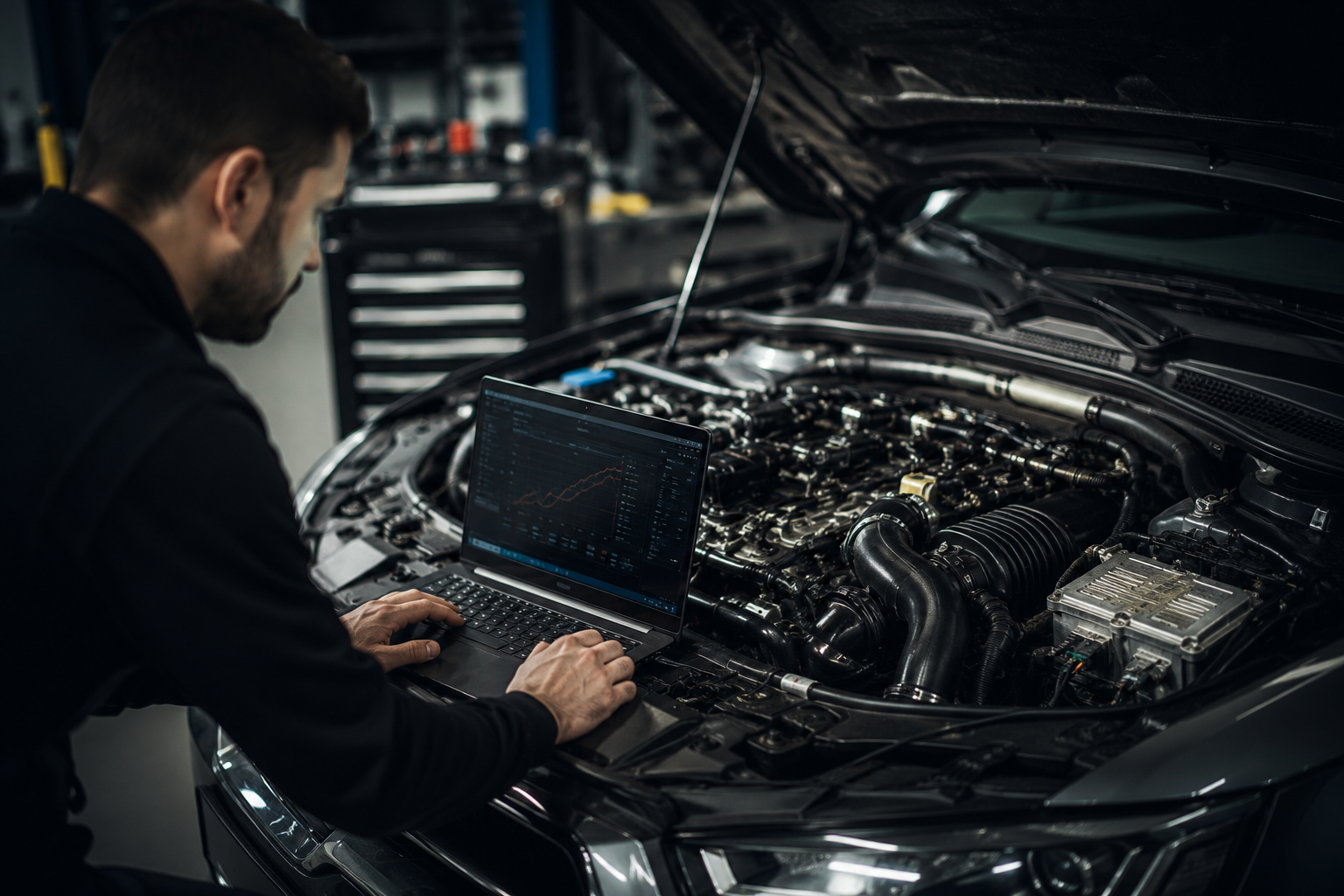
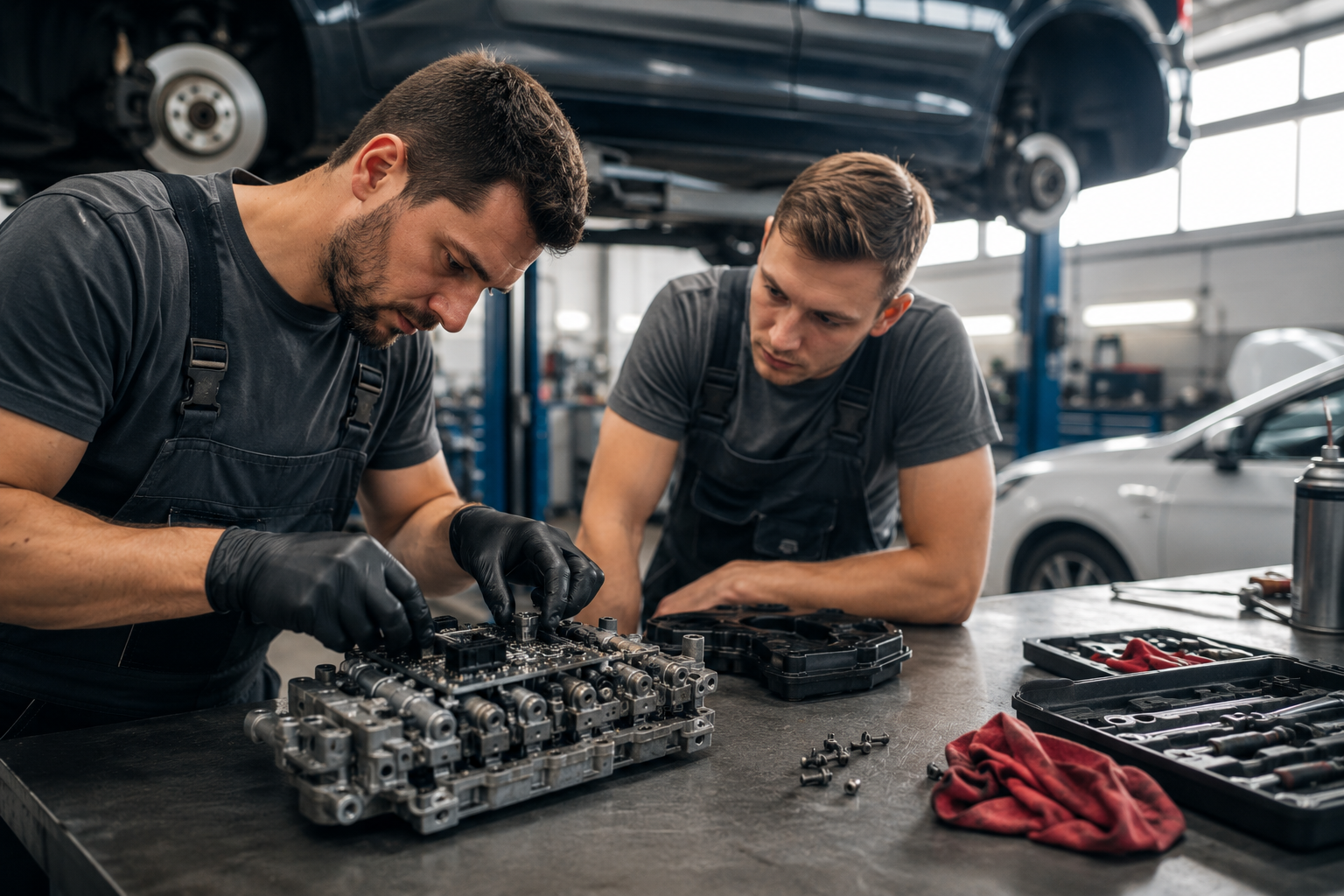
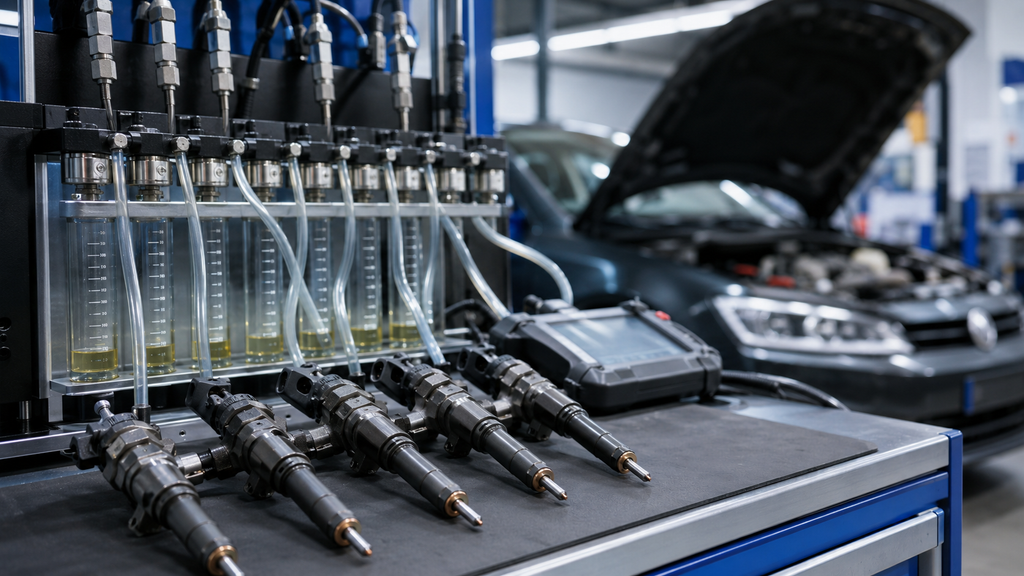
The purpose of bench diagnostics is not only to confirm a fault but also to identify its cause. Testing checks injector delivery, leak tightness, spray pattern, consistency of fuel delivery, response speed, and the amount of diesel fuel returned through the leak-off circuit. Stability across different operating modes and compliance with factory tolerances are also assessed.
Before repair begins, it is important to understand the cost of injector bench testing and the likely scope of work. The final cost, however, depends on more than just the number of injectors. Their type, design complexity, the need for disassembly, and the list of tests required for an accurate conclusion all matter.
Repair or replacement – how the decision is made
Bench testing shows which elements have lost their specified characteristics and which remain fully serviceable. For this reason, a decision to rebuild an injector should be based on measurements rather than external symptoms.
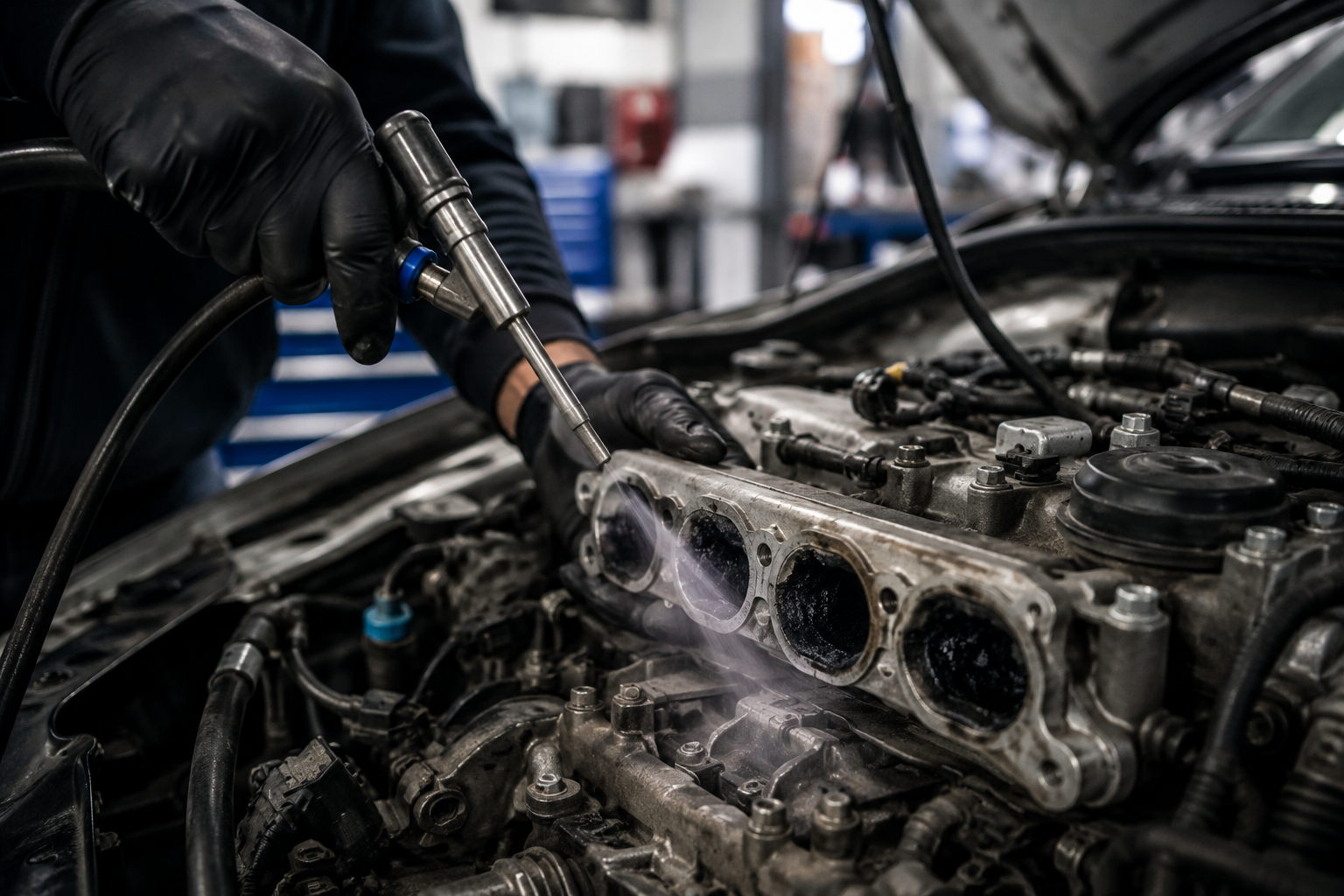
If the body has no mechanical damage and the seating surfaces have retained their geometry, the control valve, injector nozzle, or seals are usually replaced. Common Rail injector cleaning may also be carried out if necessary, after which each unit is retested on the bench. Only confirmation that it meets factory parameters indicates a successful rebuild.
Complete replacement is appropriate in other cases: critical wear of internal components, cracks in the body, deformation of seating surfaces, or the absence of high-quality repair kits for a specific model. In practice, solenoid injectors are much more often repairable, while some piezoelectric designs are more economical to replace.
Why an injector must be coded into the control unit after repair
After rebuilding, the injector is recalibrated and may receive a new IMA or C2I code. This code contains individual calibration values obtained during control testing. The engine control unit uses these data to meter fuel as accurately as possible in each cylinder.
If the new code is not entered, the electronics will continue using the old values, which no longer match the actual characteristics of the repaired injector. This can result in unstable idle, increased diesel consumption, recurring black smoke, or difficult starting after the vehicle has been parked for a long time. Proper Common Rail repair is not a single operation but a sequence of interconnected steps: accurate diagnostics, evaluation of bench-test results, repair only of components that actually need it, repeat testing, and correct coding. This approach restores stable fuel-system operation without unnecessary expenditure on replacing serviceable parts.
Top popular news
- Steering Tie Rod Knocking: Symptoms and How Not to Confuse It with a Faulty Rack
- How to Read US Car Auction Photos and See More Than the Camera Shows
- Restoring Vehicle Safety After Airbag Deployment: Why Cheap SRS Repairs Are Dangerous
- VAG Comfort Control Module: Simultaneous Failure of Locks, Mirrors, and Power Windows
- The Heater Blows Weakly, and the Engine Takes a Long Time to Warm Up: Where to Look for the Cause
- ADAS calibration after windshield replacement: restoring the accuracy of driver-assistance systems
- VAG immobilizer: why the car will not start and the key transponder is not recognized
- TSI coolant pump and thermostat: causes of slow warm-up and engine overheating

Subscribe to our newsletter!
To stay updated with the latest news

Book a service