Mon - Sat | 09:00 - 19:00


Find

Contact us

Odesa
Hrushevskoho str., 41
 Мережа СТО в місті
Місто
 +38 (096) 299 29 97
Odesa
Hrushevskoho str., 41
 Мережа СТО в місті
Місто
+38 (096) 299 29 97

 Години роботи
 Mon - Sat
09:00 - 19:00
Computer Diagnostics for Your Car: Why Simply “Reading Error Codes” Is Not a Repair
Today, almost any driver can buy an inexpensive diagnostic adapter. After spending just a few minutes searching the Internet, it is easy to find a diagnostic app, connect to the vehicle, and obtain a list of fault codes. As a result, many people mistakenly believe that vehicle diagnostics consists only of reading error codes. In reality, owning a diagnostic scanner does not make someone a professional technician any more than owning a thermometer makes someone a doctor.
Computer diagnostics is the process of identifying the root cause of a vehicle malfunction based on data provided by the car’s electronic systems. A fault code only points the technician in the right direction it does not answer the most important question: what exactly has failed, and why did it happen?
What a Diagnostic Scanner Actually Detects

A modern vehicle contains dozens of electronic control units that continuously monitor the operation of the engine, transmission, safety systems, and auxiliary equipment. If any parameter falls outside its acceptable range, the control unit stores a Diagnostic Trouble Code (DTC).
During an inspection, a scanner may display:
- engine misfires in a specific cylinder;
- oxygen sensor (lambda sensor) fault codes;
- coolant temperature sensor faults;
- electrical circuit problems;
- air-fuel mixture deviations;
- faults in individual actuators.
It is important to understand that a fault code records the consequence of a problem not its root cause. For example, an oxygen sensor fault code does not necessarily mean that the sensor itself has failed. Likewise, an engine misfire does not always indicate a defective spark plug or ignition coil.
That is why a service that simply offers to “read fault codes,” although usually inexpensive, cannot replace a complete diagnostic inspection.
Why the Same Error Code Can Have Different Causes
One of the biggest mistakes made during DIY repairs is assuming that the name of the fault displayed by the scanner identifies the defective part.
For example, the system may detect a lean air-fuel mixture. Many drivers immediately suspect a faulty oxygen sensor. However, in practice, the same fault code may be triggered by several completely different issues.
Possible causes include:
- a vacuum leak caused by a cracked vacuum hose;
- clogged fuel injectors;
- insufficient fuel pressure;
- a faulty mass airflow (MAF) sensor;
- improper operation of the oxygen sensor.
From the engine control unit’s perspective, the result is always the same the air-fuel mixture is outside the acceptable range. However, the actual repair required may be completely different. This is why replacing the first component mentioned in the fault code often fails to solve the problem.
Why Clearing Error Codes Does Not Fix the Problem
Some drivers believe that if the Check Engine light disappears after clearing the fault codes, the issue has been resolved. In reality, clearing vehicle fault codes simply erases the memory stored in the electronic control unit.
If the underlying mechanical or electrical problem still exists, the system will detect the abnormal condition again and store the same fault code. This may happen within minutes of engine operation or several days later.
For this reason, deleting Diagnostic Trouble Codes without additional testing should never be considered a repair.
What Live Data Analysis Provides
After reading the stored fault codes, the most important stage of the diagnostic process begins analyzing Live Data.
Unlike stored fault codes, which describe events that occurred in the past, Live Data shows exactly what is happening inside the vehicle at the present moment.
During Live Data analysis, the technician evaluates:
- oxygen sensor readings;
- fuel trim values;
- engine temperature;
- mass airflow sensor performance;
- pressure sensor readings;
- ignition system signals;
- fuel injector operation.
Live Data allows abnormal operating conditions to be detected even before a fault code is stored in the control unit’s memory.
What Customers Are Actually Paying for During Diagnostics
Reading fault codes usually takes only a few minutes. Most of the diagnostic time is spent identifying the actual cause of the malfunction.
An automotive electrical technician analyzes the relationship between different system parameters, checks electrical circuits, evaluates sensor signals, and compares the collected data. This process makes it possible to determine the correct diagnosis while avoiding unnecessary replacement of perfectly functional components.
That is why professional automotive electrical diagnostics whether in Kyiv or any other city is primarily about finding the root cause of the problem rather than simply connecting a diagnostic scanner.
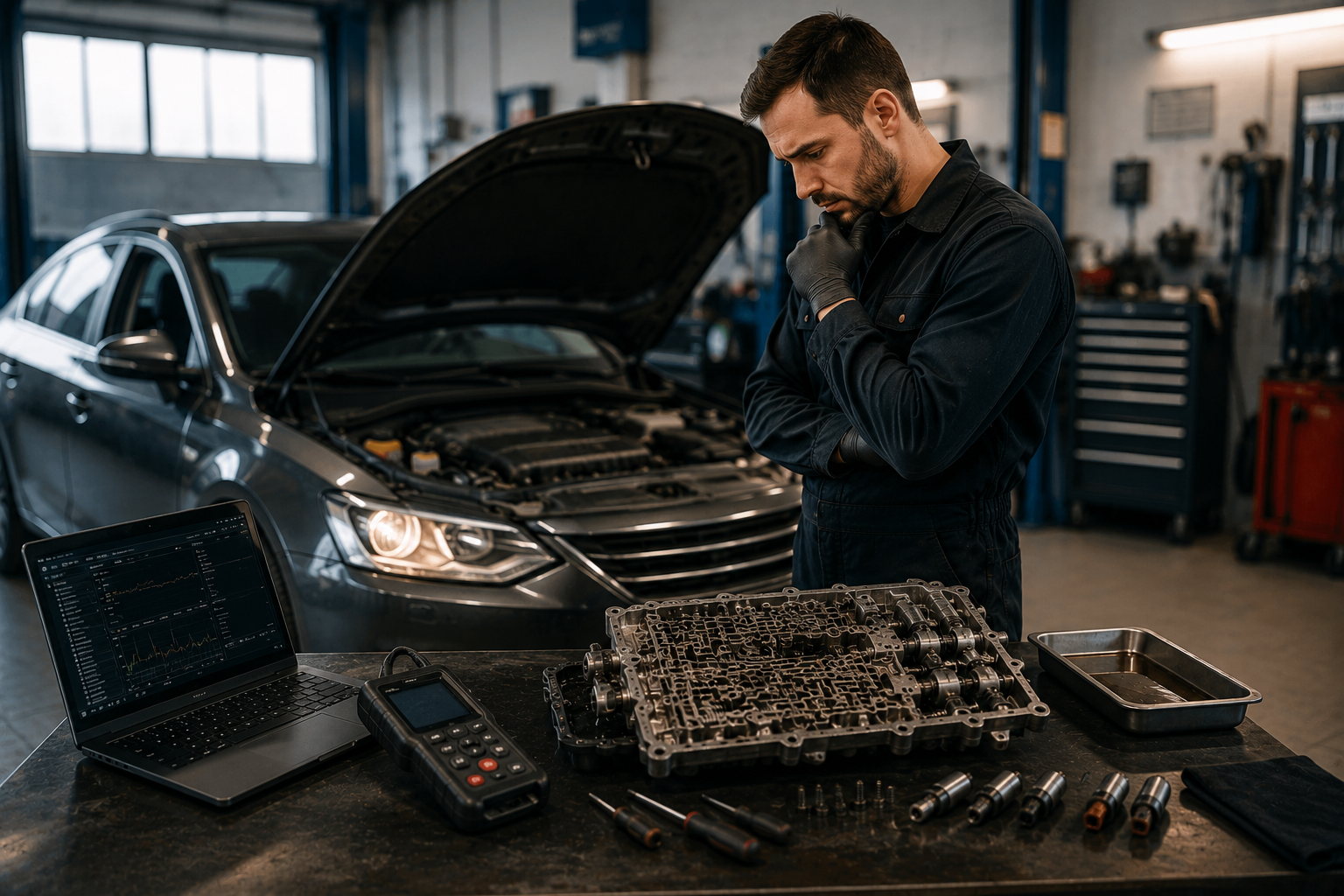
Professional Diagnostic Equipment
For complex faults, a scanner alone is not enough.
Professional technicians also use:
- a multi-brand diagnostic scanner;
- an oscilloscope;
- an engine analyzer (motor tester);
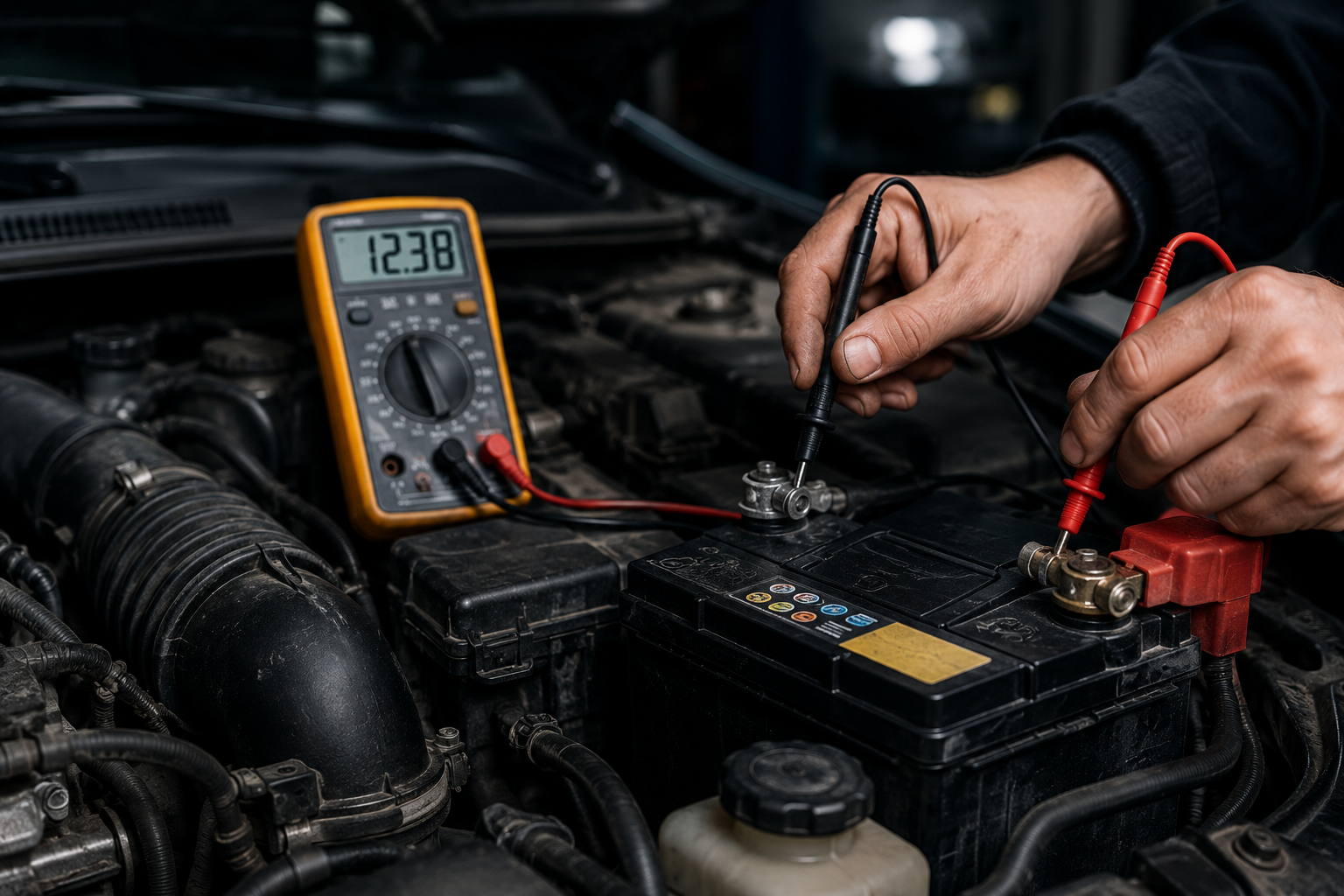
- a digital multimeter;
- specialized equipment for testing wiring and electrical connections.
For example, if an electrical circuit contains a short circuit or a sensor signal becomes intermittently distorted, a scanner may not reveal the actual cause. An oscilloscope allows the technician to view the electrical waveform in real time and identify the fault with much greater accuracy.
For this reason, professional vehicle sensor testing often involves much more than simply reading fault codes it includes analyzing real electrical signals.
A Practical Example
A vehicle arrived with complaints of rough engine operation and a stored engine misfire fault code. Based on a basic inspection, one might assume that the ignition coil or spark plug was defective.
However, Live Data analysis revealed abnormal airflow readings. Further inspection discovered a damaged intake hose that allowed unmetered air to enter the engine.
As a result, the engine control unit recorded ignition misfires even though the ignition system itself was functioning perfectly. If the repair had started by replacing ignition coils or spark plugs, the vehicle owner would simply have spent money without fixing the actual problem.
Computer diagnostics is not merely the process of reading Diagnostic Trouble Codes it is a comprehensive analysis of the operation of a vehicle’s electronic systems. DTC codes only indicate the direction for further investigation; they do not identify the exact component that must be replaced.
Only Live Data analysis, electrical circuit testing, sensor evaluation, and the use of professional diagnostic equipment allow technicians to determine the true cause of a malfunction. This approach helps avoid unnecessary expenses and prevents repairs based on random parts replacement.
Timely diagnostics make it possible to identify developing problems at an early stage and help prevent more complex and expensive repairs in the future.
Top popular news
- Steering Tie Rod Knocking: Symptoms and How Not to Confuse It with a Faulty Rack
- How to Read US Car Auction Photos and See More Than the Camera Shows
- Restoring Vehicle Safety After Airbag Deployment: Why Cheap SRS Repairs Are Dangerous
- VAG Comfort Control Module: Simultaneous Failure of Locks, Mirrors, and Power Windows
- The Heater Blows Weakly, and the Engine Takes a Long Time to Warm Up: Where to Look for the Cause
- ADAS calibration after windshield replacement: restoring the accuracy of driver-assistance systems
- VAG immobilizer: why the car will not start and the key transponder is not recognized
- TSI coolant pump and thermostat: causes of slow warm-up and engine overheating

Subscribe to our newsletter!
To stay updated with the latest news

Book a service