Mon - Sat | 09:00 - 19:00


Find

Contact us

Odesa
Hrushevskoho str., 41
 Мережа СТО в місті
Місто
 +38 (096) 299 29 97
Odesa
Hrushevskoho str., 41
 Мережа СТО в місті
Місто
+38 (096) 299 29 97

 Години роботи
 Mon - Sat
09:00 - 19:00
Worn shock absorbers: how to understand that they need to be replaced
The role of shock absorbers in suspension operation

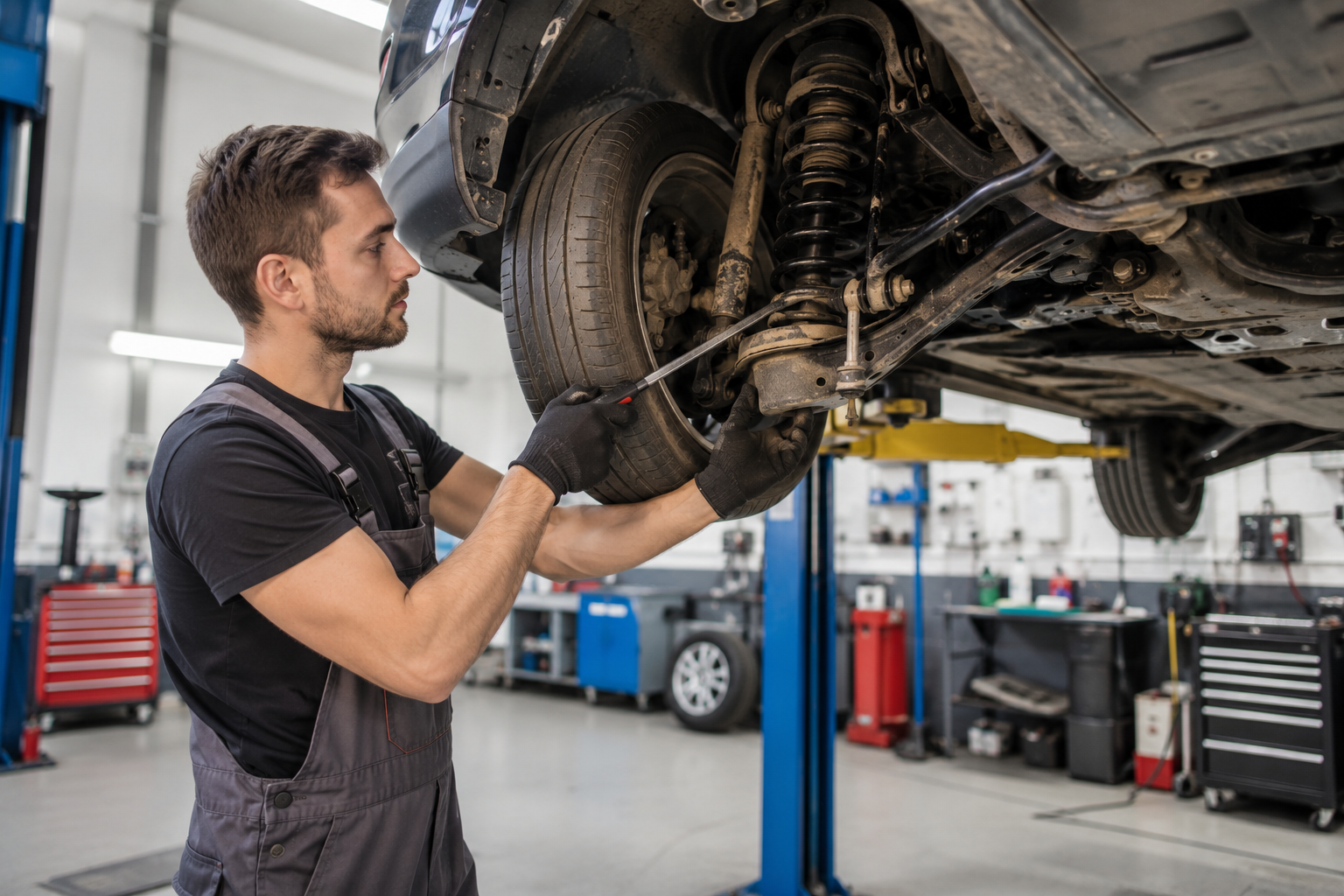
Shock absorbers are key components of a car’s suspension that ensure body stability, ride comfort, and safe braking. They dampen body vibrations after the wheels hit bumps, maintain even tire contact with the road surface, and affect the car’s handling and braking distance.
Durable shock absorbers allow the car to respond evenly to turns, braking, and speed changes, reducing the load on other suspension components, such as levers, silent blocks, and ball joints. When struts wear out, damping decreases, and the car’s body begins to sway over bumps, even small potholes or bumps in the road. This reduces control over the car and increases the risk of accidents.
The effect of worn shock absorbers is especially noticeable when driving at high speeds or when the car is overloaded. Any uneven road surface causes the body to sway heavily, which makes steering more difficult and less predictable. Thus, shock absorbers directly affect not only comfort, but also the safety of the driver and passengers.
Main symptoms of worn shock absorbers
You can recognize the problem by characteristic signs that the driver can notice without special diagnostics:
- Body sway during maneuvers and on bumps. The car body sways longer after a wheel hits a pothole or speed bump. This is especially noticeable when overtaking, making sharp turns, and changing lanes.
- Extended braking distance. Faulty shock absorbers do not hold the body stable during braking, which can increase the distance to an obstacle and increase the risk of an accident.
- Uneven contact between the wheels and the road. Loss of damping leads to partial separation of the wheel from the road surface, especially at high speed or on potholes.
- Unusual sounds when driving. Knocks, bumps, or creaks indicate loose suspension components or fluid leakage from the shock absorbers.
- Visual signs. The appearance of oil traces on the strut body or deformation of the strut indicate a loss of damping efficiency.
It is important to note that a single symptom does not always indicate a critical malfunction. However, the simultaneous appearance of several signs clearly signals that the shock absorbers are worn out and need to be replaced. Regular assessment of the condition of the suspension allows you to prevent more serious breakdowns and maintain the controllability of the car.
How dangerous is driving with faulty shock absorbers?
Operating a car with faulty shock absorbers reduces safety and driving comfort. Body swaying on bends and bumps makes it difficult to control the car, and increased braking distance makes accidents more likely.
In addition, worn struts increase the load on the suspension arms, silent blocks and ball joints, which accelerates their wear. Tires become unevenly worn, which affects the stability of the car. Even a short trip with faulty shock absorbers can lead to damage to the chassis and increase repair costs.
Especially dangerous are situations on slippery roads or during emergency maneuvers, when the car may lose contact with the road. Therefore, timely diagnostics and replacement of struts is critically important for traffic safety.
When to check shock absorbers
Regular inspection of shock absorbers helps to detect wear at an early stage. Diagnostics should be carried out when:
- the appearance of knocking or creaking sounds while driving;
- uneven tire wear;
- prolonged body swaying after a wheel impact;
- a change in the behavior of the car on uneven roads;
- extended braking distance.
The inspection includes an assessment of the shock absorber struts, damping, mounts and tightness. Comprehensive diagnostics help determine when to change the shock absorbers, maintain the car’s handling and extend the suspension life. It is especially important to monitor the car’s behavior on bends and when changing speed. Even minor changes in the body’s response to bumps signal potential shock absorber wear. Timely replacement of struts allows you to maintain vehicle stability, reduce the risk of accidents and save on repairs to other suspension elements.
Top popular news
- Steering Tie Rod Knocking: Symptoms and How Not to Confuse It with a Faulty Rack
- How to Read US Car Auction Photos and See More Than the Camera Shows
- Restoring Vehicle Safety After Airbag Deployment: Why Cheap SRS Repairs Are Dangerous
- VAG Comfort Control Module: Simultaneous Failure of Locks, Mirrors, and Power Windows
- The Heater Blows Weakly, and the Engine Takes a Long Time to Warm Up: Where to Look for the Cause
- ADAS calibration after windshield replacement: restoring the accuracy of driver-assistance systems
- VAG immobilizer: why the car will not start and the key transponder is not recognized
- TSI coolant pump and thermostat: causes of slow warm-up and engine overheating

Subscribe to our newsletter!
To stay updated with the latest news

Book a service