Mon - Sat | 09:00 - 19:00


Find

Contact us

Odesa
Hrushevskoho str., 41
 Мережа СТО в місті
Місто
 +38 (096) 299 29 97
Odesa
Hrushevskoho str., 41
 Мережа СТО в місті
Місто
+38 (096) 299 29 97

 Години роботи
 Mon - Sat
09:00 - 19:00
Intake Valve Cleaning with Walnut Shell Blasting: Does It Help with Carbon Build-Up in TSI and GDI Engines?
Just ten to fifteen years ago, cleaning intake valves was the exception rather than a routine service procedure. The introduction of gasoline direct injection engines changed the situation. Interestingly, in these engines, fuel has almost no contact with the surface of the intake valves. This design feature is exactly what caused a problem that is now well known to owners of Volkswagen, Audi, Škoda, and other VAG Group vehicles.
Today, intake valve cleaning with walnut shell blasting is considered the most effective way to remove heavy carbon deposits without removing the cylinder head. Rather than masking the effects of contamination, this method physically removes the deposits that interfere with normal engine operation.
Why Carbon Deposits Form Even in a Properly Functioning Engine
Many drivers mistakenly associate carbon build-up with poor-quality fuel or delayed oil changes. In reality, the issue is built into the design of the direct injection system itself.
In engines with port fuel injection, gasoline passes through the intake tract and partially cleans the intake valves. In TSI, FSI, and GDI engines, however, the injector sprays fuel directly into the combustion chamber, leaving the intake valves without this natural cleaning effect.
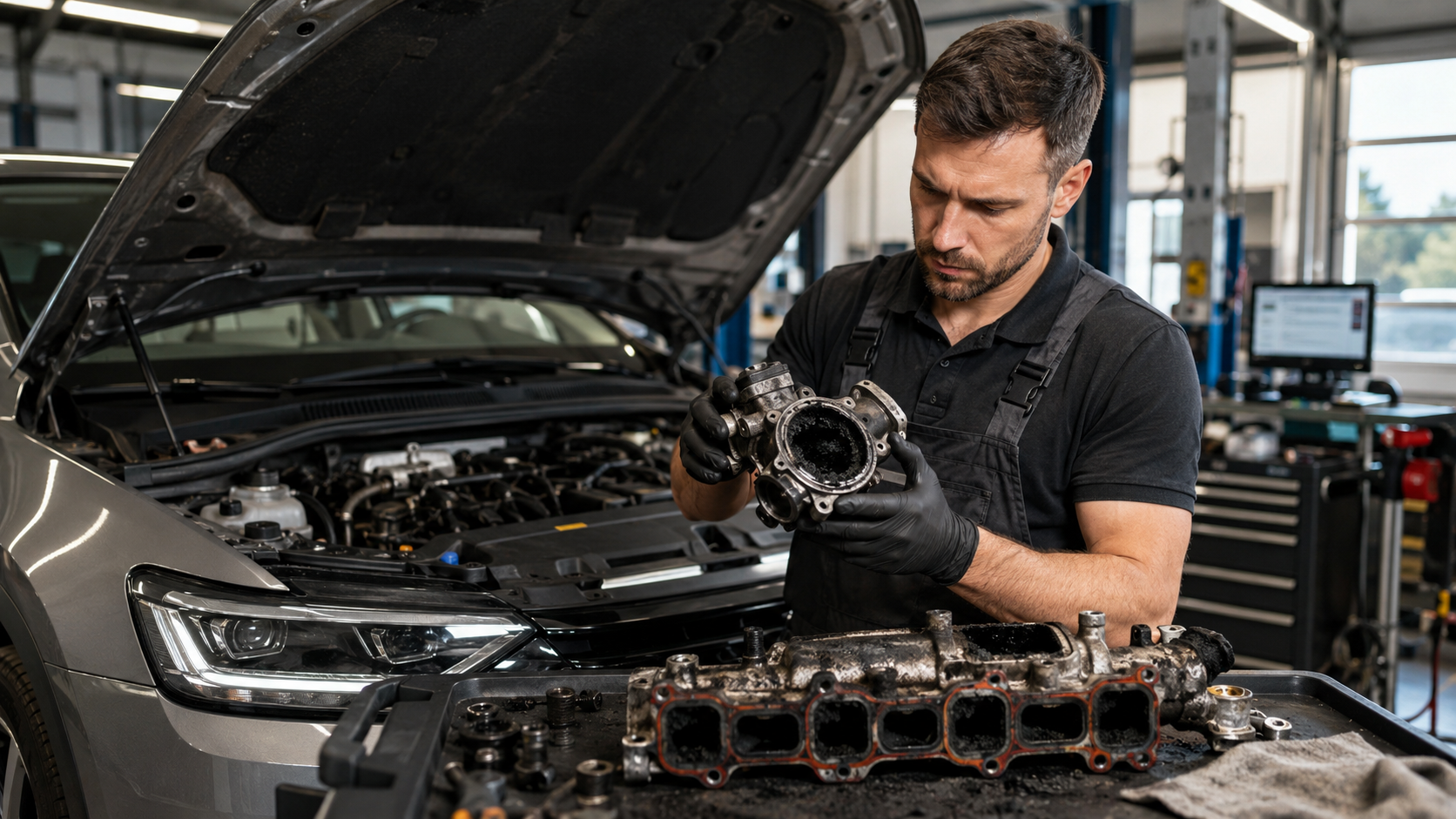
At the same time, the crankcase ventilation system continuously returns tiny oil particles into the intake system. These particles settle on the valve assembly, mix with dust and combustion by-products, and eventually harden into a thick layer of carbon deposits under high temperatures.
This process develops fastest in vehicles that are mainly driven in urban conditions: short trips, frequent cold starts, and extended idling. Under these operating conditions, the engine reaches its normal operating temperature less often, allowing deposits to accumulate more quickly.
This is how carbon build-up develops in direct injection engines, even without any mechanical failures.
When Carbon Deposits Begin to Affect Engine Performance
The first changes rarely appear suddenly. Initially, the engine control unit compensates for the reduced cylinder filling, so the driver may not notice anything unusual. Only when the deposit layer becomes thick enough does the engine begin to behave differently.
The most common signs of carbon deposits on TSI intake valves include:
- rough idle after a cold start;
- cold start misfires typical of TSI engines;
- unstable idle speed;
- noticeable loss of acceleration;
- increased fuel consumption;
- intermittent Check Engine warning light.
In more severe cases, compression may decrease because the intake valves can no longer close completely. This is why these symptoms can easily resemble ignition system or fuel system faults.
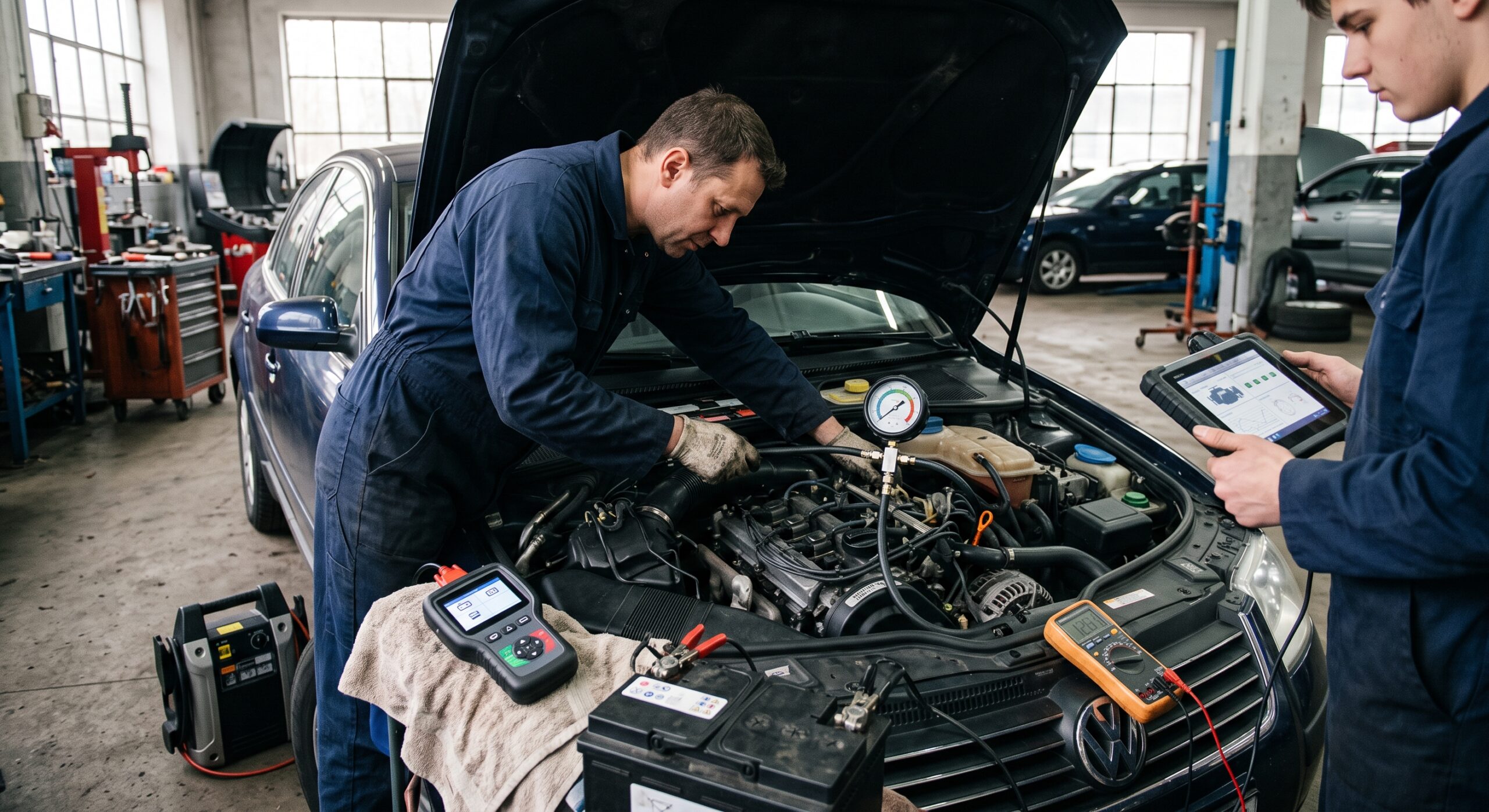
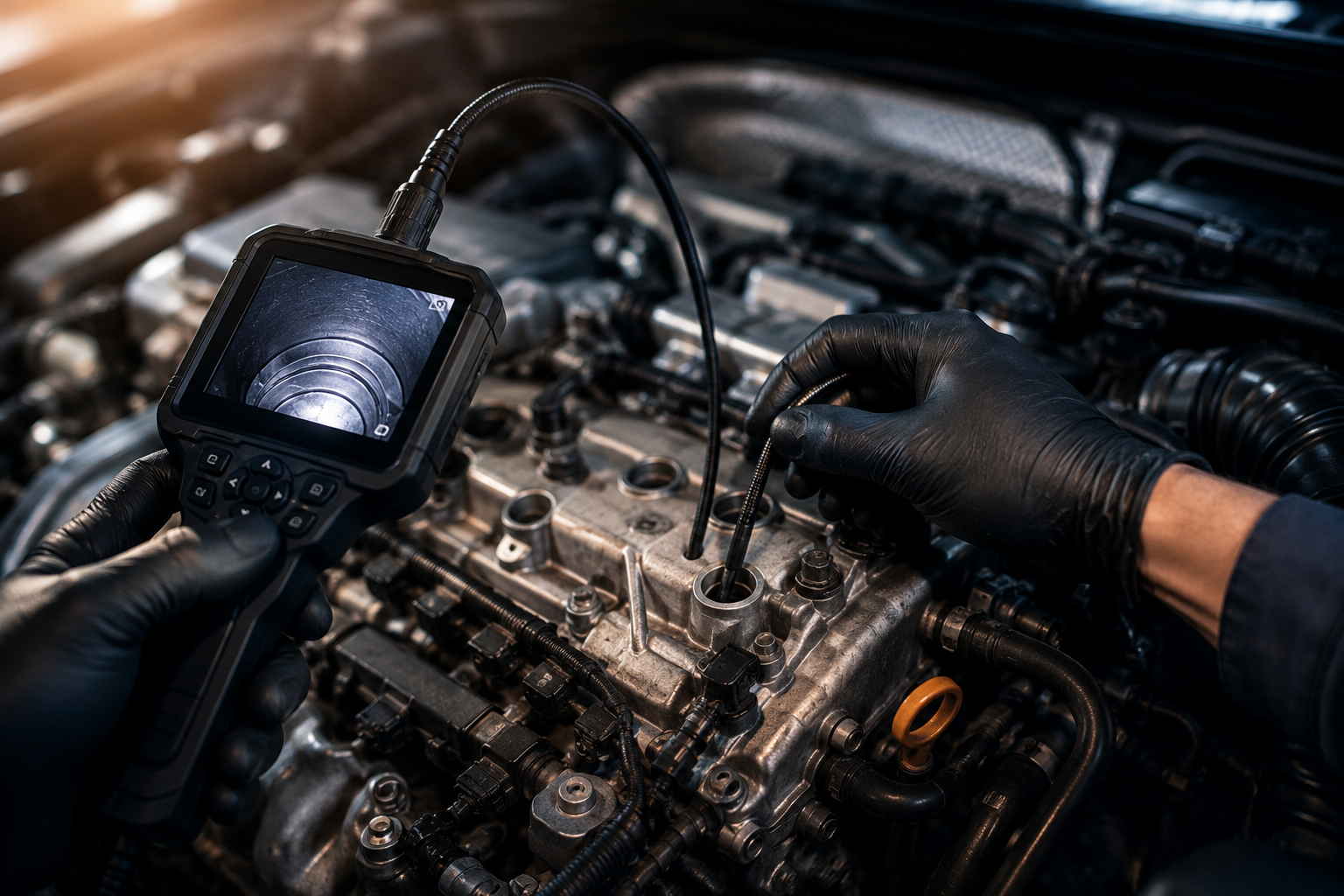
The presence of carbon deposits can be confirmed or ruled out through engine borescope inspection. A miniature camera allows technicians to inspect the intake valves without disassembling the engine and accurately assess the amount of carbon accumulation.
Why Fuel Additives Cannot Clean Intake Valves
The common recommendation to pour a cleaning additive into the fuel tank seems logical only at first glance. In engines with port fuel injection, this approach can indeed help keep the intake system cleaner.
In direct injection engines, however, the situation is completely different. Fuel is injected directly into the combustion chamber and never passes over the intake valves. As a result, no fuel additive can physically dissolve carbon deposits where they have accumulated. While such products may help clean fuel injectors or the combustion chamber, they cannot eliminate the primary cause of reduced engine performance.
Why Walnut Shells Are Used
The name Walnut Blasting often raises questions. It is natural to wonder why crushed walnut shells are used instead of quartz sand or another abrasive material.
The answer lies in the material’s unique properties. Crushed walnut shells are hard enough to remove stubborn carbon deposits while remaining significantly softer than the steel valves and aluminum cylinder head surfaces. As a result, they clean the components effectively without scratching the surfaces or changing their geometry.
For many direct injection engines, VAG recommends Walnut Blasting as the preferred method for cleaning intake valves.
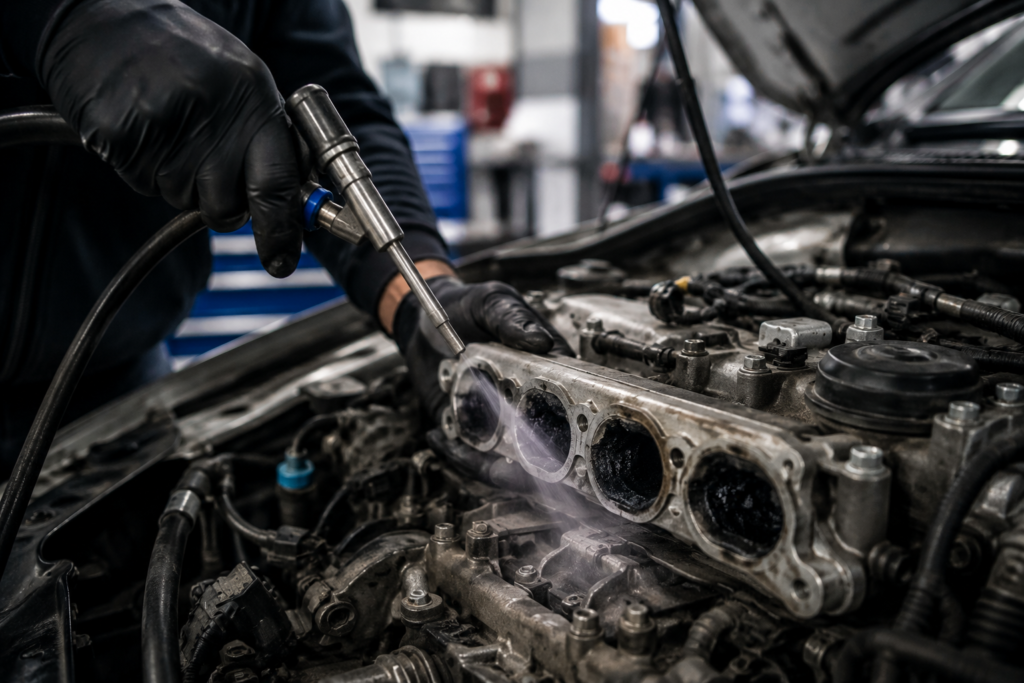
During the procedure, after removing the intake manifold, each intake port is cleaned individually. The walnut shell media is blasted under pressure while a powerful vacuum system simultaneously extracts both the media and the loosened carbon deposits, preventing them from entering the cylinders.
Is Cleaning Always Necessary?
The presence of a thin layer of deposits does not automatically mean that the engine requires immediate cleaning. A small amount of carbon build-up is considered normal for direct injection engines.
Cleaning is recommended when a borescope inspection confirms significant contamination and engine performance has already begun to deteriorate. The combination of diagnostic results and characteristic symptoms provides the most reliable basis for making this decision.
After professional cleaning, the engine typically starts more easily, idles more smoothly, responds faster to throttle input, and no longer experiences misfires. If the procedure is postponed for too long, the deposit layer will continue to grow, and the engine control unit will eventually be unable to compensate for the reduced airflow into the cylinders. That is why timely diagnostics make it possible to perform cleaning only when it is truly necessary and restore normal engine performance without unnecessary repairs.
Top popular news
- There is a smell of gasoline under the hood, but there are no signs of a leak: where to look for the problem
- Volkswagen Golf 7: which engines are considered the most successful in the secondary market
- Why do errors appear after a night frost that disappear after warming up?
- The car stalls when you suddenly release the gas: what happens at this moment
- Audi A6 with 200+ thousand mileage: what expensive malfunctions can be predicted in advance
- Why does my car start to consume more oil even though my driving style hasn’t changed?
- The ABS light came on on the dashboard: can I continue driving?
- Volkswagen Passat B8 or Skoda Superb: what will the car show after 200 thousand km

Subscribe to our newsletter!
To stay updated with the latest news

Book a service