Mon - Sat | 09:00 - 19:00


Find

Contact us

Odesa
Hrushevskoho str., 41
 Мережа СТО в місті
Місто
 +38 (096) 299 29 97
Odesa
Hrushevskoho str., 41
 Мережа СТО в місті
Місто
+38 (096) 299 29 97

 Години роботи
 Mon - Sat
09:00 - 19:00
There is a smell of gasoline under the hood, but there are no signs of a leak: where to look for the problem
The smell of gasoline under the hood is not always accompanied by drops of fuel or a wet spot on the parts. A small amount of gasoline can seep through seals, evaporate from heated surfaces or escape through a leaky connection. In this case, the driver will smell a characteristic odor, but during a quick inspection, there is no obvious source.
If you smell gasoline under the hood, you shouldn’t ignore the symptom. The fuel system operates under pressure, and gasoline vapors ignite easily. Even a small leak may only appear in a certain engine operating mode or after a long period of parking.
Why does the smell appear without a visible leak?
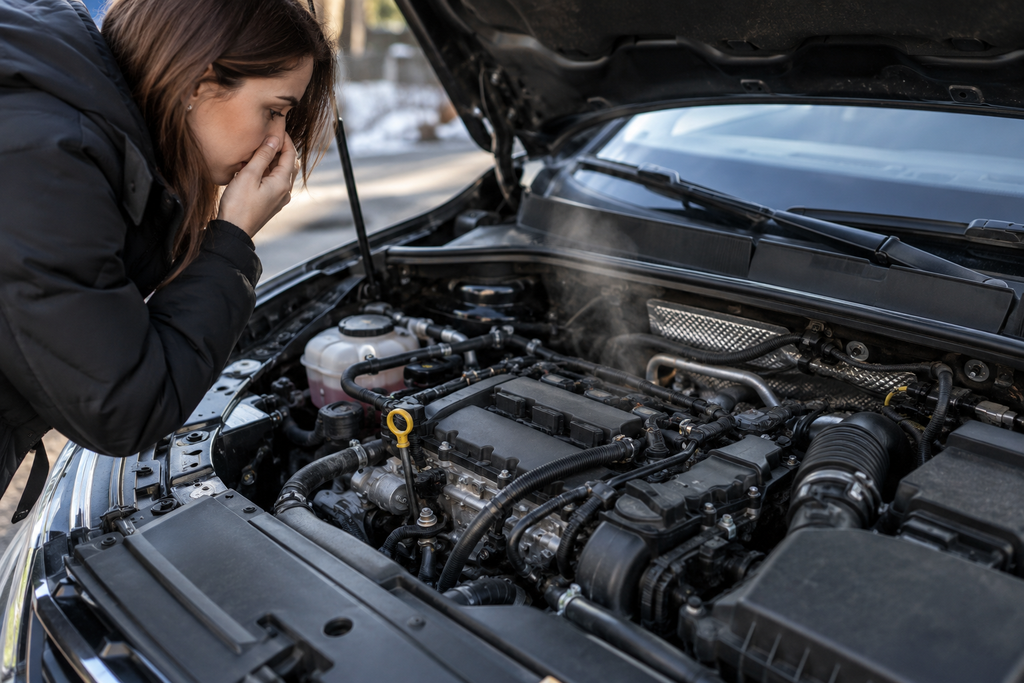
Gasoline is highly volatile, so a small amount of fuel can evaporate quickly. If it gets on the surface of the engine, fuel system elements or other heated parts, there may be no noticeable traces left.
Micro-leakage is a separate issue. Due to a damaged seal or a weak connection, fuel may leak in small amounts only when the pump or engine is running. When the car is stationary, the pressure in the line changes, and the remaining gasoline gradually evaporates.
That is why the smell of fuel without a visible leak can still indicate a leak in the fuel system.
Fuel rail, injectors and connections
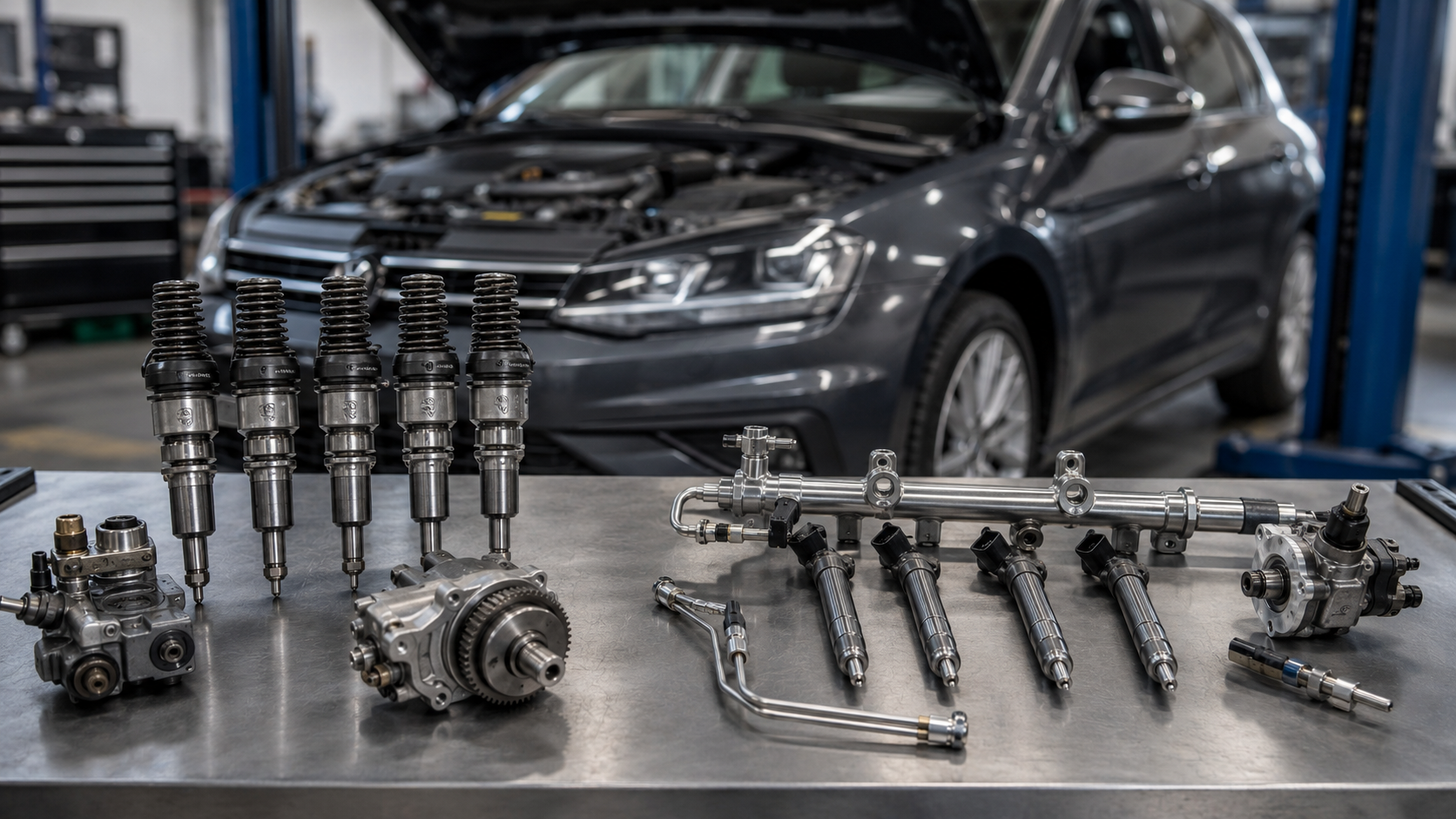
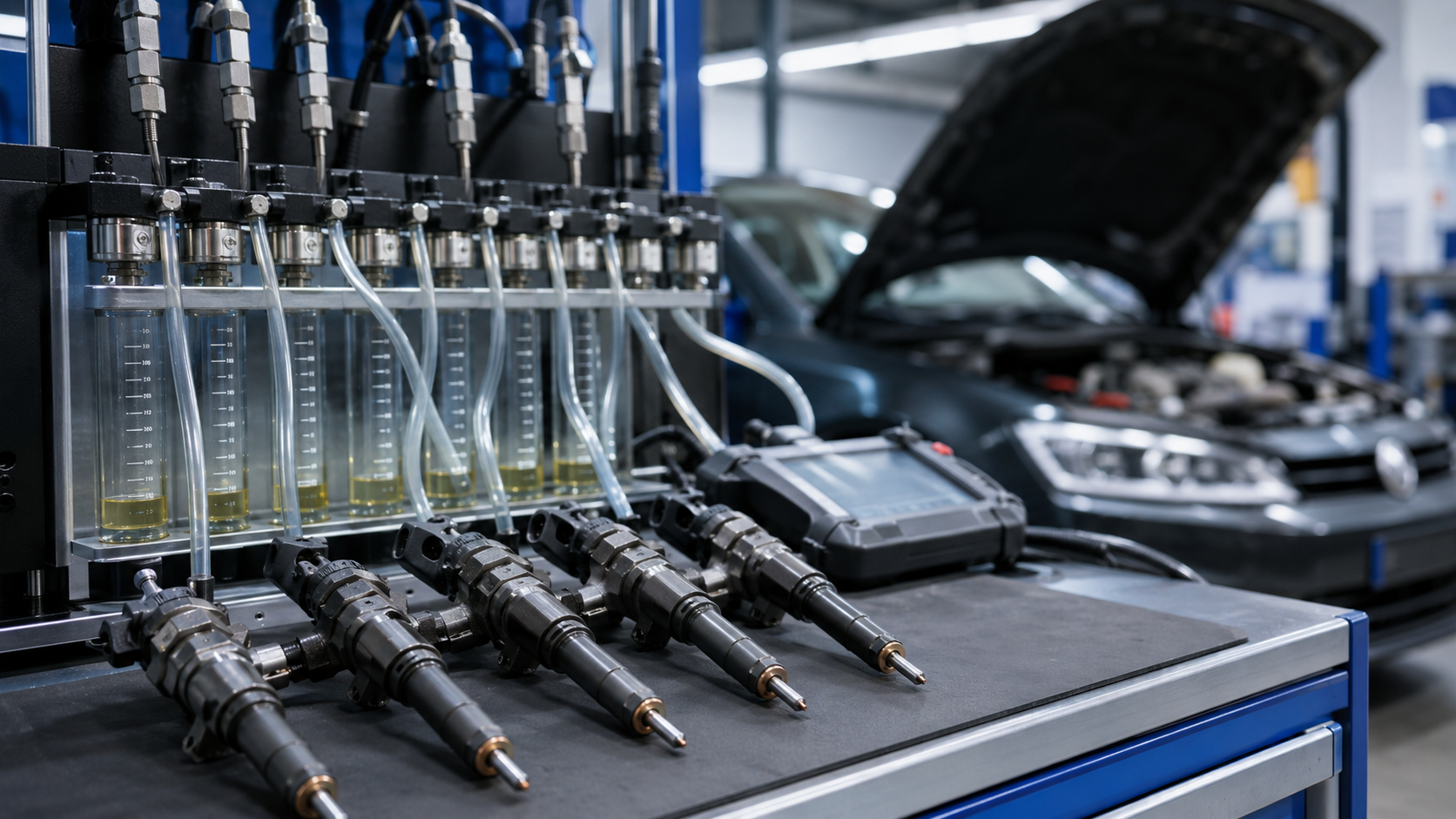
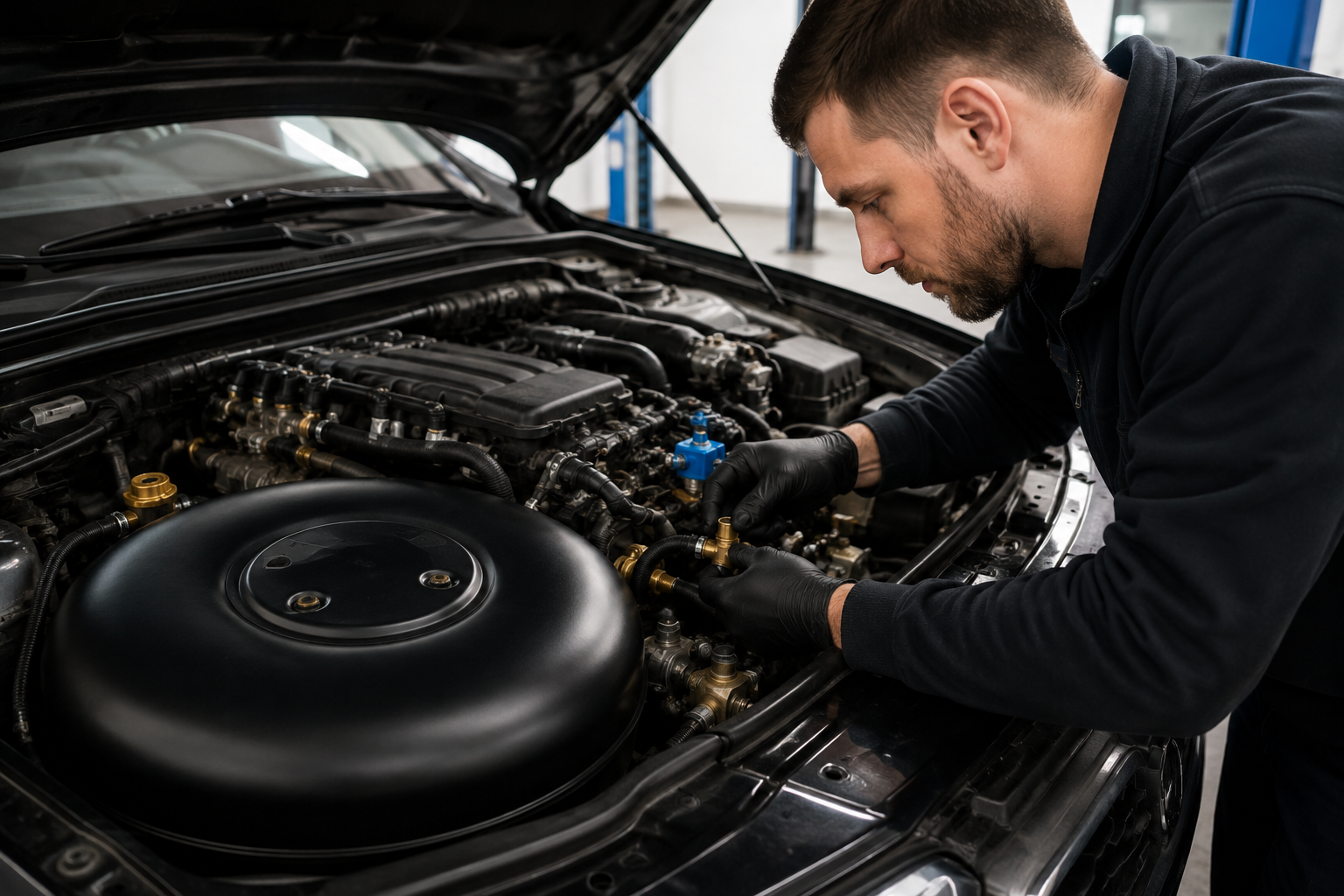
One of the first areas to inspect is the fuel rail and injectors. Depending on the vehicle’s design, there may be O-rings, line connections, and other elements through which fuel can leak if faulty.
A small leak near the injector is sometimes noticeable only by the smell. When the engine is running, gasoline can come out under pressure, and after switching off some of the residue evaporates. If the problem is related to the seal, there are sometimes traces around the leak, but they can be so small that they are easy to miss.
During the inspection, attention is paid to:
- fuel line connection points;
- injector seals;
- fuel rail condition;
- traces of fresh fuel or wet areas;
- changes in odor during engine start-up and after engine shutdown.
Do not touch suspicious areas with your hands while the engine is running. If there is a possibility of a fuel leak under pressure, it is safer to turn off the vehicle first and inspect after the pressure in the system has been reduced.
Hoses, filter and fuel pump
The source of the smell may not be directly on the engine. Fuel hoses lose elasticity over time, crack or become damaged at the attachment points. Pay special attention to the areas near the joints and where the line contacts other parts.
Particular attention is paid to the fuel filter if its design provides accessible external connections. After maintenance, an incorrectly installed element or a damaged seal can cause an odor.
The fuel pump is also worth considering when searching. In many cars, it is installed in the tank, and the seal is provided by the cap, gasket and line connections. Therefore, the smell that is felt near the engine compartment sometimes has a source closer to the rear of the car.
Gasoline evaporation and tank ventilation
Not every smell means that gasoline is leaking in a liquid state. Vapors are formed in the fuel system and must be vented in a controlled manner. This is done by using a gas tank ventilation system that includes an adsorber and appropriate valves.
If the system is not working properly, vapors can accumulate or escape where they were not designed to. This can be caused by damaged hoses, leaking connections, a faulty valve, or a saturated adsorber.
In this situation, the smell may become stronger after refueling, when parked in the sun, or after stopping a warm car. In this case, there may be no wet areas under the hood at all.
When the nature of the smell helps to find the source
The conditions under which the smell occurs provide important diagnostic information. If it occurs immediately after starting, first evaluate the components where fuel pressure appears or increases while the engine is running.
When the smell intensifies after stopping, attention is also paid to the heating of the engine compartment and the evaporation of gasoline residues. If the characteristic aroma appears after refueling, check the fuel tank, its neck, ventilation and connections.
For searching, it is useful to record:
- when the smell becomes stronger;
- does it depend on engine temperature;
- does it appear after refueling;
- Is there a smell in the cabin?
- Does the symptom recur after each start?
This description helps determine the direction of further inspection, but does not replace an inspection of the fuel system.
How to check the fuel system
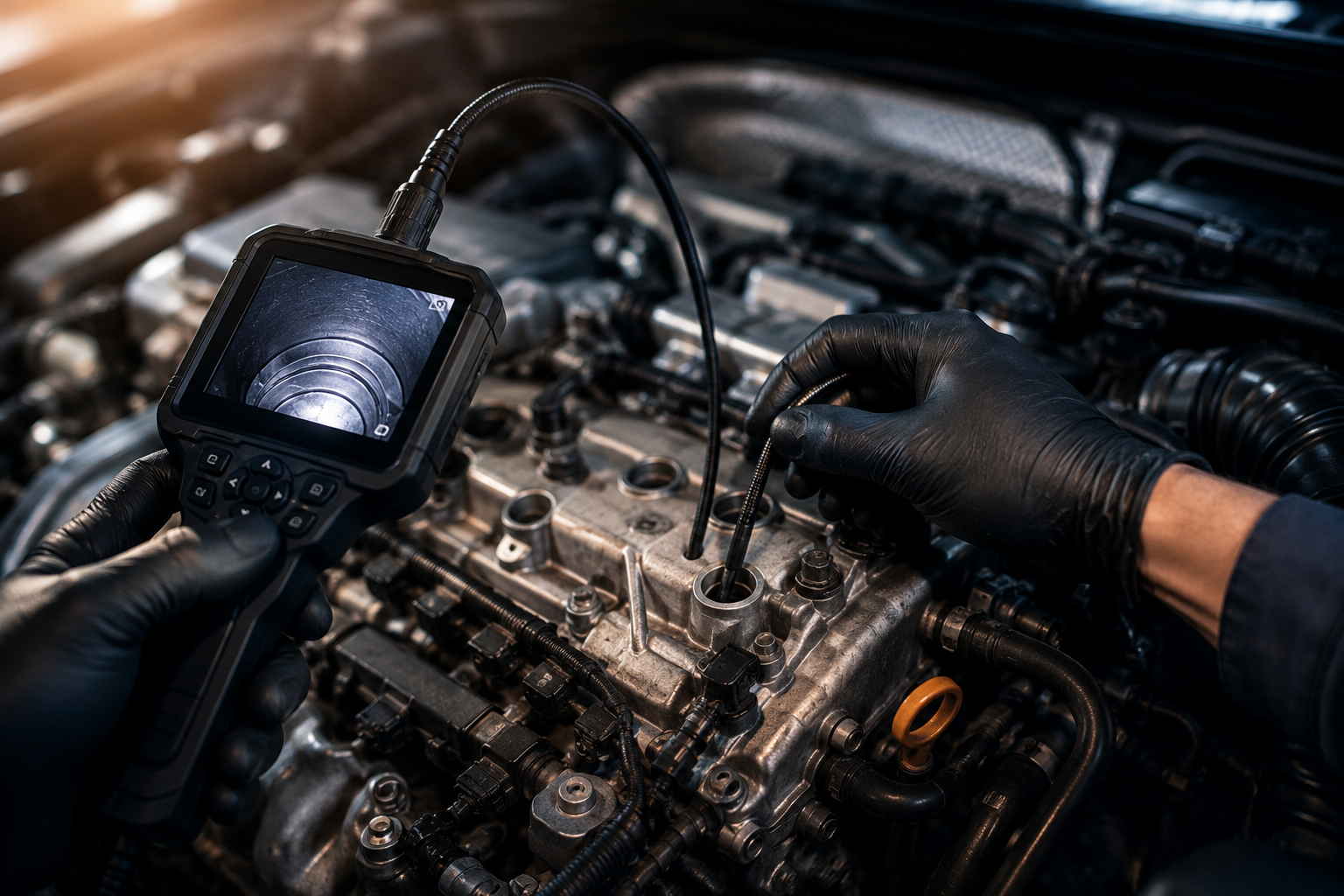
Diagnostics begin with a visual inspection of accessible lines, connections, the fuel rail, injectors, and areas near the fuel filter. Next, the pressure in the system is measured and how it changes during start-up and after the engine is turned off, if such a check is provided for by the design.
The tank ventilation system, adsorber, valves and hoses are monitored separately. If necessary, vapor or leak detection methods are used to detect the problem without the appearance of a large amount of liquid fuel.
If the cause is not immediately determined, do not simply mask the smell or replace a single seal without confirming the cause. You need to identify the location where the gasoline or its vapors are escaping.
A strong smell of gasoline under the hood is a reason to stop operating the vehicle until the source is determined. If fuel gets on hot parts or vapors accumulate in the engine compartment, the risk of ignition increases. It is safer to conduct a complete inspection of the fuel system and eliminate leaks than to wait for a visible puddle to appear.
Top popular news
- Volkswagen Golf 7: which engines are considered the most successful in the secondary market
- Why do errors appear after a night frost that disappear after warming up?
- The car stalls when you suddenly release the gas: what happens at this moment
- Audi A6 with 200+ thousand mileage: what expensive malfunctions can be predicted in advance
- Why does my car start to consume more oil even though my driving style hasn’t changed?
- The ABS light came on on the dashboard: can I continue driving?
- Volkswagen Passat B8 or Skoda Superb: what will the car show after 200 thousand km
- The car loses traction after warming up: why does this happen?

Subscribe to our newsletter!
To stay updated with the latest news

Book a service